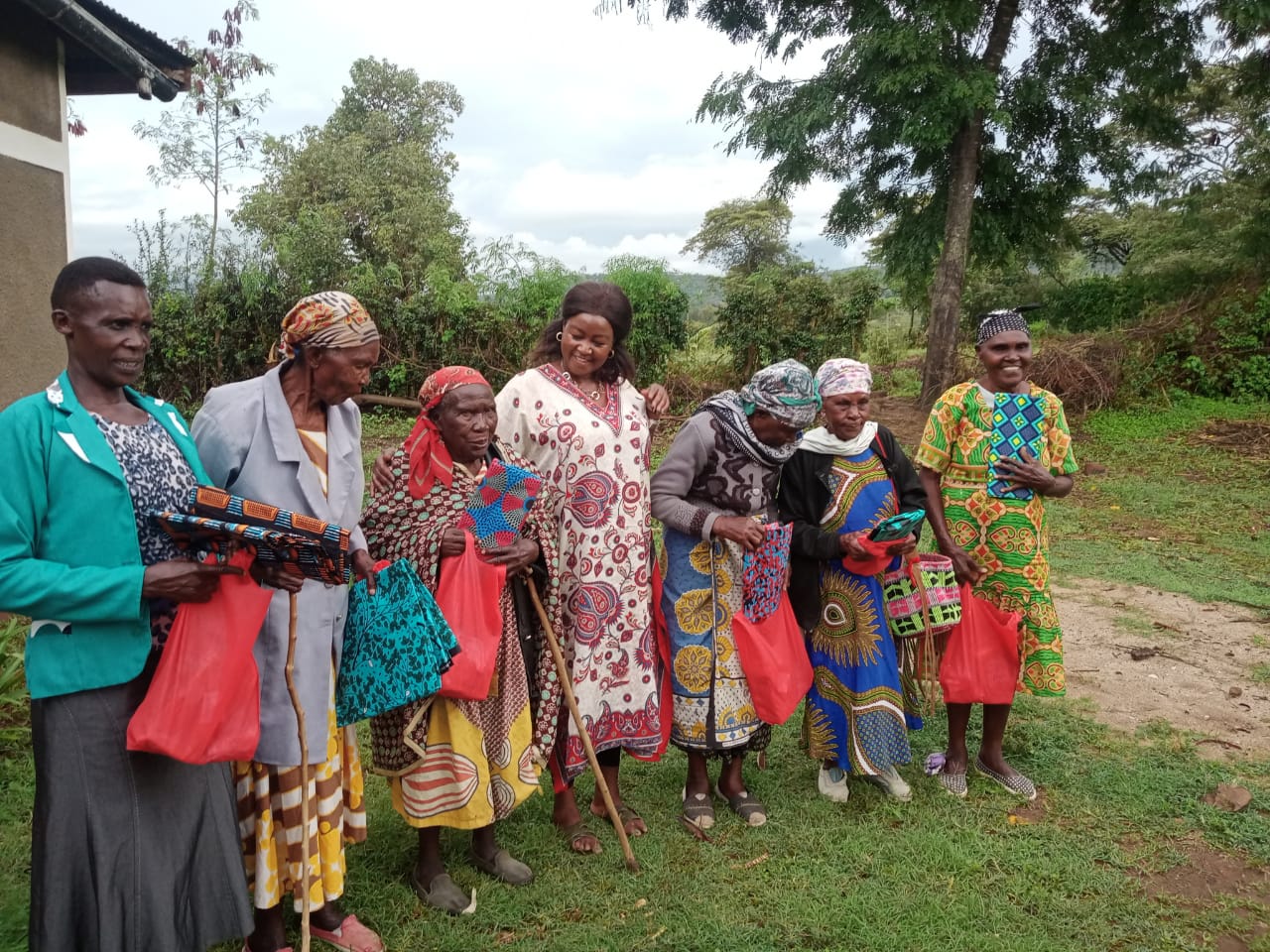
 Mary Ndunge (dressed in a flowered cream dress at the centre) with some of the elderly women she supports in Mango Village, Machakos/CHRISTABEL ADHIAMBO
In Mango village in Machakos County, old age often arrives quietly. It comes with aching bones, fading strength and the slow realisation that the people you once cared for may no longer be able to care for you.
For many elderly women here, survival depends not only on government stipends or family support but also on the kindness of neighbours who refuse to look away.
Across the paths of the Mango village live women whose lives tell stories of loss and quiet endurance.
Many raised large families, tilled land, fed communities and carried households through decades of hardship.
Now in their later years, some find themselves raising grandchildren again, struggling with illness and surviving on little more than faith and the goodwill of others.
For women like Wanza, Beatrice and Alice, daily life is a delicate balancing act between what they need and what they can access. Their stories also reveal something else: the powerful difference that a single act of compassion can make.
It is this gap between need and care that Mary, a local woman who grew up among them, noticed long before anyone thought of calling it an initiative.
A grandmother raising generations
Wanza sits quietly outside her modest home in Mango village, her voice carrying the weight of years that have not been easy.
A widow for more than three decades, she once raised ten children. None of them survived to grow old with her.
“After my children died, I was left with their children,” Wanza said.
She took in her grandchildren and did what she could to provide for them, despite having little of her own, but poverty soon became overwhelming.
At one point, faced with the impossible choice between feeding them all and keeping them together, she gave two grandchildren to an orphanage.
“To this day, I have never seen them again, and I don’t know what they look like,” Wanza said.
Years later, the responsibilities continued to multiply; two of the grandchildren she raised later had children of their own, leaving Wanza caring for yet another generation as the two eloped.
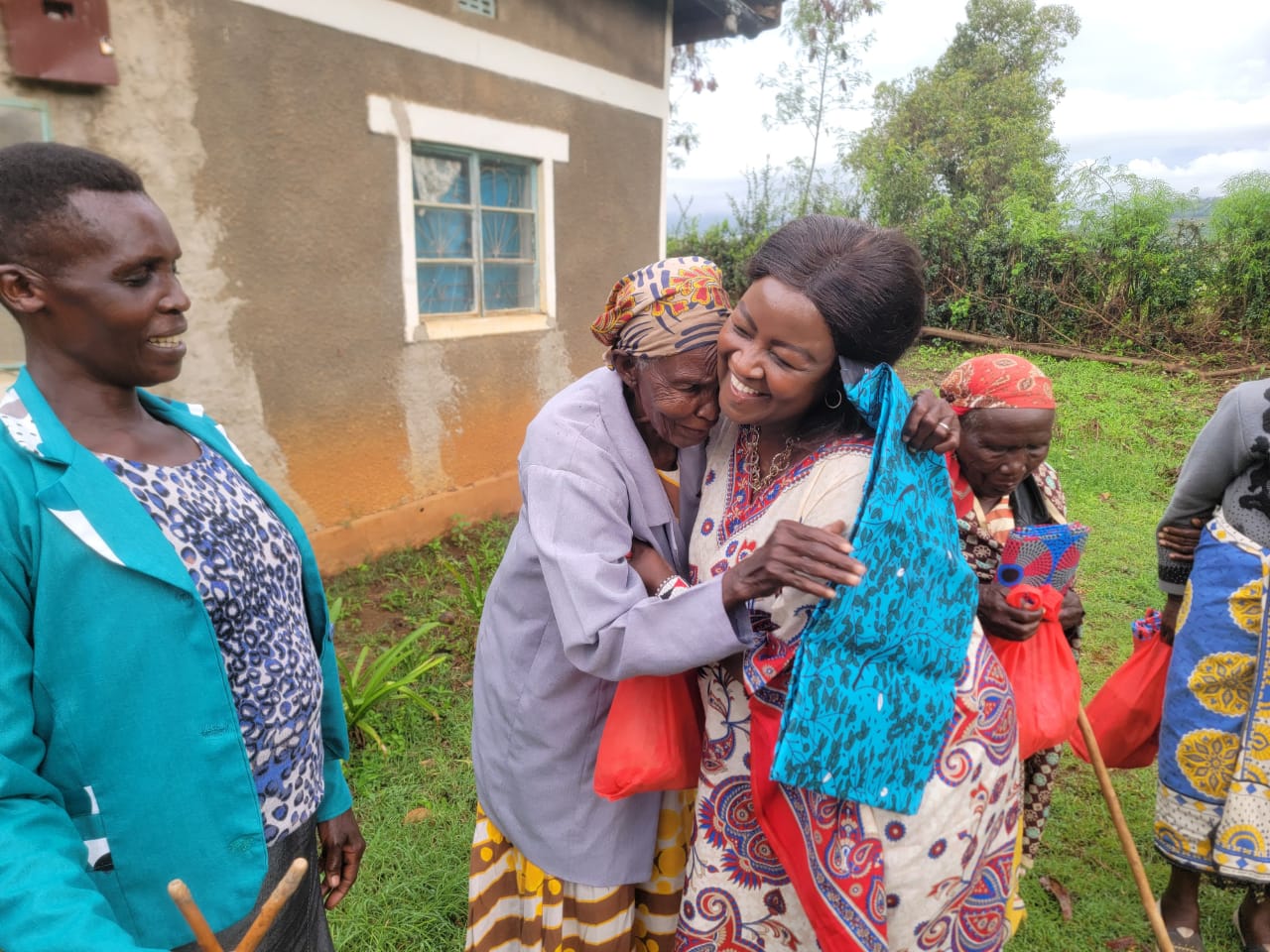 Mary Ndunge (dressed in a flowered cream dress) sharing a moment of laughter with some of the elderly women she supports in Mango Village, Machakos/CHRISTABEL ADHIAMBO
Now, her home shelters grandchildren and great-grandchildren.
One of the grandchildren managed to complete secondary school but has been unable to secure employment or further education.
Two others are still in high school, while two young great-grandchildren remain at home.
School fees remain the biggest challenge.
“My wish is just to see them go to school,” Wanza said. “If they can study, their lives can change.”
Wanza used to survive partly on the government’s cash transfer programme for older persons, which provides Sh2,000, but she says the amount is far from enough.
“There was a time we used to get Sh8,000, and it helped us so much,” Wanza said. “Now the Sh2,000 cannot do anything.”
Once the money is spent, she relies on small gestures from neighbours and well-wishers, but the uncertainty of that help means most days remain a struggle.
“Sometimes someone gives Sh100 or something small,” she said.
Selling land to keep children in school
A few feet away lives Beatrice, another elderly woman whose life mirrors many of the challenges facing older women in the village.
Born in 1942, Beatrice raised five sons, only one has job in Nairobi while others live in the village with their families with no reliable source of income.
Two of her sons lost their wives, leaving Beatrice caring for the grandchildren.
“Those children are now mine,” she said.
For years she also depended heavily on the government stipend before when it was Sh8,000 as the money helped her pay school fees, buy food and support the growing household.
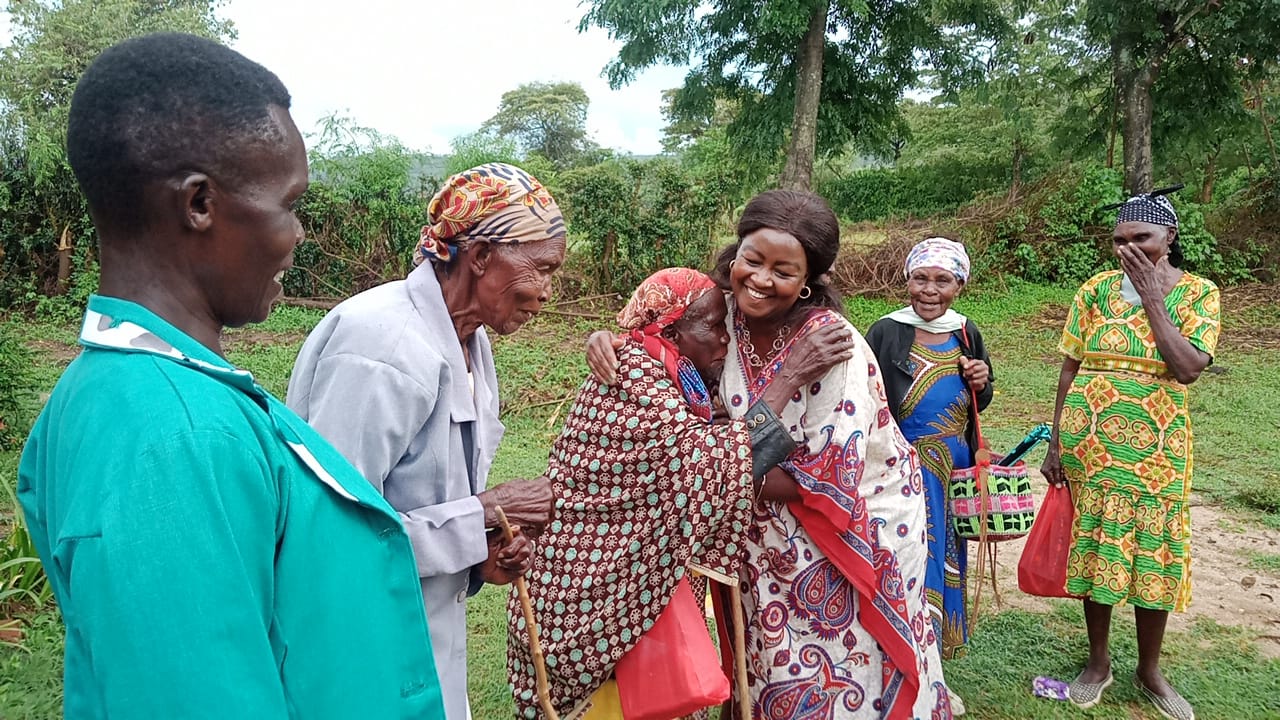 Mary Ndunge (dressed in a flowered cream dress) sharing a moment of laughter with some of the elderly women she supports in Mango Village, Machakos/CHRISTABEL ADHIAMBO
“I sold a piece of land so that the children could go to school,” Beatrice said.
Despite the struggles, she continues to prioritise feeding the children before herself.
“Most of the time when I cook, I let the children eat first,” she said.
Her biggest concern is the future of the young people around her; many, she says, have dropped out of school and are turning to drugs and idleness.
“The youth must go to school,” Beatrice said firmly. “Education is the only way their lives will change.”
Absent children
For Alice, ageing has meant confronting illness without support from her own children. Last year, she lost her sight completely.
“I could not see anything,” she recalled.
It was not her children who took her to the hospital but a distant relative who brought her to the Lions Eye Clinic.
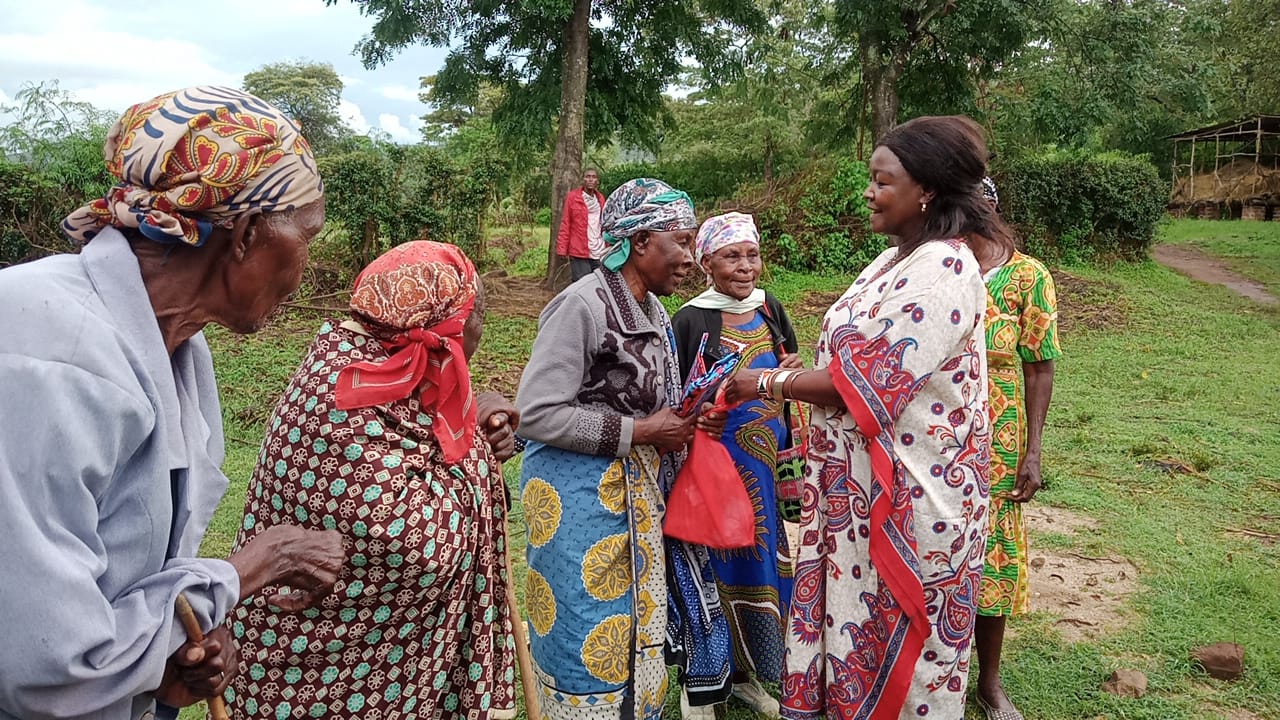 Mary Ndunge (dressed in a flowered cream dress) sharing a moment with some of the elderly women she supports in Mango Village, Machakos/CHRISTABEL ADHIAMBO
After treatment she regained her vision. Now she is able to see again, but life remains fragile. She too depends on the government stipend but says the amount barely covers basic needs.
“There was a time we were getting Sh8,000 and it was very helpful,” Alice said.
She remembers using that money to buy a bed and improve her living conditions, now, she says, the Sh2,000 hardly stretches far enough.
“We need seeds to plant, we need people to help us till the land because we are no longer strong,” she said.
Even small things such as clothes for church have become difficult to afford.
Her message to younger people is simple. “They must take care of their parents and they must work,” Alice said.
The woman who noticed
As the world marks International Women’s Day, conversations often focus on leadership, empowerment and opportunity. Yet in places like Mango village in Machakos County, the day also shines a light on quieter acts of courage and compassion that rarely make headlines.
Here, empowerment is not always about boardrooms or policy rooms but about women stepping in where systems fall short, ensuring that elderly mothers and grandmothers are not left to face old age alone.
It is within this spirit of care and responsibility that Mary Ndunge, a hay farmer, decided to act because for her these women are not statistics or distant stories. They are people she has known all her life.
“I grew up seeing them; they were in our church, and I watched them as I was growing up,” Mary said.
Over the years, she noticed something troubling: many of the elderly women in the village were living in quiet hardship.
Their children were struggling or absent, some had died, others had simply moved away thus, most of the elderly women were left alone.
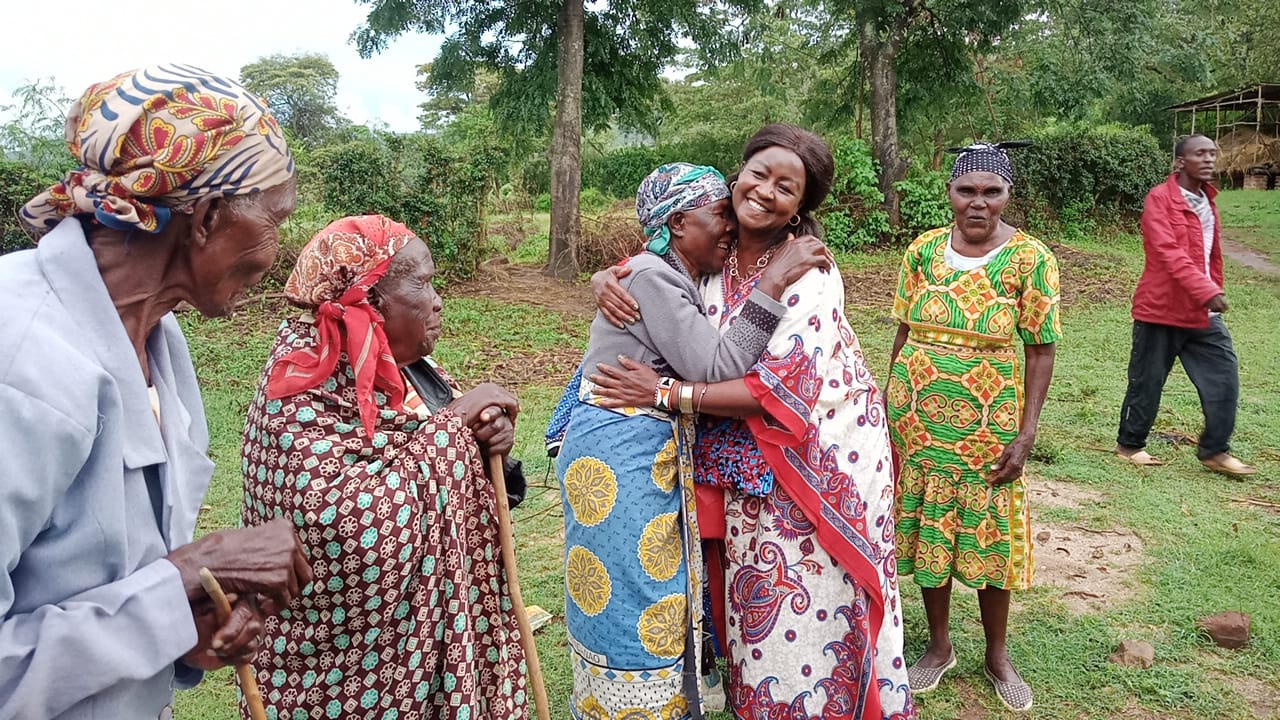 Mary Ndunge (dressed in a flowered cream dress) sharing a moment of laughter with some of the elderly women she supports in Mango Village, Machakos/CHRISTABEL ADHIAMBO
Her involvement began informally in the late 1980s when she started helping neighbours occasionally, but the initiative became more structured around 2015.
Since then, she has been supporting between eight and ten elderly women in the village entirely from her own pocket.
“I get them the basic needs whenever I can, it includes food and clothings,” she said.
The support may come every three months with no fixed budget depending on her finances.
During those visits she gathers the women, listens to their concerns and offers encouragement.
Beyond the group meetings, she keeps track of their individual needs, she knows where each of them lives and regularly calls them to check how they are doing.
“Most of them have phones, so, I call them to do a follow up,” she said.
For many of the elderly women, that phone call has become a lifeline; Wanza describes Mary’s support in deeply personal terms saying “she is God’s sent”.
“Mary has helped us a lot, If I run out of essentials such as sugar or flour, she allows me to collect items from the local shop and pays,” she said.
Whenever Mary visits, she brings food, clothes or medicine; food includes packets of rice, beans, green grams, salt, sugar, salad, bread, tea leaves and maize flour.
Sometimes the supplies last for two weeks to a month before they run out, when that happens, the women are free to call Mary.
“We tell her what we need and she tries to help,” Wanza said.
But the needs remain larger than what one person can provide.
“She helps us very much, but if she could come every month it would be even better,” Wanza said.
Without that support, Beatrice says life would be far more difficult. When she cooks, the grandchildren gather and eat together, often using food Mary helped provide.
Still, she hopes for a future where elderly women do not have to depend entirely on individual goodwill.
A dream beyond charity
Mary knows that her efforts, though meaningful, are limited, saying her biggest challenge is finances
“Money is the main challenge, if I had more resources I could help many more people and maybe monthly,” she said.
Healthcare is another pressing issue, she says many elderly women are not registered under health insurance programmes thus, they fall sick, treatment becomes difficult to afford.
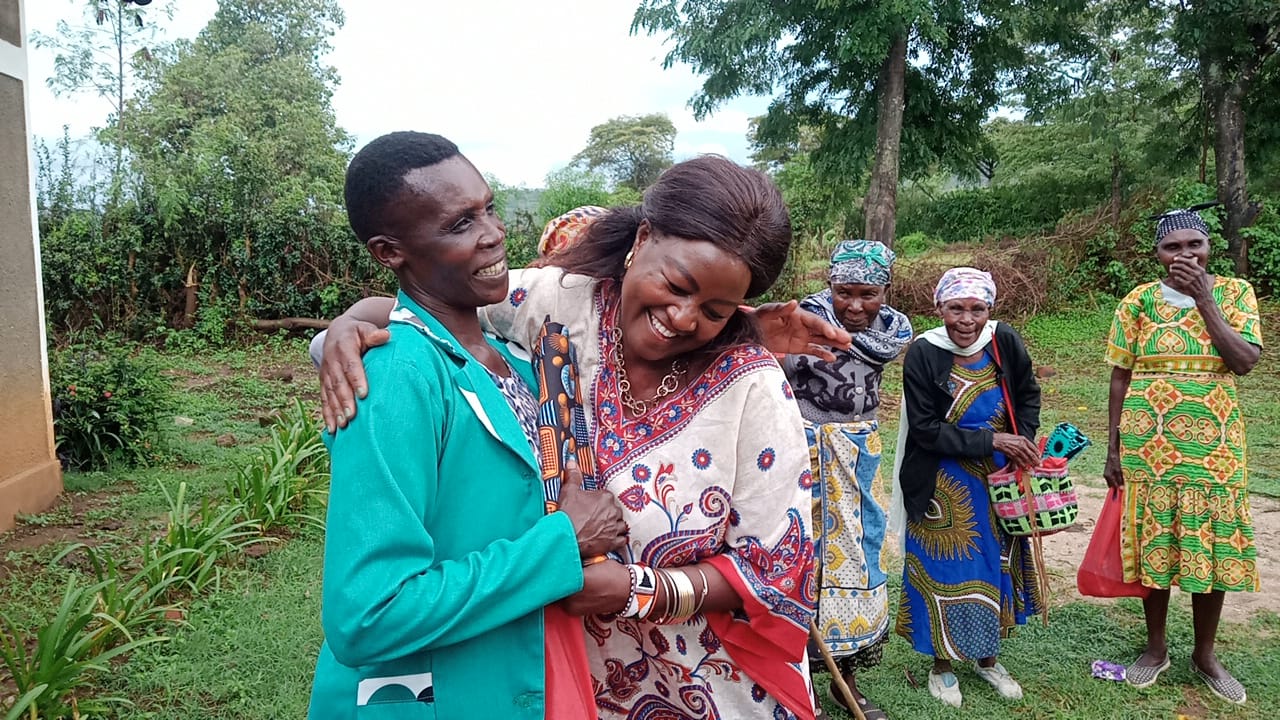 Mary Ndunge (dressed in a flowered cream dress) sharing a moment of laughter with some of the elderly women she supports in Mango Village, Machakos/CHRISTABEL ADHIAMBO
“If we had more funds we could pay for their health insurance,” Mary said.
She also worries about the way some families misuse the government stipend meant for elderly people.
“Sometimes the children go to collect the money and they do not give it to them,” she said.
“That means the elderly cannot decide how to use their own money.”
Her long-term vision is to create a more sustainable solution, she hopes to build a home for elderly people on land she already acquired in the village.
“My dream is to build an old people’s home where they can stay if they have no one to take care of them,” she said adding that the facility would include caregivers, nurses and staff who can cook and provide daily support.
For now, the dream remains on paper, she hopes that in the future donors might help bring the project to life.
Mary also hopes to start a foundation in honour of her parents saying that their influence shaped the values she lives by today.
“My father was a teacher and later a pastor, he managed a children’s home and my parents always helped people who had nowhere to stay,” she said.
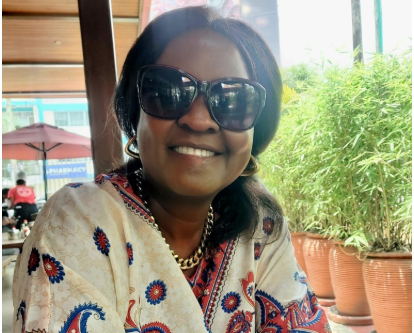 Mary Ndunge, a changemaker supporting elderly women in Mango Village, Machakos/ HANDOUT
Growing up, she often saw strangers living temporarily in their home.
“That is where I learned the heart of helping,” she said.
Her husband and son now support her efforts, while income from small-scale farming helps finance some of the assistance she provides.
“When they are happy and appreciating what I do, I feel satisfied,” Mary said.
As the world marks International Women’s Day, Mary says the celebration should go beyond recognition and translate into action for women who have carried communities on their shoulders for decades.
“To all women across the world, I want to wish them a happy International Women’s Day,” Mary said.
“A woman is a pillar of the family, of the community and of the universe. We hold families together and we must also take care of one another.”
She says women often understand the struggles of other women more deeply because they share similar life experiences.
“As women we understand each other’s problems. When we see someone suffering, especially an elderly woman, we should not ignore them,” she said firmly.
The experience of working closely with elderly women in Mango village has also shaped Mary’s vision for leadership. She says she hopes to serve as the Machakos Woman Representative in 2027, a position she believes would allow her to expand the support she currently provides to a much larger scale.
“My desire is to work for women across the whole county,” Mary said. “Right now I help a small group because that is what my resources allow, but if I get the opportunity to serve as the Woman Representative for Machakos, I would extend this support to many more women.”
Beyond Machakos
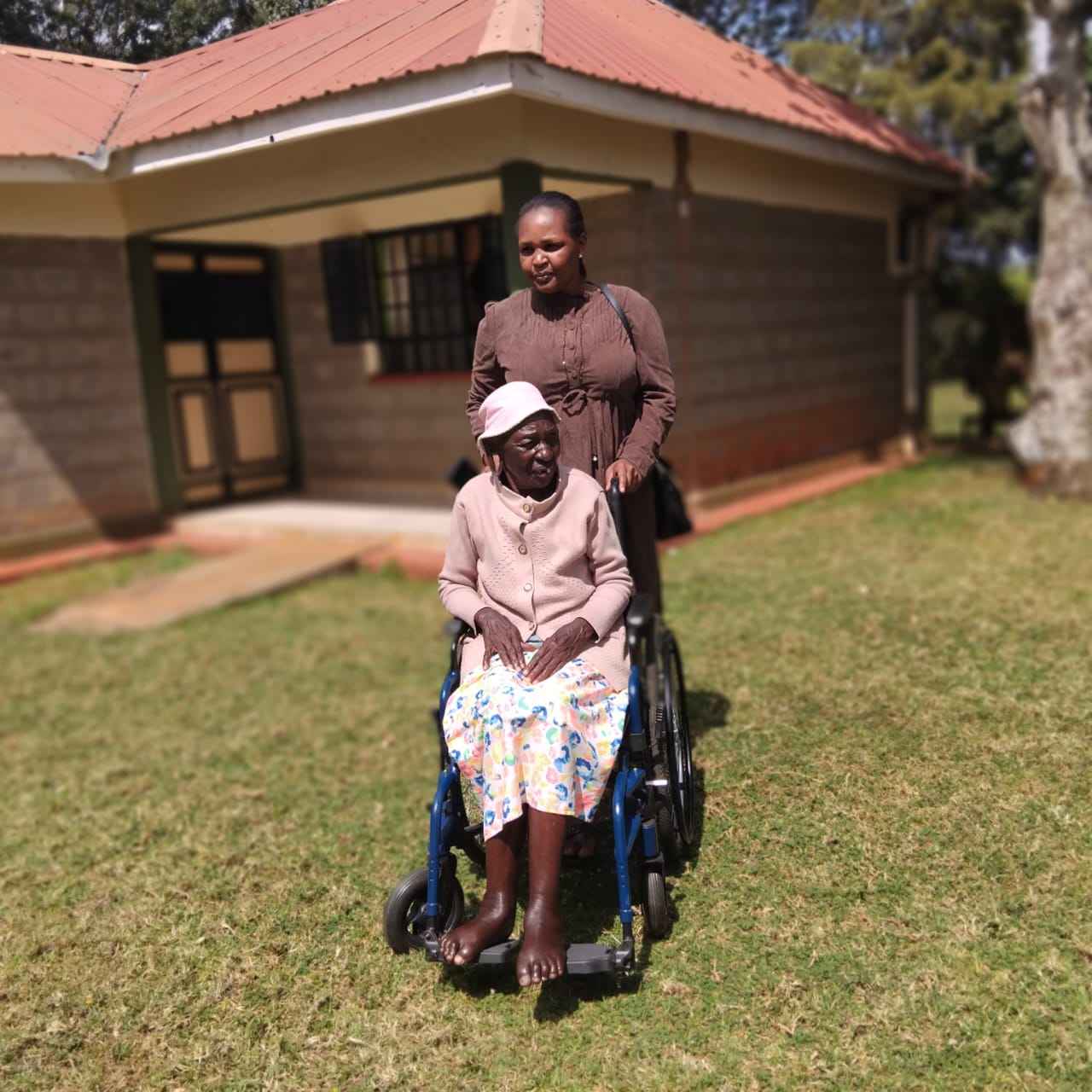 Everlyne Chepkosgei with an elderly woman she supports in Kitale, Trans Nzoia County/COURTESY
As we celebrate International Women's Day Mary is not the only woman leading to support the elderly. Hundreds of kilometres away in Kitale, another woman has been quietly responding to the challenges faced by elderly people.
For Evelyne Chepkosgei, the journey began with personal loss, her son, who lived with hydrocephalus, died at the age of 15.
“That changed my life,” Evelyne said.
After his death, she took in her grandmother and started caring for her at home, through that experience she discovered how demanding elderly care can be.
“The elderly needs more help than we assume,” she said.
They need assistance with movement, hygiene and daily routines adding that they also need emotional support as they adjust to losing abilities they once had.
“Some feel embarrassed when they cannot do things they used to do on their own,” Evelyne said.
Her awareness deepened when she observed how some elderly neighbours were being treated.
In one case, she watched family members carry an elderly woman outside each morning and leave her there all day.
She tried suggesting a wheelchair to improve the woman’s mobility, but the family refused, eventually the woman developed complications and died.
“That experience made me realise there was a gap in awareness,” Evelyne said.
She began visiting elderly people in the neighbourhood and teaching families how to care for them.
Restoring movement and dignity
One of Evelyne’s most important interventions involves providing mobility devices.
Through a partnership with BethanyKids Kenya under the mobility devices programme, she helps elderly people access wheelchairs, crutches and walking frames.
With about Sh5,000 she can acquire a device and transport it to someone in need where friends often contribute money to make the purchases possible.
“There are people who had not moved for a whole year. When they start walking again they are so happy,” she said adding that the moment someone receives a mobility device is often emotional.
Her work, she says, is driven by the desire to prevent elderly people from suffering in silence.
The hidden challenges of ageing
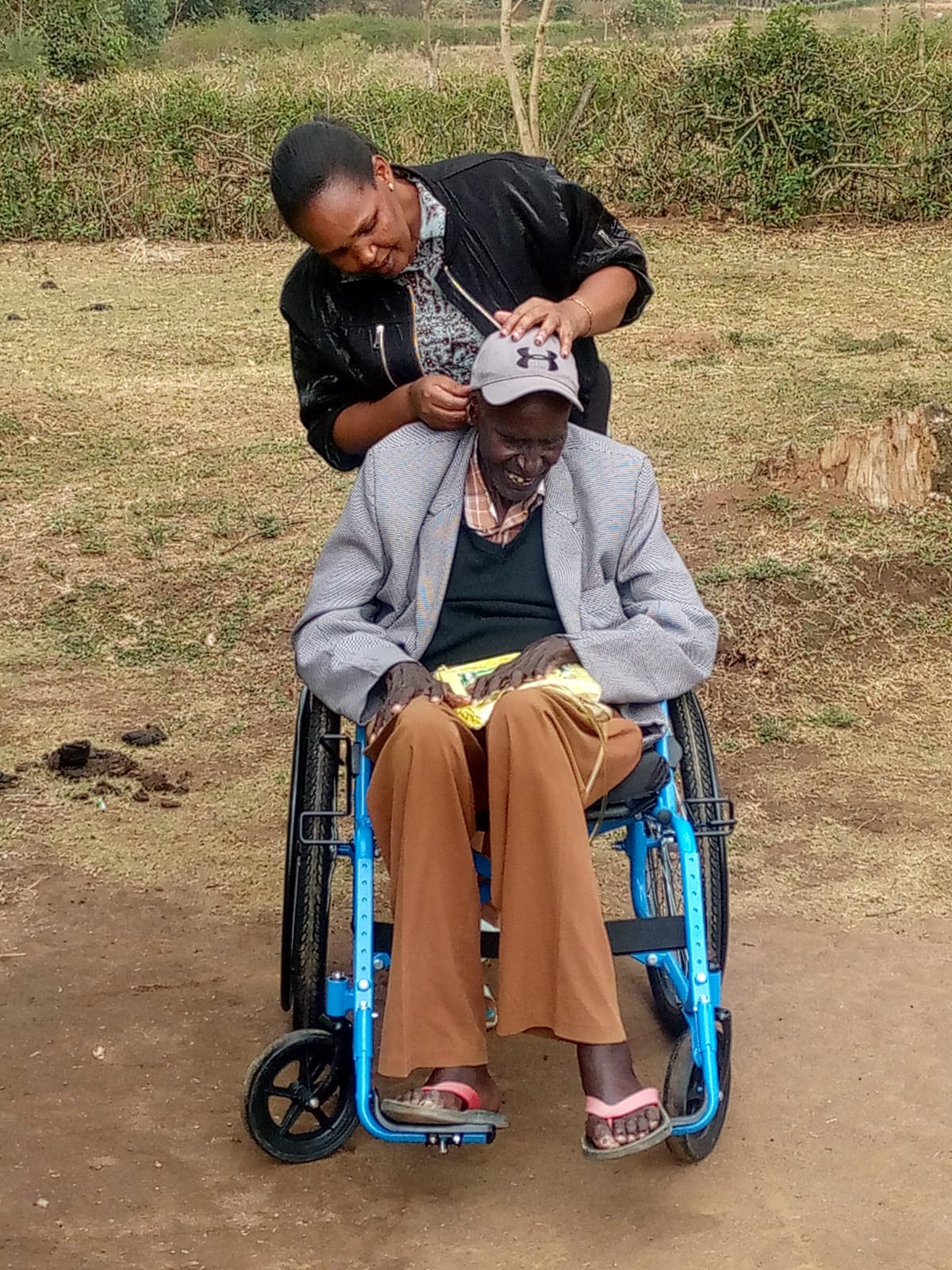 Everlyne Chepkosgei with an elderly man she supports in Kitale, Trans Nzoia County/COURTESY
Evelyne says many of the problems older people face remain invisible from basic hygiene, for instance, can become a serious challenge when mobility declines.
Adult diapers can make caregiving easier, but they are expensive saying that a packet costs about Sh750 and may only last three or four days.
Because many families cannot afford them, some elderly people avoid eating or drinking enough to reduce bathroom visits.
“They are afraid of troubling others,” Evelyne said warning that it can lead to infections and serious health problems.
When she can, Evelyne buys diapers using contributions from friends and distributes them to families and also teaches caregivers how to clean, feed and support elderly people respectfully.
Sometimes that means cooking meals for them or helping with bathing. “I have even cooked food and washed some of them,” she said.
Working alone
Unlike large organisations with funding and staff, Evelyne works mostly alone, although the initiative is not a full-time job as she does it for free.
She takes casual work and works with an organisations supporting persons with disabilities in Trans Nzoia to earn a living.
Over the past three years, she estimates she has supported more than 30 elderly people, though some have since passed away.
“Sometimes I receive referrals, but I cannot help because I do not have enough money,” Evelyne said.
Despite the limitation, she continues because the need is so visible.
Her dream is to one day establish a home where elderly people can receive proper care in one place.
“I want a place where they can live with dignity,” she said.
A call for compassion
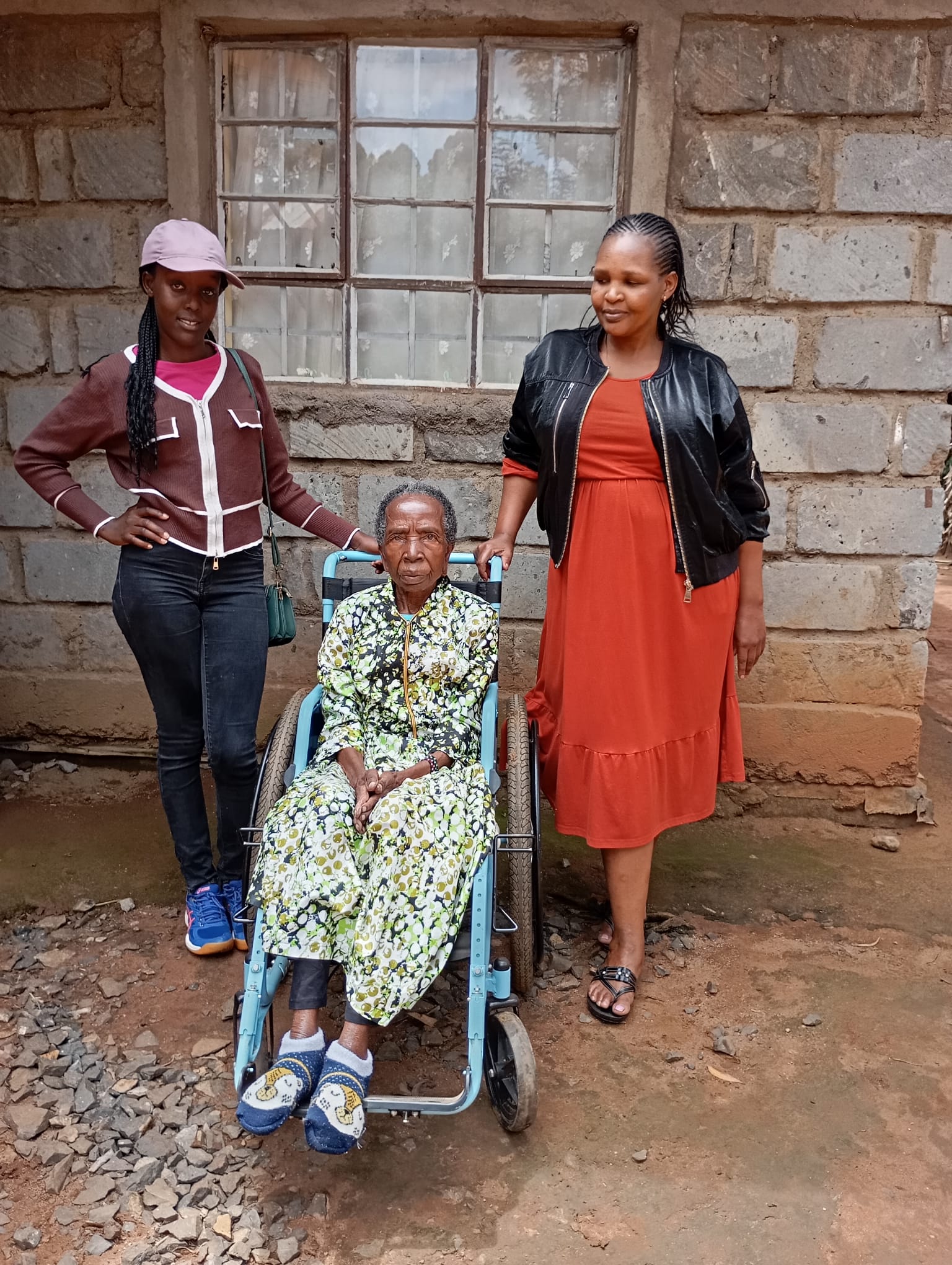 Everlyne Chepkosgei with a family she helps in teach how to care for their grandmother in Kitale, Trans Nzoia County/COURTESY
Both Mary and Evelyne believe caring for elderly people should not fall on a few individuals.
For Evelyne, International Women’s Day is also a moment to reflect on compassion and responsibility.
She believes younger women have a responsibility to look out for the elderly in their families and communities.
“These elders are the ones who gave birth to us and raised us. Now it is our turn to stand with them,” she urged.
Her work with elderly people and persons with disabilities, she says, is rooted in empathy and the belief that dignity should not disappear with age.
She hopes more people will step forward to support elderly people, whether through volunteering, donations or simply learning how to care for ageing relatives properly.
They say communities must recognise the value of older generations and ensure they live their final years with dignity.
Evelyne says awareness is key.
“Old age requires patience, understanding and love,” she said.
“Just the way awareness was raised for people with disabilities, we must do the same for the elderly.”
With proper care, she believes many elderly people could live far longer than they currently do.
“Living to 100 years is possible,” Evelyne said.