When Peter Fortune was in the final year of junior secondary school, his school toldhim it was time to choose a stream: science, arts or commerce.
He was drawn tomathematics and the practical, experimental side of science, but also loved writingand literature. He asked if he could combine physics, advanced mathematics and literature. Theanswer was simple: “That’s not how it works.”
By the next term, he was placed in the arts stream - where he could take literature andgeneral mathematics, but none of the advanced mathematics he had hoped for.
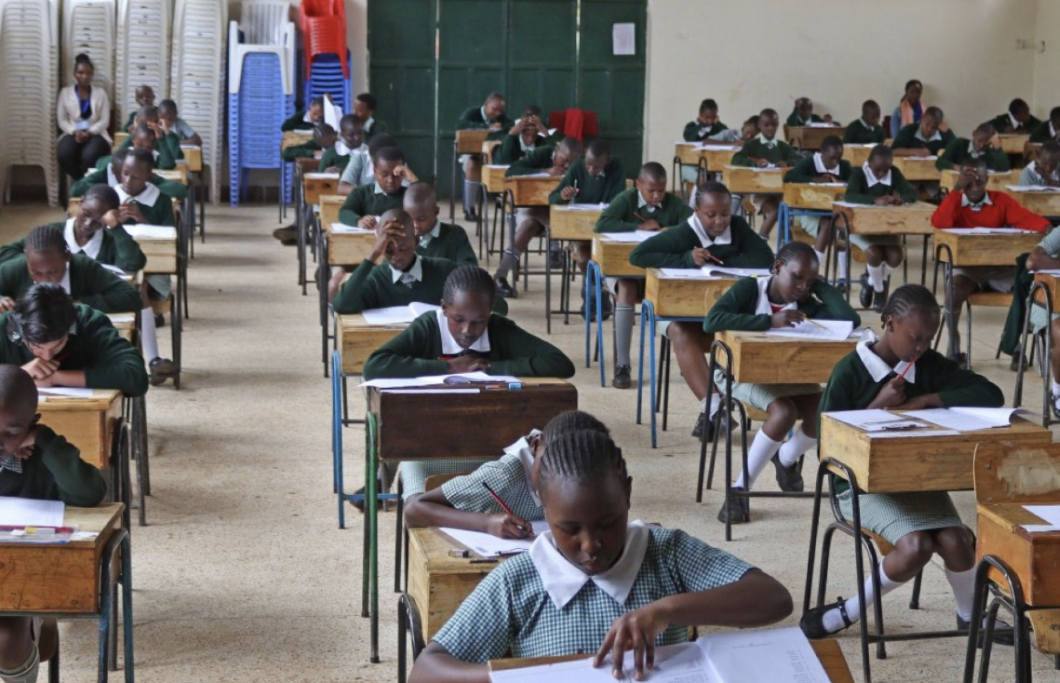
Peter’s experience is not unusual. It reflects a common practice in Kenya’s secondary schoolsknown as subject streaming - in this context, the assignment of students to a fixed curriculumtrack (science, arts or commerce) for their final three years of secondary school.
Streaming’s structure, rationale
In Kenya’s education system, subject streaming is a defining feature of senior secondary school.After completing the general curriculum during junior secondary school, students entersenior secondary school.
Beginning Grades 10-12, students must select a subject stream. Thisstreaming is based on a quick assessment of their interests, perceived intelligence and theavailability of teachers.
This decision shapes not only the subjects they will study for the next three years,but also their preparedness for, and success in, higher education.
The system is designed to alignstudents’ strengths and interests with university and career pathways, particularly in preparationfor the national senior school certification assessment administered by the Kenya NationalExaminations Council. To sit for KCSE, which remains the official Grade 12/Form 4 nationalexamination, students are required to take a total of seven subjects.
This includes four core,compulsory subjects and three elective subjects. They are chosen based on the student’spathway - STEM, Arts, Sports, or Social Sciences.
In theory, this curriculum differentiation promotes focus, efficiency and relevance.The logic is straightforward: specialisation should help students deepen expertise inareas most relevant to their intended careers, while enabling schools to manageresources such as teachers, labs and equipment.
However, this specialisation alsomeans students are exposed to a narrow set of subjects, with limited opportunity totake courses outside their chosen stream. The system also lacks both the linkagesand second-chance opportunities needed for students to move between streams,leaving many unprepared for university demands and careers beyond their assignedtrack.
Early subject streaming problematic
One of the core challenges with early subject streaming is that it narrows the rangeof skills students can develop. Science stream students typically gain depth inmathematics and sciences, but often have little exposure to the humanities, creativearts or social sciences.
Conversely, arts or commercial students may study literature,government, history or accounting, but have limited access to technical subjects. Inboth cases, students can miss out on skills that later prove essential for careers theydiscover after their initial placement.
For example, an arts student who decides to study economics, or one drawn to engineering, mayfind themselves underprepared for the academic demands of those fields, not because of ability,but because their secondary school pathway did not provide the necessary foundations.
Beyond these structural barriers, subject streaming can also entrench career mismatches andreinforce damaging social hierarchies. In many schools, the science stream is seen as the preserve of the “brightest” students, while arts and business streams are undervalued.
Thisperception shapes how teachers, peers and even students themselves view academic potential,sometimes with lasting effects on confidence and ambition.
Subject streaming is not unique to Kenya. International evidence shows that earlytracking based on ability or career pathway tends to deepen educational inequalities.
Several OECD countries, including Finland, Spain and Poland, have abolished earlyacademic tracking because research shows it depresses outcomes for lower-performing students, particularly those from low-income and racialised backgrounds,thereby reinforcing lifelong achievement gaps.
Likewise, in Australia, educationresearchers have raised concerns that streaming in mathematics can limit students’exposure to advanced mathematics, narrowing the pipeline into fields such asengineering and other STEM disciplines.
While these international experiences are instructive, research on the impact ofstreaming within Kenya’s education system remains limited. At institutions such as theUniversity of Nairobi, for instance, students with strong mathematics backgroundsfrom the 8-4-4 science track often perform better in econometrics and statistics dueto cumulative preparation.
Meanwhile, arts-track students may struggle in quantitative courses despite equal ability. Thepolicy question is clear: can Kenya design pathways that preserve depth without locking learnersinto early disadvantages?
Why does this matter?
The consequences of early subject streaming extend far beyond the classroom. By narrowingaccess to essential subjects and skills, the system limits individual students’ options and reducesthe breadth of talent available to Kenya’s universities and labour market.
In a global economy,where interdisciplinary knowledge is increasingly valuable, such structural barriers leavestudents ill-prepared for fields demanding both quantitative and analytical skills alongsidecreativity and communication.
The issue is also one of equity. When certain streams are seen as more prestigiousand others have limited access to high-demand subjects, existing social inequalitiesdeepen.
The goal is not to compel every student to take every subject, but to ensurethat all students can build a diverse knowledge base if they choose to, without beingnarrowed too early to a single stream.
Students from less privileged backgrounds,who may not have the resources to seek extra tutoring or switch streams, are mostlikely to be affected, reinforcing patterns of disadvantage.
Ultimately, the currentmodel risks undermining Kenya’s broader goals for inclusive education and humancapital development, together with STEM growth.
Way forward
Students should be allowed to take a diverse mix of courses across sciences,humanities and business studies during senior secondary school, rather than beinglocked into rigid tracks from senior secondary school. This approach would let themexplore different interests, build a wider knowledge base, and make more informedchoices about future studies or careers.
The point of specialisation should come atKCSE registration, when students decide which subjects to sit for based on the pathsthey want to pursue.
This model would give students freedom to combine, forexample, further mathematics with literature, or economics with physics, ensuringthat no doors are closed too early.
Ontario, Canada’s“destreaming” initiativedemonstrates how delaying streaming and widening access can reduce disparitiesand create more equitable outcomes.
Even with more flexible subject choice, all students should graduate with a baselinelevel of STEM literacy. This means embedding compulsory mathematics, scienceand digital skills modules across senior secondary school, while leaving electivesopen for students to combine according to their interests.
For instance, a studentmight choose literature or economics as electives but would still take a generalscience or technology course to build essential competencies.
Embedding practicalSTEM modules into the core curriculum, as seen in the United Arab Emirates, wouldensure that all students graduate with scientific and technological proficiencyrelevant across professions.
Reform should also be guided by data. In New Zealand, a 2023 review recommended nationalresearch on streaming’s prevalence and effects to inform policy change.
A similar evidence-firstapproach in Kenya would ensure reforms deliver meaningful, measurable improvements.Ultimately, reforming streaming is not about removing structure but redesigning it to servestudents’ ambitions rather than constrain them.
Ochieng is a development communication consultant, [email protected]