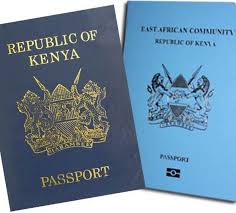
 A passport is concerned with foreign travel, rather than internal use /FILE
People have complained that giving Kenyan passports to dubious non-Kenyans is a betrayal of trust and bad for Kenya’s international reputation. That is no doubt true, but I have been struck by the limited focus on the constitution.
Some constitutions say nothing or very little about who is a citizen of the country, leaving it to the government and Parliament to make laws. But ours is very specific, and I argue that no one can be a Kenyan unless they fit within one of the categories in the constitution, and no one can (legally) get a Kenyan passport unless they are a Kenyan citizen.
But first, I want to unpack (or re-pack) some ideas.
Citizens of the world
People like to say this. When it comes to practicalities, it is not very meaningful. In fact, historically, citizenship of a particular country was less critical than it is now.
While most people never left their home areas (true of even the majority of humanity now I think) those who did could travel with less formality than would be required now. On the other hand, there was possibly less that one gained exclusively as a citizen at home. For example, you might not have voting rights even at home.
In the early 1960s, I learned that any Commonwealth citizens could enter the UK – something that modern Home Office civil servants seemed never to have learned, with the result that a large number of those people – the Windrush generation – were illegally deported. A great injustice.
At present there seems to be a greater emphasis on “us and them” and reaction against immigration – and insistence on people going back to where they “belong” - in many countries.
Citizenship and nationality
Citizenship has two sorts of connotations. Being a “good citizen” tends to mean being a contributing member of society, probably local.
But it also means having the nationality of a particular country. In fact, the Kenyan constitution uses both “nationality” and “citizenship”.
As a practical matter, it means having certain rights of which the most obvious is to live in the relevant country. Some countries will not extradite their citizens to other countries even if they are wanted for serious crimes. It may also mean having certain responsibilities – like perhaps a period in the national military or other public service.
Many countries now allow their citizens also to hold the nationality of other countries. But quite a number of countries do not allow dual (or more) nationality. Most of these are in Asia. Several are in Europe.
Allegiance
A key idea connected to citizenship is that of “allegiance” – loyalty and commitment to a particular country, which of course might be compromised if a person was a citizen of another country which had conflicting interests.
It has an emotional tone to it, but practically is significant if some legal consequences is attached to it. It’s not just supporting your national football team.
The phrase appears in the Kenyan constitution. Mostly it is in the context of the oath of allegiance taken by the president, the deputy and in the one oath taken by members of Parliament: “I will bear true allegiance”.
No one who “owes allegiance to a foreign state” can stand for president (Article 137(2)(a). This will mean holding another nationality or having sworn an oath (maybe as a MP or member of a foreign military) to another state. It is not quite clear why this archaic expression is used for presidential candidates but otherwise, “A State officer or a member of the defence forces shall not hold dual citizenship” (Article 78(2)).
What is a passport?
A passport is concerned with foreign travel, rather than internal use. For millennia, governments have issued documents to prominent citizens authenticating them and asking foreign countries to treat them well. Even now, when almost anyone needs a passport when travelling abroad, my British and Kenyan passports both - in the name of the monarch or the president - “request and require … all those whom it may concern to allow the bearer to pass freely without let or hindrance, and to afford the bearer such assistance and protection as may be necessary”.
Occasionally, countries have issued passports to people but not citizenship – usually for financial benefits. Other countries offer citizenship on a discretionary basis to people who do not meet the usual criteria because of their special merits.
Kenya
In Kenya two things are clear: for a foreigner to become a citizen they must satisfy certain very specific, constitutional requirements and probably requirements laid down in an Act of Parliament.
Other than people who are entitled because they are married to a citizen (for at least seven years) the route to citizenship involves residence (lawfully) in Kenya for seven years, including continuously for 12 months before applying, knowledge of Kenya, speaking Kiswahili or another local language (so not English), intending to remain in the country and being able to make a contribution to Kenyan national development.
No one, however exalted, has the power to grant citizenship on the basis of discretion or whim or even what they consider special merit or benefit to Kenya.
Secondly, passports (and ID cards) follow citizenship. No citizenship, no document. And if someone who was a foreigner applies for a passport, they must produce their certificate of registration as a citizen. Passports and IDs do not grant citizenship. They are evidence of citizenship, obviously, but not, as lawyers say, conclusive or irrefutable evidence.
Special rights and obligations of citizens
Under the constitution, citizens have a few rights denied to others. Most rights under the Bill of Rights are for “every person”. Only citizens have a constitutional right to access to information (Article 35), to vote or join or campaign for a political party (Article 38), to enter Kenya (Article 40), as well as getting passports or other such documents (Article 12). Only a citizen can hold freehold land or land on a lease for longer than 99 years (Article 65).
There are very few obligations that apply only to citizens – none under the Constitution. But only a person who owes “allegiance to the Republic” can commit treason (section 40 of the Penal Code). That still carries a mandatory death penalty. Being a citizen is the most obvious way of “owing allegiance”.
However, even another person who does what would be treason can be convicted of “treasonable felony – though this carries only life imprisonment.
This raises a historical oddity. During the Second World War, William Joyce, an American nicknamed “Lord Haw-Haw” used to broadcast on German radio, trying to undermine the morale of the British. After the war, he was captured and found to be in possession of a British passport –obtained by fraud
On this basis, however, he was tried for treason – it as argued that that passport, however invalid, made him owe allegiance to the British Crown. He was convicted and hanged. Many lawyers viewed this as unjust because the “passport which he'd fraudulently obtained did not … involve any protection by the Crown and therefore no allegiance by William Joyce."
On the basis of this decision, however, foreigners with Kenyan passports to which they are not entitled could be guilty of treason if they planned to overthrow the Kenyan government, assassinate the president or something similar – a purely academic issue of course.
A final thought, however: it is a mystery why any Kenyan would wish to grant favours to anyone connected with the Sudanese RSF. We knew them as the Janjaweed: identifying as Arabs and murdering countless Darfuris because they were “African”, and recently driving thousands into exile in Chad. And their treatment of non-Arab groups in Al Fasher – which they recently took - has been characterised by UN investigators as having the “hallmarks of genocide”.