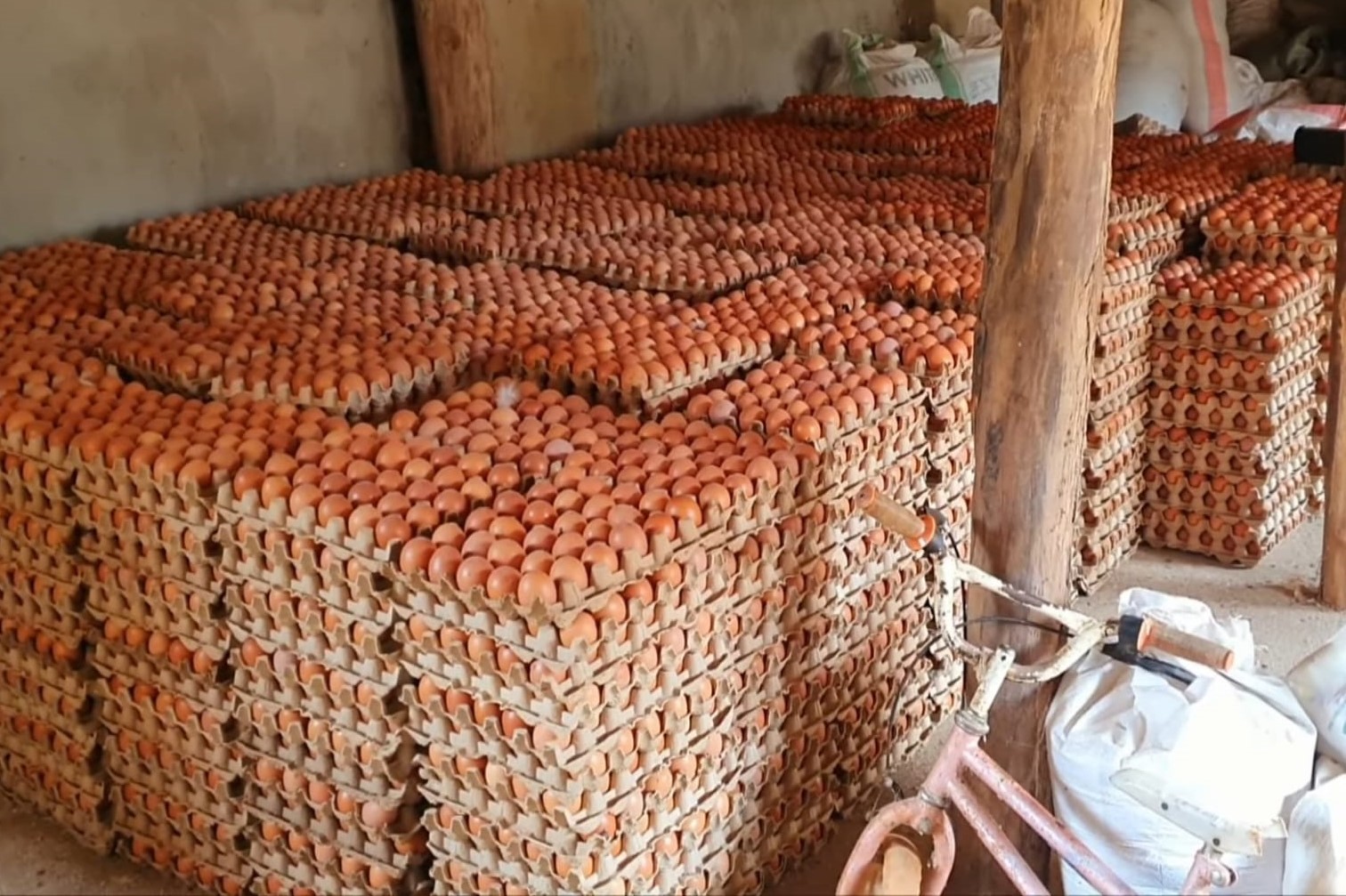
Residents of Murang’a are feeling the strain of rising egg prices, with traders attributing the high cost to low supply of eggs in the market.
A spot check by KNA in several shops and egg outlets within Murang’a town revealed that the price of eggs has gone up by more than 30 percent in the past few weeks.
A section of traders have attributed the increase to the high cost of poultry feeds, increased transport costs and reduced production due to cold weather occasioned by ongoing rains in the region.
At Murang’a town, an egg wholesaler Emma Wanjiru has noted that the price increase has forced her to adjust how she sells to retailers.
She notes that a tray of eggs that previously sold at Sh380 is now going for more than Sh450, a rise she attributes to higher production and supply costs from farmers.
Wanjiru explains that most of the farmers who supply her with eggs have been struggling with the rising cost of poultry feeds, which has significantly increased the cost of production.
According to her, the situation has made it difficult for wholesalers to maintain previous prices since they must also cover transport and handling costs.
“The price from farmers has gone up because feeds are very expensive, and egg production has reduced. Even transporting the eggs to Murang’a now costs more than before, so we have no choice but to increase the price,” said Wanjiru.
She added that the increase has slightly slowed the movement of eggs in the market, as some retailers are now buying smaller quantities compared to before.
Retailers are also struggling to keep up with the rising prices while trying not to lose customers.
Margret Waruguru, who runs a small retail shop in Mukuyu town, noted that the increase has greatly affected her business.
She explains that she is now buying eggs at almost the same price she used to sell them before the increase, forcing her to raise retail prices.
Waruguru remarked that the change has made customers more cautious with their spending, with many opting to buy fewer eggs than they previously did.
She notes that eggs are a common food item in many households, but the current price increase has made some families reconsider how often they buy them.
“Right now I am getting eggs from wholesalers at the same price I used to sell them as a retailer, so I have no option but to increase the price for customers,” stated Waruguru.
She added that despite the price increase, she tries to maintain fair pricing so that her regular customers can still afford the product.
The situation is also worrying small food vendors who rely heavily on eggs for their daily businesses.
Benson Irungu, a smokie–mayai vendor in Murang’a town, says eggs are a key ingredient in his business and any increase in their price directly affects his profits.
He notes that smokie–mayai vendors depend on a steady supply of affordable eggs to keep their businesses running.
Irungu said that although egg prices have gone up at the wholesale level, they have not yet increased the selling price to customers.
However, He warned that if the trend continues, they may have no choice but to adjust their prices.
“We are still selling eggs at the usual price of Sh30 per egg, but if the wholesale prices keep going up like this, we might have to increase the price because it will be difficult for us to sustain the business,” said Irungu.
He observed that many of his customers are students and workers who rely on smokie–mayai as an affordable meal, meaning any price increase could also affect sales.
Farmers and traders argued the current cold season has also contributed to the situation, as chickens tend to lay fewer eggs during colder weather, reducing supply in the market.