As the sun sets in, people in the radiant Nairobi Central business district (CBD), move swiftly towards the various bus stations with the urge to get home to rest for a new day, or rather, at least in the case of many, that is how it goes.
There is an eerie silence in the public transport commonly known as 'matatu' which can penetrate iron.
Silent thoughts are the only signs you see from people's faces. When the matatu hits a pothole everyone looks irritated but not a word is uttered.
"I thought the president said he is working on the roads," says the tout who just got up from picking his coins.
"With what money? People do not want to support the idea of things like privatisation," says a middle aged lady dressed sharply, seated at the front of the matatu. Then silence looms again everyone deeply lost in thought.
“What is this privatisation and how is it supposed to build roads?” is the question in most people's lips.
Privatisation which is the transfer of ownership, properties or business operations from the public sector to the private sector aims to increase economic efficiency reduce government debt and introduce competition.
Privatisation has become one of the most debated on, economic policies in the modern era reshaping how governments deliver services.
This process which realigns incentives by linking investments directly to residual returns promotes innovation, efficiency and reduces public spending.
The changing of state departments to private sectors has gone a long way from education, health, infrastructure to business sectors all over the country.
Infrastructure remains a top priority in Kenya’s development strategy and Public - Private Partnerships (PPPs) have become instrumental in delivering key projects.
The Standard Gauge Railway (SGR), a flagship infrastructure project, showcases this dynamic.
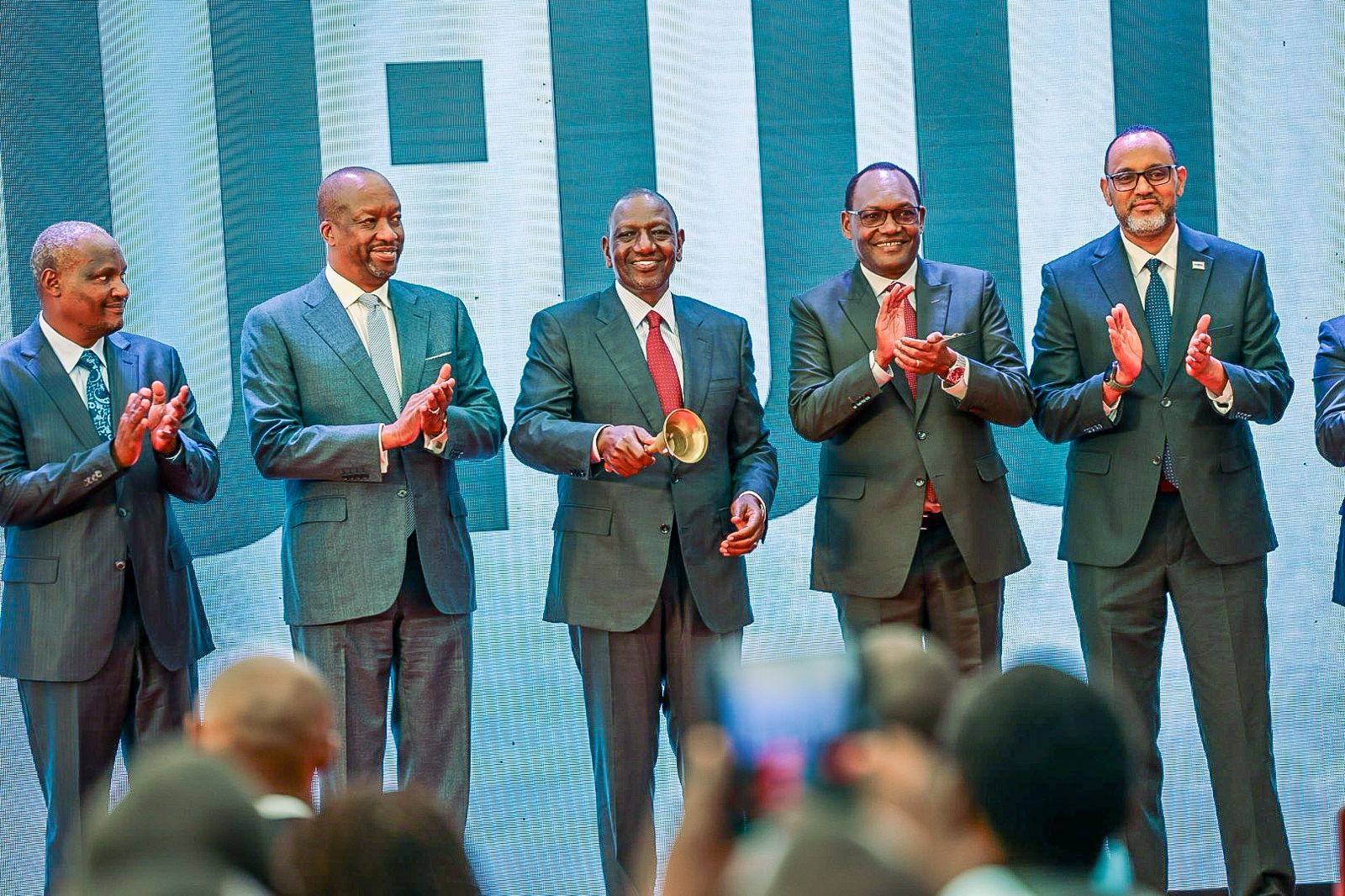
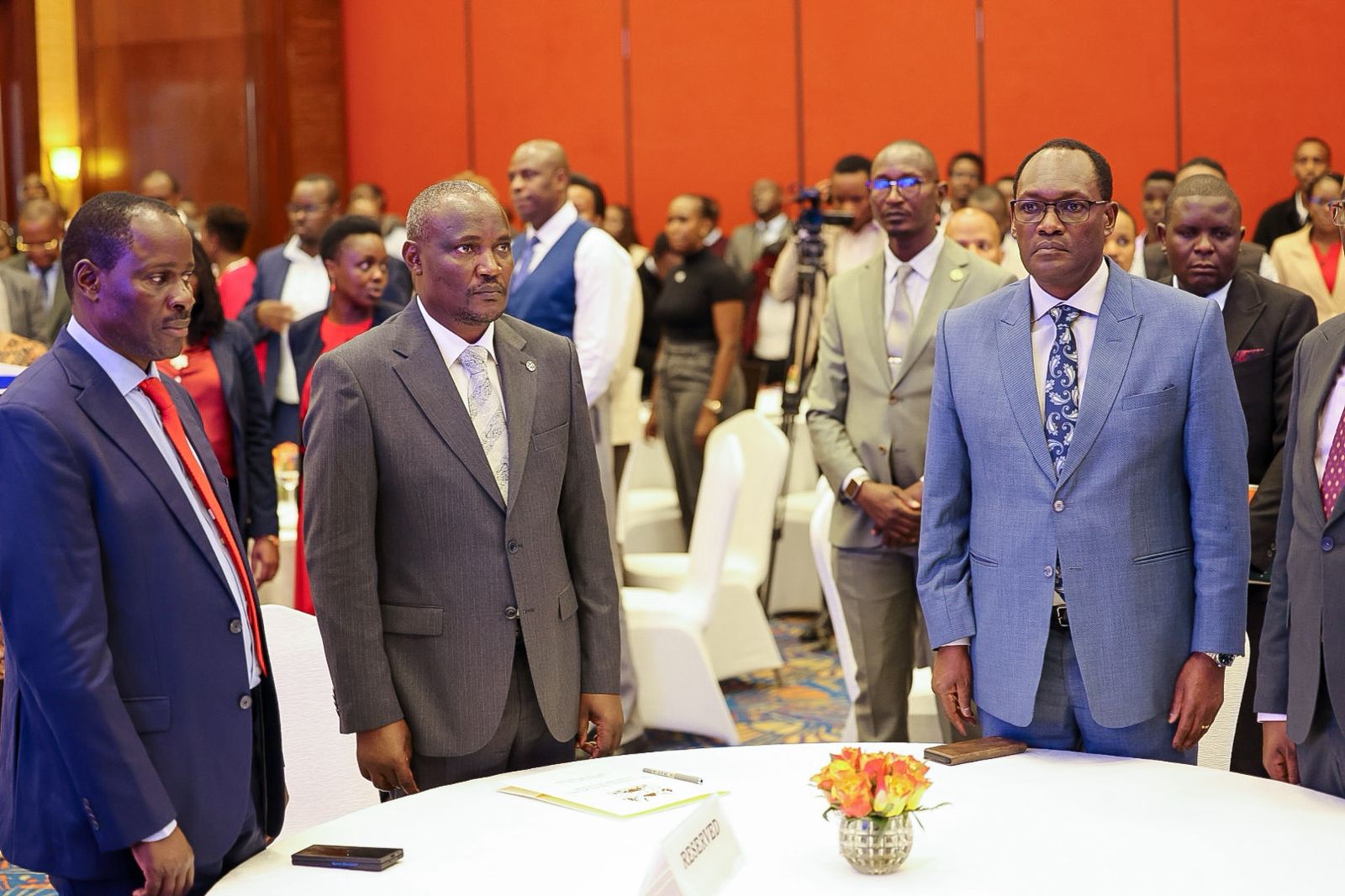 The National Treasury Cabinet Secretary, John Mbadi (centre) accompanied by PSs
Cyrell Waguda State Department for Public Investment and Asset Management (left)
and Dr. Chris Kiptoo PS National Treasury during the Kenya pipeline corporation KPC
initial public offer IPO results at Serena hotel, Nairobi/COURTESY
The National Treasury Cabinet Secretary, John Mbadi (centre) accompanied by PSs
Cyrell Waguda State Department for Public Investment and Asset Management (left)
and Dr. Chris Kiptoo PS National Treasury during the Kenya pipeline corporation KPC
initial public offer IPO results at Serena hotel, Nairobi/COURTESY
While initially developed with significant government and Chinese financing, recent phases have seen the government encouraging private sector participation in operations and maintenance.
For instance, the Kenya Railways Corporation is exploring partnerships with private firms to enhance service efficiency and customer experience, ensuring that SGR remains a backbone for regional trade and connectivity.
In road infrastructure, the Kenya Kwanza government is actively engaging private concessionaires through Build-Operate-Transfer (BOT) models.
The ongoing Nairobi Expressway project, constructed and operated by a private consortium, exemplifies how PPPs can reduce traffic congestion and improve urban mobility.
This project is expected to significantly cut travel times and boost productivity for millions of commuters.
Following the enactment of the privatisation Act 2025, the Kenyan government cleared the sale of 11 state owned corporations.
These entities scheduled for privatisation include Kenya Pipeline Company (KPC), Kenyatta International Convention Centre (KICC), National Oil Corporation of Kenya (NOCK), Kenya Seed Company Limited (KSC), Kenya Literature Bureau (KLB), New Kenya Cooperative Creameries (New KCC), Rivatex East Africa Limited, Numerical Machining Complex, Kenya Vehicle Manufacturers Limited (KVM), Mwea Rice Mills and Western Kenya Rice Mills Limited.
These state corporations being set for privatisation means the government has a bigger plan for the funds being generated from the process once the shares have been sold.
These actions are part of a broader strategy to divest from non-strategic to income building and funds saving public enterprises.
A company like Safaricom started as a government linked company and in 2000, South Africa's Vodafone acquired 40 percent stake.
In 2008, the government sold 25 percent of the company ownership through an initial public offering (IPO) listing the company on the Nairobi Securities Exchange.
Since that IPO Safaricom has operated as a largely privately owned publicly traded company.
This move made Safaricom grow over the years bringing in a lot of income which enabled the company to open different foundations and employ thousands of Kenyans.
In his last week’s weekly press briefing, the Government Spokesperson Dr. Isaac Mwaura addressed recent developments regarding the Jomo Kenyatta International Airport (JKIA) upgrade.
He clarified that the public-private partnership (PPP) deal with the Adani Group had been formally terminated, a fact that was confirmed by the Kenya Airports Authority in court on February 24, 2026.
“The government is now moving forward with a sovereign, integrated master plan for JKIA. This comprehensive plan includes the construction of a new passenger terminal, a second runway, airfield expansion and the development of an airport city.
Construction is set to commence within the year, with the entire project under full government oversight,” the government Spokesperson explained.
The Kenya Pipeline Company (KPC) has been the recent State Agency to be privatised out of the other entities with the government offering 65 percent stake of its shares to trade as Initial Public Offering costing 11.81 billion that kicked off on January 19,2026 and closed on February 24, 2026 going for Kshs.9 per share with a minimum of 100 shares on offer.
The National Treasury and Economic Planning Cabinet Secretary John Mbadi says the government will retain Kshs.6.36 billion which accounts for 35 percent of the shares.
This highlights what the Bottom - up Economic Transformation Agenda (BETA) is all about. Giving a chance for those at the bottom to rise up through inclusivity as President William Ruto strives to fulfil his agenda.
The
privatization of KPC will come with positive impacts on the infrastructure
sector in terms of roads, transport, energy, industries, manufacturing, sea
ports and airports developing the sector.
Privatisation has benefits to the market which is the prime reason the government embraces the process as it will grow funds needed in Kenya's market to elevate all sectors and projects.
The privatization of KPC further highlights how the program will boost investor confidence amongst other great impacts which will offer strong and honest platforms to raise long term funds. This aligns well with the BETA plan as it aims to shift economic impact from the state to the public while still aiming for a broad based growth.
Hilda Ng’etich works at the Office of Government Spokesperson.