
What has in the past been dismissed as an individual’s failure now turns out to be a national development and public health emergency that demands urgent and collective action.
The scale and spread of substance abuse show that it is no longer confined to specific communities or lifestyles, but has become deeply embedded in everyday life across the nation.
From the informal settlements in Nairobi to rural villages across the country, addiction has tightened its grip on millions of young Kenyans.
Alcohol and drug abuse remains one of the major challenges affecting the youth in the country.
Its growing prevalence signals a systemic challenge, one that reflects broader social and economic pressures and calls for a response that goes beyond individual blame to a shared national responsibility.
Alcohol remains the most commonly abused substance, often introduced during adolescence and sometimes as early as during primary school age. For many, experimentation quickly turns into dependency.
In his new year’s speech President William Ruto observed that one in every six Kenyans aged between 15 and 65 is addicted to at least one drug or substance of abuse.
This might sound like a normal issue, he warned, but in real sense, it is something that needs immediate intervention to curb the deadly crisis.
The cause is because most of the hapless youth simply have the pressure of fitting into their peer lifestyles.
The consequences are visible everywhere; cases of broken families are many, school dropouts have increased, cases of crime, mental health disorders, unemployment and preventable deaths have also surged.” the Head of State regretted as he immediately ordered for composition of a Special Multi-Agency Taskforce to immediately embark on a war against the drug sellers and users as well to have the illegal trade wiped out of the country.
An update from the Ministry of Interior and National Administration indicates that the government has since, recorded measurable progress in dismantling narcotics networks and strengthening national response systems.
Through NACADA, the update reveals, enforcement and facilitated Major Intelligence-Led crackdowns have been carried out in Nandi, Makueni, Murang’a, Kisumu, Mombasa, Nairobi and Kirinyaga Counties while awaiting activation of the Special Command Team as per the Presidential directive.
A total of 4,035 boxes of Illicit alcohol and 69 kilograms of Cannabis Sativa have been confiscated so far and the operation continues.
The public is now aware of the crackdowns and helping by providing feedback and sharing information on the whereabouts of perpetrators of illicit trade in their localities.
The Cabinet Secretary for Interior and National Administration Mr. Kipchumba Murkomen early in January this year reached out to all county government seeking their support by availing rehabilitation services as part of the drugs demand reduction.
The Ministry’s update shows that eight counties have responded positively and provided suitable parcel of land for construction of rehabilitation facilities in collaboration with NACADA among them; Vihiga, Tharaka Nithi, Kitui, Mombasa, Murang’a, Embu, Siaya and Elgeyo Marakwet.
The government has consequently through the office of the Principal Secretary for Internal Security and National Administration instructed NACADA to immediately engage the State Department for Housing and Urban Development and develop a model county rehabilitation facility ideal for all forms of therapy.
The NACADA is in addition, facilitating a Multi-Agency led review of the Narcotic Drugs and Psychotropic Substances (Control) and the National Authority for the Campaign Against Alcohol and Drug Abuse Acts and has come up with crosscutting proposals to strengthen the laws.
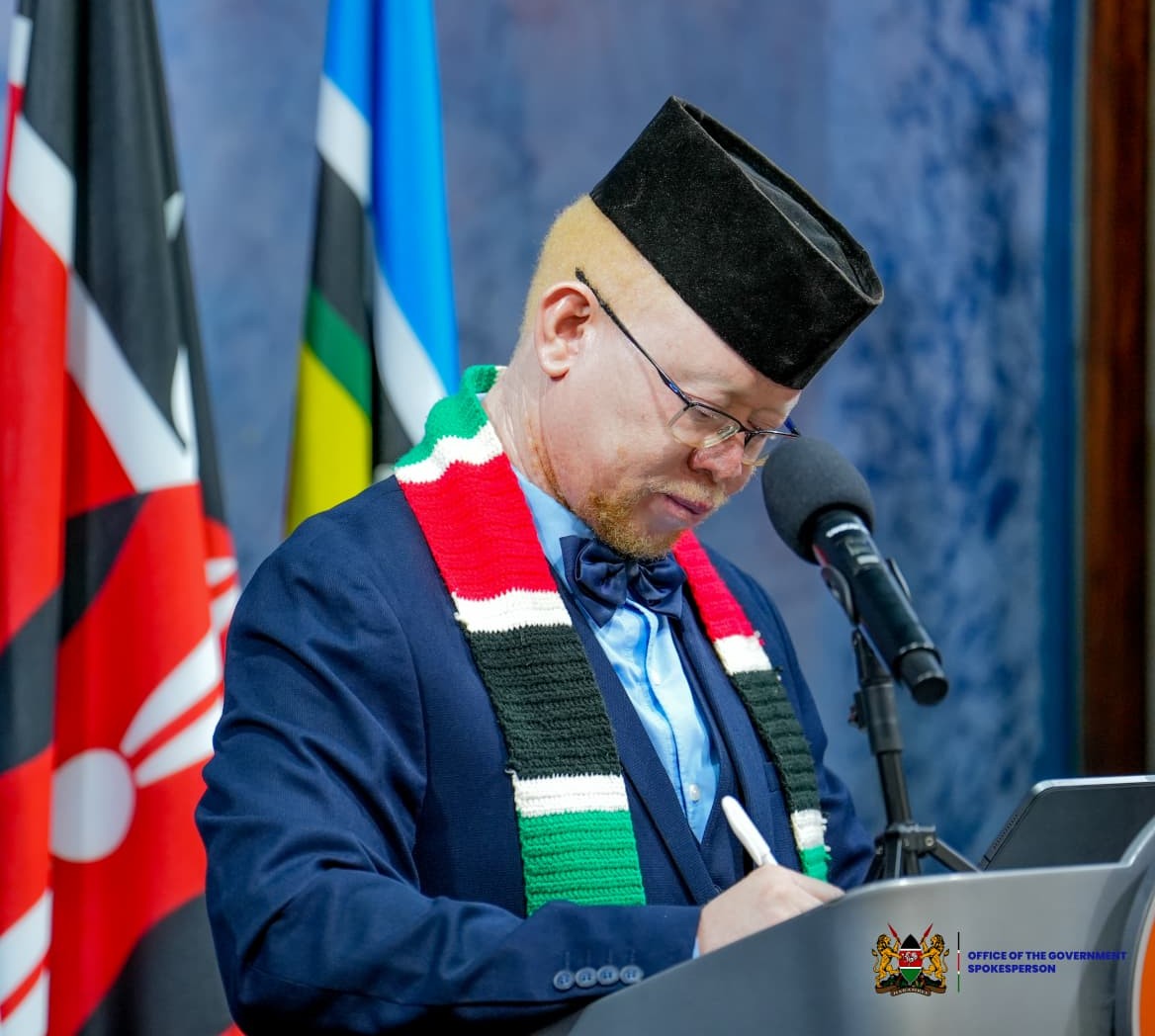
Government Spokesperson Dr. Isaac Mwaura observes that the coordinated enforcement efforts have helped in the interception and destruction of illicit drugs valued at more than KShs8.2 billion, disrupting international trafficking corridors and reinforcing national security.
Dr. Mwaura adds that to sustain the war, the Anti-Narcotics Unit has been strengthened and expanded to 700 specialised officers, while enhanced forensic and field capabilities including advanced drug testing kits secured through international collaboration have strengthened evidential standards and operational precision.”
He further explains that the government has shut down illegal online distribution channels, launched a nationwide crackdown on unlicensed pharmaceutical outlets and initiated reforms toward establishment of dedicated drug courts to fast-track prosecution of high-level traffickers.
The substance use disorder treatment is now covered under the national healthcare financing framework and complementary TVET scholarship programmes are supporting individuals in recovery to regain dignity through skills development and economic empowerment, Dr. Mwaura adds.
“The government is through the supervision of President Ruto, establishing 30 football academies and developing 22 modern stadia across the country.
The initiative aims to nurture young talent and position Kenya as a regional powerhouse in football and sports development. We encourage our youth to use these facilities in some useful gainful activities instead of engaging in drug and alcohol abuse,” the Government Spokesperson advises.
I the author of this article happens to be one of the majority Kenyans perturbed by this unfortunate kind of a lifestyle to the Kenyan youth.
In my view, this crisis is no longer just a social concern confined to families and communities but an economic emergency, a security threat and a development crisis rolled into one.
Medics will tell you that addiction weakens more than the body. It erodes mental clarity, emotional stability and discipline, which are the very qualities that drive productivity.
Substance use impairs concentration, memory, coordination and judgment. A young worker struggling with addiction is more likely to arrive late, miss deadlines, make costly mistakes and struggle to maintain consistency.
I agree with Dr. Mwaura that a young person who wakes up early for football training, music production, film editing, or digital content creation is far less likely to fall into destructive habits such as alcohol and drug abuse as such engagement weakens the pull to drugs.
Marion Awino Oluoch works at the Office of Government Spokesperson.







