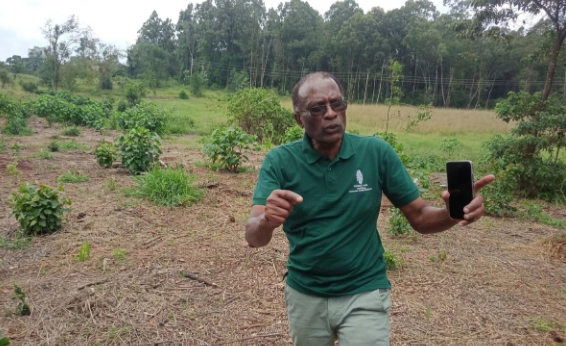
 FKF Chairperson, Professor Karanja Njoroge speaking during Wangari Maathai Day celebrations on Tuesday March 3, 2026 at Karura forest/CHRISTABEL ADHIAMBO
The Friends of Karura Forest (FKF) has called on the Kenya Forest Service (KFS) to consult the Community Forest Association (CFA) before implementing any new projects in Karura Forest, warning that uncoordinated actions could undermine citizen-led conservation efforts.
Speaking during Wangari Maathai Day celebrations on Tuesday, FKF Chairperson Professor Karanja Njoroge highlighted the role of participatory forest management under the Kenya Forest Act in Karura’s transformation.
“We exist under the Kenya Forest Act, which allows forest stations to be governed through participatory management. Any initiative must be discussed with the CFA first,” Njoroge said.
He traced the forest’s history to January 1998, when Nobel Laureate Professor Wangari Maathai challenged land allocations that threatened Karura Forest. Njoroge noted that the CFA, registered in 2009, has helped turn Karura into one of Kenya’s most visited urban forests, attracting 75,000 to 80,000 visitors monthly.
The forest supports 123 employees and 315 community members who earn a living from it, funds scholarships for local children, and underpins community development initiatives.
“Karura is not just a forest; it is a source of livelihood for many people. Ignoring the CFA in planning risks undoing 17 years of volunteer and pro bono effort,” Njoroge said.
Board member Sansi Dietz emphasized that participatory management has transformed Karura from a “no-go zone” into a safe and thriving environment, adding that existing tree nurseries within the forest and at KFS headquarters are sufficient for replanting indigenous species.
FKF’s concerns come amid KFS plans to house National Youth Service (NYS) personnel in the forest to raise two million tree seedlings.
Njoroge questioned the need to place staff inside the forest when KFS headquarters, just 2.7 kilometres away, has 136 acres with existing infrastructure.
“Why bring pressure inside the forest when it can be done elsewhere?” he asked.
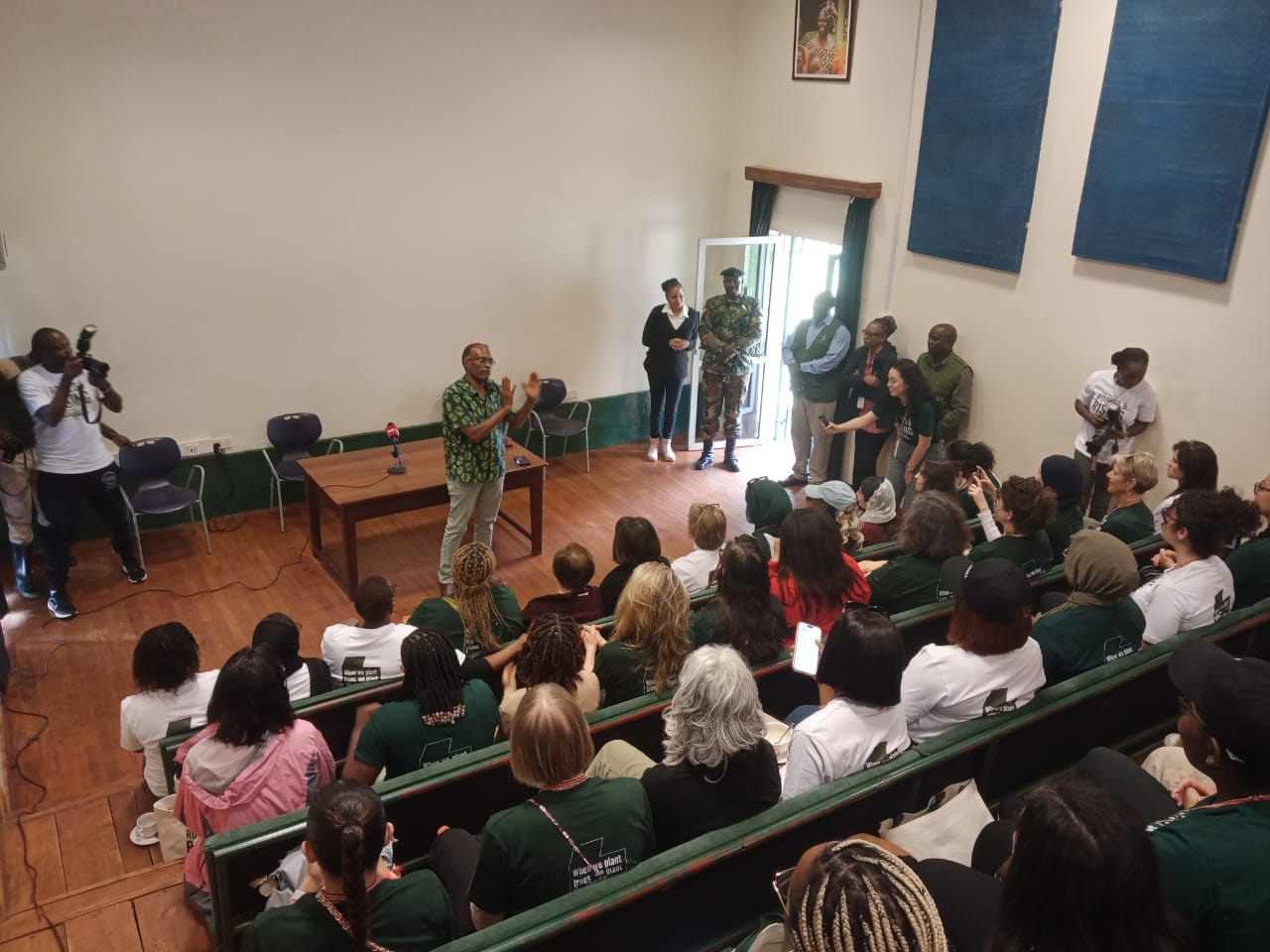 FKF Chairperson, Professor Karanja Njoroge speaking during Wangari Maathai Day celebrations on Tuesday March 3, 2026, at Karura forest/CHRISTABEL ADHIAMBO
KFS, however, has dismissed claims of encroachment or land excision. In a statement issued on February 27, the Service said ongoing works are confined to administrative zones and do not affect protected areas.
“Currently, there is development of barracks for National Youth Service (NYS) personnel who will be partnering with the Service to support the raising of tree seedlings,” KFS said, adding that the works are taking place within the Forest Rangers’ living quarters at the KFS headquarters and not within the indigenous forest or conservation areas.
The agency also clarified that no trees have been felled during the ongoing works, only old tree stumps have been removed, and similar barracks are being established at other forest stations nationwide.
KFS said the partnership with NYS aims to boost tree seedling production to help achieve the government’s target of growing 15 billion trees by 2032 and a 30 per cent national tree cover. The Service is also expanding existing tree nurseries in Karura and other forest stations.
“KFS reiterates that Karura remains a protected public forest land and it is not under any threat,” the statement said, urging the public to disregard claims suggesting otherwise.
FKF has appealed for engagement with the CFA before any project implementation, stressing that Karura Forest is a national asset requiring cooperation for sustainable management.
“Karura Forest belongs not only to us but to future generations. We must protect its 1,043 hectares and ensure it remains a model for participatory conservation, community benefit, and sustainable urban forestry in Kenya,” Njoroge said.