Hunger is never an accident, Kofi Annan said, because it is the result of policy choices.
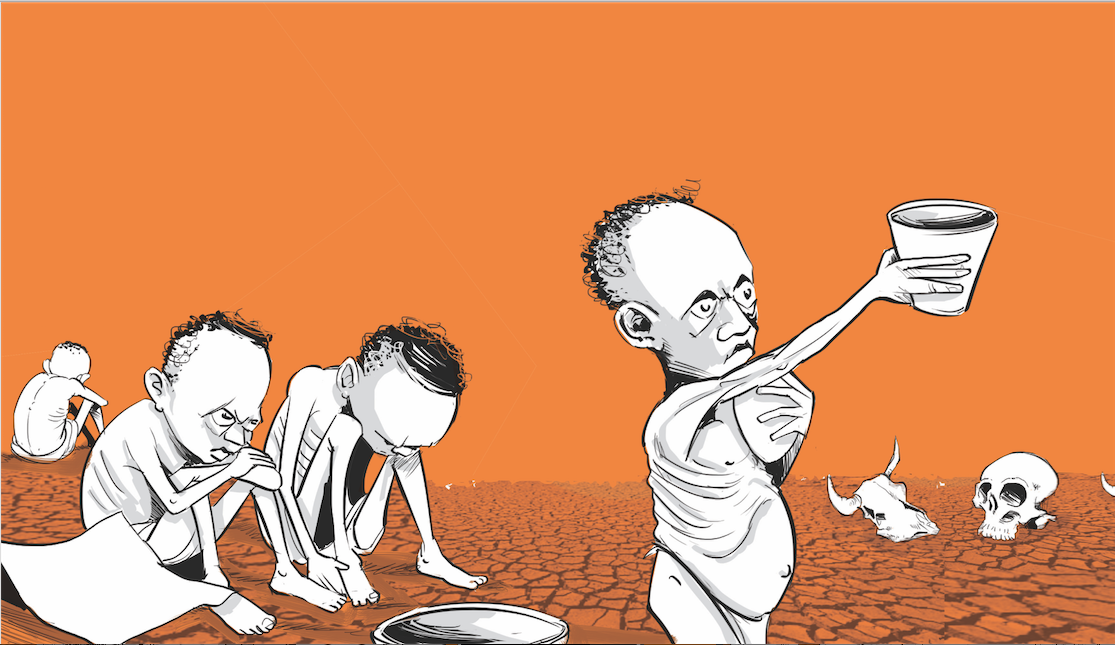
And this is what is happening in Northern Kenya. An estimated 3.3 million people in 23 arid and semi-arid counties are facing acute food insecurity.
More than 810,000 children under five and 117,000 pregnant or lactating women face malnutrition. These figures could climb if the March-May long rains fail, as climate forecasts suggest they might.
In Turkana, Wajir, Marsabit, Mandera and Garissa, livestock deaths are mounting. Milk production has plunged by about 55 per cent. This has affected household incomes and the national dairy supply. Wells are drying up, too.
On February 19, 2026, the National Drought Management Authority released Sh778 million in cash transfers to 133,101 poor and vulnerable households as drought conditions worsened across the arid and semi-arid lands.
The support targeted families in seven counties, including Mandera, Turkana, Wajir, Marsabit, Garissa, Tana River, Isiolo and Samburu, under the Hunger Safety Net Programme, covering the December 2025 and January 2026 payment cycles. The funds formed part of a Cabinet-approved Sh4.1 billion drought response intended to assist 3.3 million people facing acute food insecurity.
However, the scale of need remains far greater. It requires that this funding be understood in its proper context. Experts estimate that as much as Sh30 billion may be required to meet the demands for food aid, livestock protection, water access and nutrition services. You can therefore see that allocating Sh778 million to meet the demand of Sh30 billion is simply not enough.
This crisis is not merely humanitarian. It is also a constitutional and legal test for Kenya. Article 43(1)(c) of the constitution guarantees every person the right to adequate housing, the highest attainable standard of health and reasonable access to sufficient food and water.
Article 21(1) further obliges the state to progressively realise economic and social rights, with particular attention to marginalised communities. These domestic duties are reinforced by international commitments.
Article 11 of the International Covenant on Economic, Social, and Cultural Rights recognises the right to an adequate standard of living, including food, clothing and housing. Article 25 of the Universal Declaration of Human Rights affirms that access to food, water and medical care is essential to health and well-being.
Likewise, Article 16 of the African Charter on Human and Peoples’ Rights underscores the entitlement of all peoples to the best attainable physical and mental health, implicitly requiring access to essential resources such as food and water.
As such, addressing this crisis demands a deliberate, long-term government strategy anchored in evidence and accountability. Investment in expanded water harvesting and storage infrastructure is critical to reduce reliance on erratic rainfall.
At the same time, climate-smart agriculture and irrigation schemes must be scaled up across arid and semi-arid regions to protect farming and pastoral livelihoods from prolonged dry spells.
Nutrition and health outreach programmes should also be strengthened to shield children and vulnerable groups from severe malnutrition. Above all, robust legal and policy frameworks are required to ensure the state fulfils its constitutional and international obligations regarding food and water rights.
Programme Manager for Political Accountability in State Institutions at the Kenya Human Rights Commission