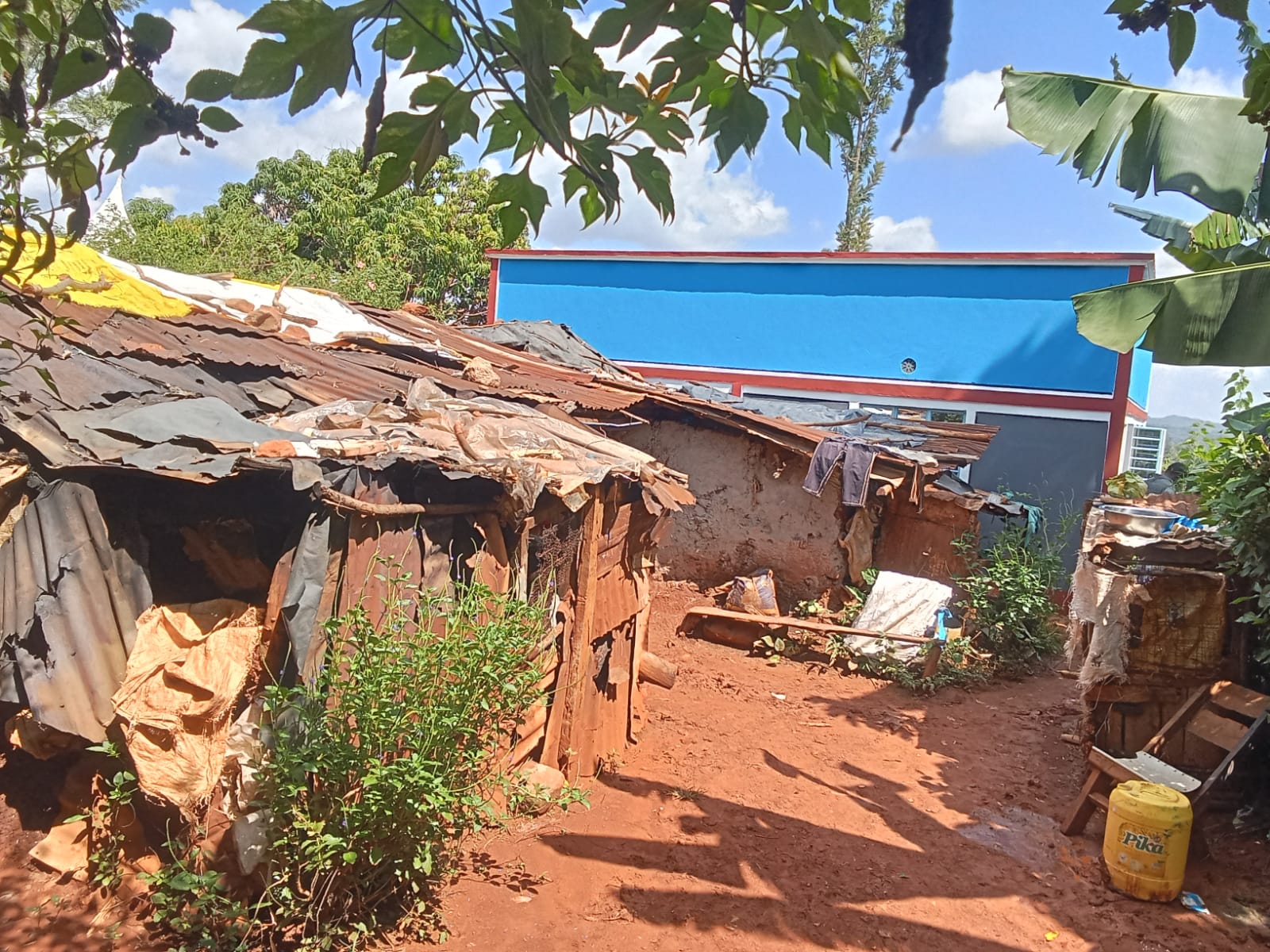
 The mud-walled, plastic-roofed house that Lucy Nyaguthii has been living in with the newly constructed permanent house in the background / ALICE WAITHERA
For years, 48-year-old Lucy Nyaguthii lived in a state of utter destitution. Her home in the Gaitega area of Kiharu constituency, Murang’a County, leaked incessantly whenever it rained; its mud walls were riddled with gaping holes.
As a casual worker and mother of six, Nyaguthii’s meager earnings barely covered food and school fees, leaving nothing for home improvements. Her husband’s health deteriorated under the crushing strain of poverty, and with no resources to seek medical care, the family faced unimaginable hardship.
“Kenyans are hardworking people, but the high cost of living makes it impossible to live comfortably. Casual workers like me can only afford food, and even that is insufficient,” she said, urging the government to reduce the cost of construction materials to enable low-income families to build decent homes.
Neighbours noted that the family has survived largely on community goodwill, with well-wishers occasionally stepping in to provide food. Mary Wanjiku, a neighbour and community health promoter, said the state of the house had long distressed local residents.
“As a community, we have been deeply concerned. They have primary school children, but we lacked the means to help. Their roof was patched with plastic sheeting, and during rainstorms, they had to constantly shift their sleeping positions,” Wanjiku explained.
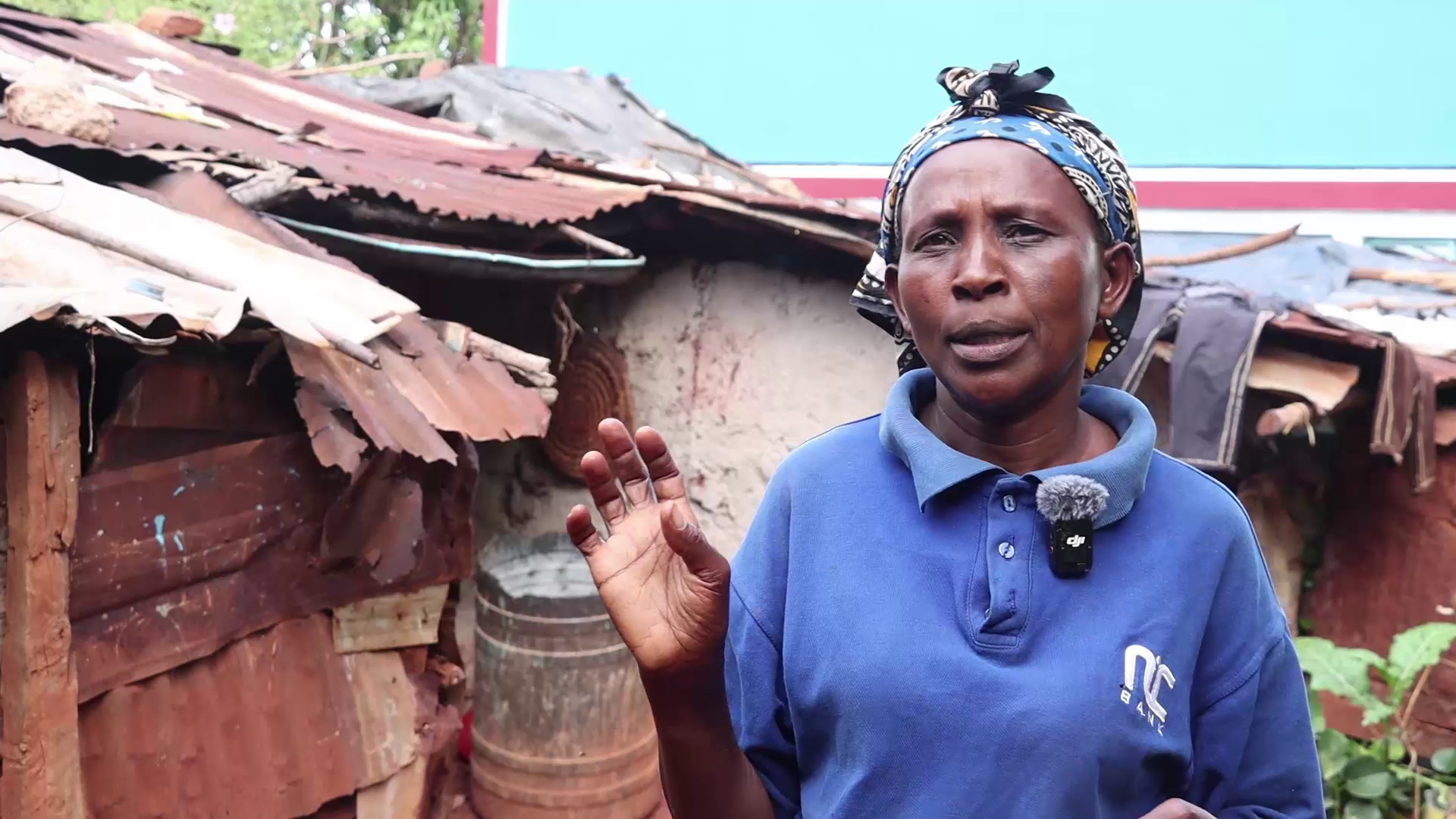 Lucy Nyaguthii, a casual worker who benefited from a new house built by a philanthropist in Murang'a/ ALICE WAITHERA
She expressed joy at the support now accorded to the family, noting that Nyaguthii, who works in a quarry, cannot earn enough to support her household alone.
“She has worked incredibly hard, but it is vital for the government to support such families. This house is beautiful, but it still lacks a proper toilet, exposing them to disease. Many families in the villages are struggling to stay afloat in this deteriorating economy.”
Wanjiku explained that casual workers in the area earn only Sh150 per day. Families often have to contend with ugali and minimal accompaniments, leaving children at high risk of malnutrition.
The plight of the Nyaguthii family eventually caught the attention of philanthropist Karanja Mburu Wamatangi, who intervened immediately. Wamatangi, who works with Can-Do-Kids International—a US-based Christian NGO—said he was alerted by neighbours and mobilised resources to ensure the family had a safe home.
“We are here today because we have blessed a family with a house that can withstand the rains. Often, during heavy downpours, mud houses collapse, endangering lives. We are calling on well-wishers and the community to ensure every family has decent shelter,” Mburu said.
The organisation constructed a four-bedroom house for the family at a cost of Sh1.5 million, providing a safe and dignified living space. While the house does not yet feature a modern toilet, the family could not hide their joy over the drastic improvement to their living conditions.
To date, the NGO has built 26 homes for destitute families in Murang’a county, with six more currently under construction. Mburu stressed that government support is crucial to scaling such interventions.
“Affordable housing should not only exist in towns. People in villages have land and the capacity to live decently if given support.”
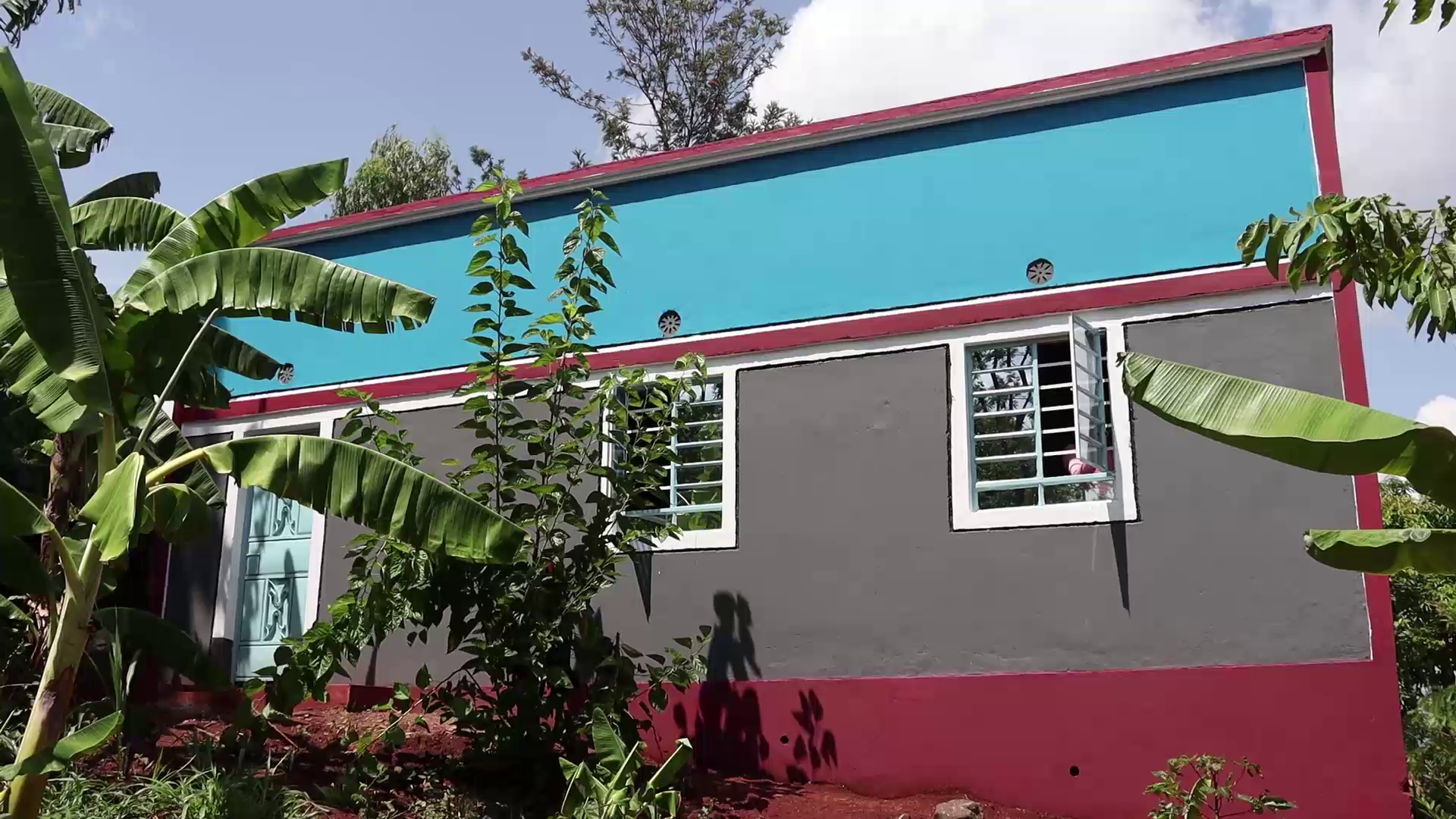 The new house donated to Lucy Nyaguthii by a philanthropist in Gaitega, Kiharu constituency in Murang'a county/ ALICE WAITHERA
The government plans to establish 500,000 housing units under the national Affordable Housing project this year.
“The government can provide grants, lower interest rates, or supply construction materials. It has engineers and construction machinery; it is simply a matter of coordination,” Mburu added.
The foundation also advocated for cheaper education, with Karanja voicing concerns over high costs that condemn humble families to further poverty. He challenged the state to scale up farming initiatives, such as rural irrigation projects, to empower Kenyans to improve their lives.
“Give people something to do, and they will provide for themselves. These families are willing to work; they just need the infrastructure and support,” Mburu said.
“This house and our programmes are a call to action. They show what can be achieved when communities, NGOs, and government work together. The goal is simple: every family should live in a safe home, and every child should have the opportunity to thrive.”
The Kenya Association of Building and Civil Engineering Contractors reports that the cost of essential materials remains elevated, with a 50kg bag of cement retailing at an average of about Sh750 in many towns. Steel and reinforcement bars range between Sh95,000 and Sh120,000 per tonne, depending on the supplier, while sand costs between Sh1,800 and Sh2,800 per cubic metre.
The Architectural Association of Kenya (AAK) has previously cautioned that sustained increases in construction inputs directly affect housing affordability, particularly for low-income earners in rural areas where wages remain low and unstable. AAK indicates that cement prices have steadily increased from about Sh650 per bag in late 2022, driven by inflation and exchange rate fluctuations.
INSTANT ANALYSIS
Neighbours said the family has survived largely on community goodwill, with well-wishers occasionally stepping in to provide food.
The family's plight attracted the attention of American based Can-Do-Kids NGO that constructed a four-bedroom house for the family at a cost of Sh1.5 million, providing a safe and dignified living space.