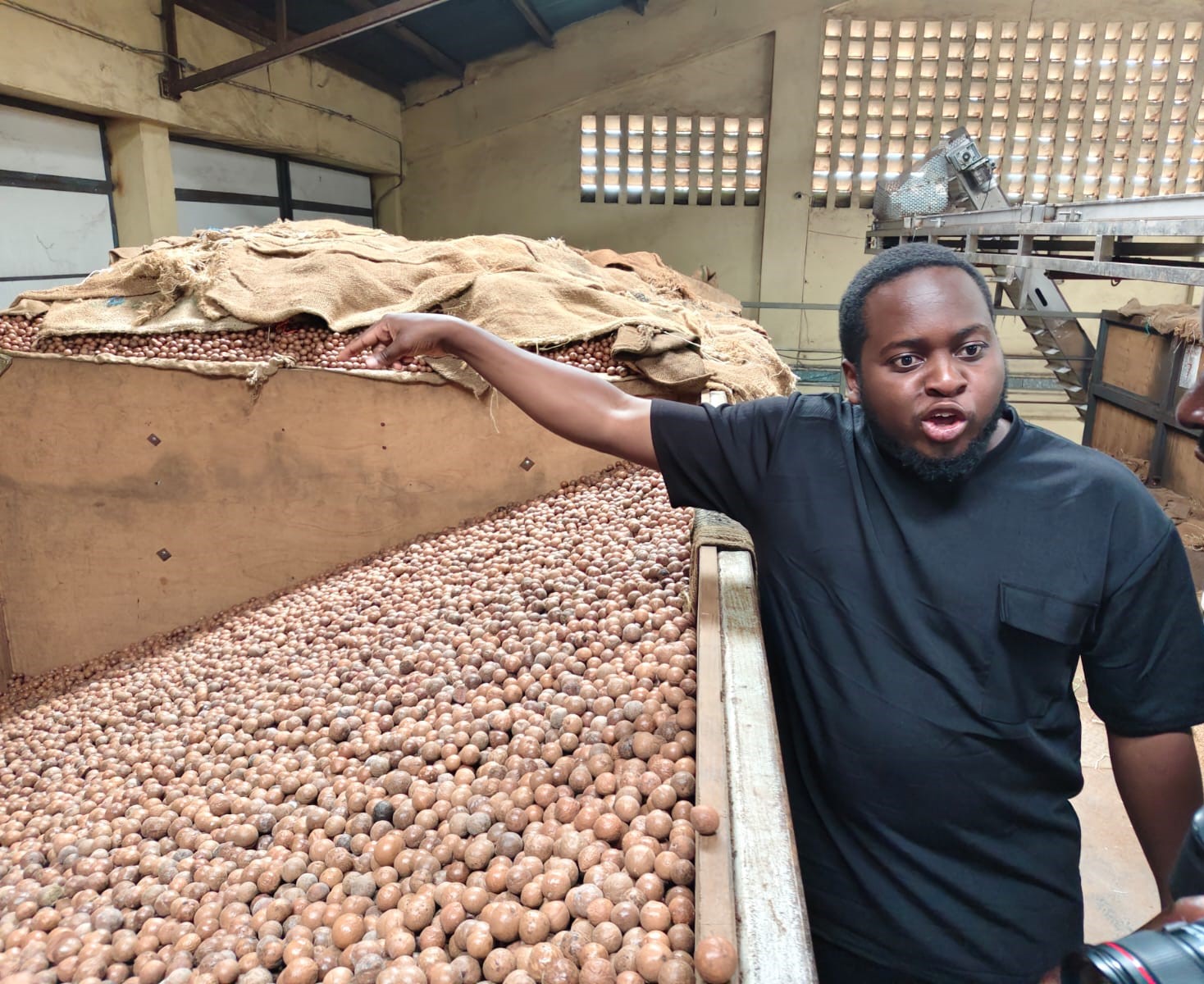
 Ian Kihara, the marketing director for FairNuts Company, in their macadamia factory in Thika on April 27, 2026/ ALICE WAITHERA
Macadamia traders have urged the government to put in place measures to ensure they benefit from the free trade agreement with China set to take effect on May 1.
The deal, signed in March this year, is expected to boost exports of Kenyan agricultural produce to China. Tea, coffee, fresh and frozen avocados, macadamia nuts, flowers, fresh horticultural produce, vegetables, herbs and other farm commodities are among the key beneficiaries. Previously, Kenyan agricultural exports to China attracted tariffs.
Tea and coffee were taxed between six and 15 per cent, macadamia nuts between 10 and 15 per cent, fresh horticultural produce and vegetables between 10 and 25 per cent, and cut flowers about four per cent.
However, macadamia traders say they risk being locked out of the opportunity because of the continued ban on the export of raw nuts.
“We’re currently experiencing a glut, and processors are struggling to access markets for kernels. This has, in turn, reduced the amount of macadamia they are buying from farmers,” said Ian Kihara, the marketing director of FairNuts company based in Thika, Kiambu county.
Kihara said processed kernels, mainly exported to the European Union and the UK, are considered a luxury commodity and have limited market uptake compared to demand in China.
He argued that Kenya has failed to tap into the vast Chinese market because of the prohibition on raw nut exports under Section 43 of the Agriculture and Food Authority (AFA) Act.
The law provides that; “A person shall not export raw cashew nuts, pyrethrum, bixa, macadamia or any other agricultural product as may be prescribed, except with the written authority of the Cabinet Secretary.”
Kihara said repeated attempts by traders to obtain export approval from Agriculture Cabinet Secretary Mutahi Kagwe have gone unanswered. “Just last year alone, our company wrote to Kagwe three times and he never responded,” he said, adding that the situation has exposed farmers to poor returns and threatens to cripple the sector.
Due to the lack of a market, macadamia nuts are now being hawked at social events and in local markets, particularly in Meru, the country’s leading macadamia-producing region.
Kihara further revealed that during a meeting last month involving Kagwe, Agriculture and Food Authority officials and MACNUT—the association of nut processors—processors said they were seeking alternative markets, which had led to reduced purchases from farmers.
He questioned the fate of trade talks between the government and American retail giant Walmart, which had been expected to absorb about 100 containers of macadamia nuts in September last year.
According to Kihara, China’s population of 1.4 billion presents a huge untapped market for Kenyan macadamia, especially because consumers there prefer in-shell nuts.
“In the Chinese market, nuts are packed partially cracked, and a small piece of metal is provided to help fully crack them open. The country has only 36 nut processors who add value to the nuts and use them in other food products, but the majority prefer unprocessed ones,” he said.
A similar oversupply crisis in 2023 pushed macadamia prices down to Sh10 per kilogramme until then Agriculture CS Mithika Linturi temporarily lifted the export ban for one year.
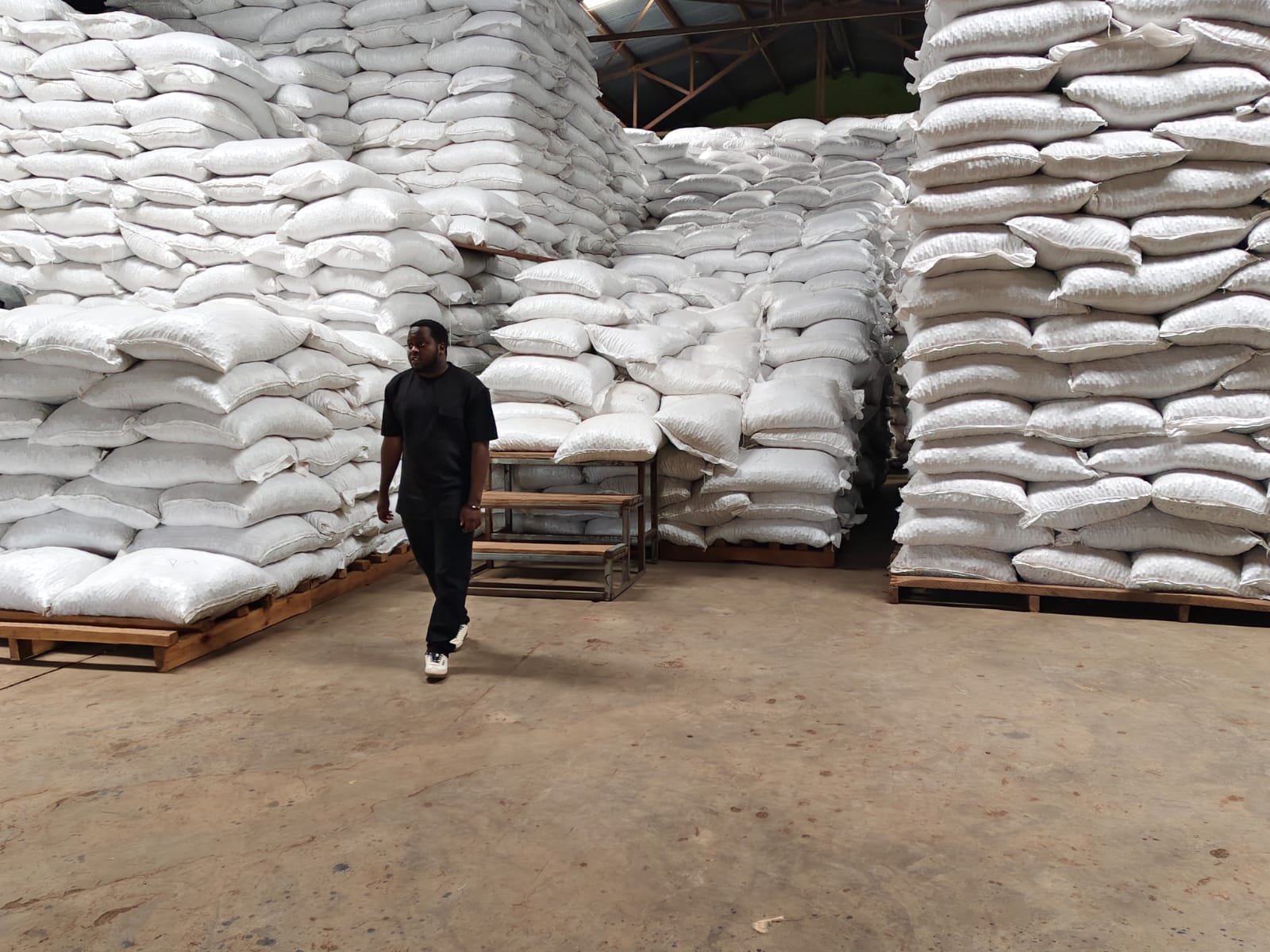 Ian Kihara, the marketing director for FairNuts Company, in their stores that have over 500 tonnes of macadamia on April 27, 2026/ ALICE WAITHERA
The suspension triggered a sharp rise in farm-gate prices to as high as Sh150 per kilogramme, as more buyers entered the market and competition increased.
The ban was, however, reinstated in November 2024, with traders given until January 3, 2025, to clear existing stocks.
Kihara said subsequent meetings with Kagwe ended with the CS maintaining that the ban would remain in place to prioritise value addition.
“We attended a meeting in February last year where the CS said he would get a win-win situation for everyone, but when we left, he made statements to the media that the ban would not be lifted.
“If the goal is to create jobs through value addition, let them tell us how many new companies have come up since the ban was re-instated. How many new jobs have been created?” he asked.
He added that at least six Chinese firms that had established local operations to dry macadamia nuts before exporting them to China have since shut down, resulting in job losses.
Kihara said the sector is currently “hanging by a thread” and is only being sustained by an NGO that has contracted several macadamia companies.
He, however, expressed optimism after Kagwe recently indicated that the ban could be lifted if MACNUT fails to absorb local produce.
CS made the remarks last week while meeting coffee farmers in Nyeri, many of whom also grow macadamia and raised concerns over the crisis.
“If the market is opened, the government will rake in huge revenue, farmers will earn more money and traders will get a lifeline. It would be a win-win.”
His factory, he said, acquired automatic driers worth over Sh50 million, which have been rendered idle since the ban was reinstated.
INSTANT ANALYSIS
Ian Kihara, the marketing director of FairNuts company, argued that Kenya has failed to tap into the vast Chinese market because of the prohibition on raw nut exports under Section 43 of the Agriculture and Food Authority (AFA) Act. Due to the lack of a market, macadamia nuts are now being hawked at social events and in local markets, particularly in Meru, the country’s leading macadamia-producing region.
 Ian Kihara, the marketing director for Ian Kihara, the marketing director for FairNuts Company, at the Sh50 million automatic drying facility that is currently idle on April 27, 2026/ ALICE WAITHERA