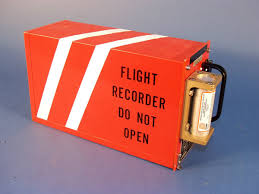
When an aircraft goes down, public attention quickly turns to one thing: the black box.
In the aftermath of any crash, questions swirl: what did the pilots say? Did they know what was happening? Were there warning signs?
While flight data recorders (FDRs) and cockpit voice recorders (CVRs) are recovered and analysed in most investigations, the public rarely hears the actual cockpit audio.
That silence is not accidental but by design.
Under rules set by the International Civil Aviation Organisation (ICAO), specifically Annex 13 of the Chicago Convention, cockpit voice recordings are treated as strictly confidential material.
Their purpose is singular: to improve aviation safety, not to satisfy public curiosity, fuel media debate, or assign blame.
Transport Cabinet Secretary Davis Chirchir announced on Sunday, March 1, that the preliminary report into the helicopter crash that claimed the life of Emurua Dikirr MP Johana Ngeno is expected within 30 days.
Chirchir said his ministry, through the Air Accident Investigations Department (AAID) under the State Department for Aviation and Aerospace Development, visited the crash site in Nandi and has initiated investigations into the circumstances surrounding the accident.
“My ministry, through the Air Accident Investigations Department, has already commenced investigations to establish the cause of the crash,” Chirchir said.
He emphasised that the probe will strictly follow international aviation standards to guarantee transparency and credibility.
"The investigation is being conducted in accordance with the rules and standards of the International Civil Aviation Organisation (ICAO) Annex 13,” he said, referring to the globally recognised framework for aircraft accident investigations.
Chirchir noted that AAID has already notified the State of Manufacture of the aircraft and the Design of the aircraft, as well as ICAO, of the crash.
Safety over sensation
The cockpit voice recorder captures the final two hours of cockpit audio in most modern aircraft.
That includes pilot conversations, radio transmissions with air traffic control, automated system warnings, alarms, and even background sounds such as switches being flipped.
It is, in many cases, the most revealing piece of evidence in an investigation.
Yet, Annex 13 makes clear that CVR recordings are not to be made public. Instead, investigators may release summaries or relevant excerpts in written form, carefully contextualised and stripped of unnecessary personal details.
Aviation safety experts argue that this confidentiality is essential.
“If pilots believed their private cockpit conversations could be broadcast on television after an accident, it would fundamentally change cockpit culture,” says one former accident investigator.
“Open communication is critical to safety. You cannot have that if crews fear public exposure.”
The logic is simple: safety depends on candour.
Pilots must feel free to question decisions, express concerns, admit uncertainty, or even challenge each other in high-pressure moments.
The cockpit is not a stage; it is a working environment where clarity and trust can mean the difference between recovery and disaster.
A line between investigation and blame
Annex 13 draws a firm distinction between accident investigation and legal liability.
Investigations are conducted to determine causes and contributing factors, not to apportion blame.
Public release of cockpit recordings could easily shift focus from systemic safety lessons to individual fault.
A clipped sentence taken out of context can inflame public opinion, trigger lawsuits, and overshadow broader technical findings.
History shows that aviation accidents rarely stem from a single mistake.
They are often the result of multiple contributing factors: weather, maintenance issues, automation confusion, design flaws, or procedural breakdowns.
Investigators rely on the CVR to understand the sequence of events, crew workload, and cockpit resource management.
But those insights are translated into technical findings, not public audio.
In many jurisdictions, courts can request access to CVR material, but even then, access is tightly controlled.
Investigators guard the recordings carefully, and families of victims are rarely allowed to hear them in full.
In a military report released on April 11, 2025, on what caused the crash that claimed Chief of Defence Forces General Francis Ogola, engine malfunction was cited as the main cause.
The Ministry of Defence stated in its report that the Huey Helicopter KAF 1501 had a relatively high level of reliability, having conducted several operational and training missions, including VIP flights.
"Further, the flight was operated by qualified, competent crew. However, dependent on information from the survivors, after experiencing Complete Power Loss, the Pilots of KAF 1501 attempted to control the Helicopter to a clear Landing Zone but lost positive control of the aircraft," the report read.
Privacy in the final moments
There is also a human dimension.
Cockpit recordings may capture deeply personal or emotional exchanges in the final moments of a flight.
Releasing such material could cause additional trauma to families of the deceased.
In some cases, CVRs have recorded mundane conversations unrelated to the accident, discussions about family, personal matters, or routine cockpit banter.
Broadcasting those exchanges would offer no safety value while intruding on privacy.
For this reason, most final accident reports include only summarised transcripts relevant to the cause of the crash. Even those summaries are carefully reviewed to ensure they serve investigative purposes.
What the public does get
Confidentiality does not mean secrecy in the broader sense. Investigative authorities are required to release preliminary reports, usually within 30 days, and final reports once analysis is complete.
These reports typically contain a factual timeline of the flight, weather conditions, aircraft technical data, analysis of flight data recorder parameters, conclusions on probable cause, and safety recommendations.
The flight data recorder, unlike the CVR, captures numerical parameters such as altitude, airspeed, engine performance, autopilot settings, and control surface movements.
These data points are often presented in charts and graphs and are less controversial to share publicly because they do not contain personal speech.
In many investigations, it is the combination of FDR data and CVR timing, not the audio itself, that provides clarity.
A global standard
The confidentiality principle is not unique to one country.
ICAO’s standards are applied worldwide to ensure uniformity.
Aviation is a global industry; aircraft cross borders daily.
Consistent rules help maintain cooperation between states involved in investigations, including the State of Occurrence, State of Registry, State of the Operator, and State of Manufacture.
Without such protections, some states or manufacturers might hesitate to share sensitive data, potentially undermining safety investigations.
For many members of the public, the absence of audio feels like a lack of transparency.
But aviation safety officials argue the opposite: withholding recordings protects the integrity of investigations and encourages full cooperation from pilots, airlines, and manufacturers.
The “black box secret,” therefore, is not about hiding the truth.
It is about preserving an environment where the truth can be discovered without fear or spectacle.
In aviation, safety improvements often come quietly, through revised procedures, updated training, design changes, or regulatory adjustments.
The cockpit voices may remain unheard by the public, but their lessons echo throughout the industry.