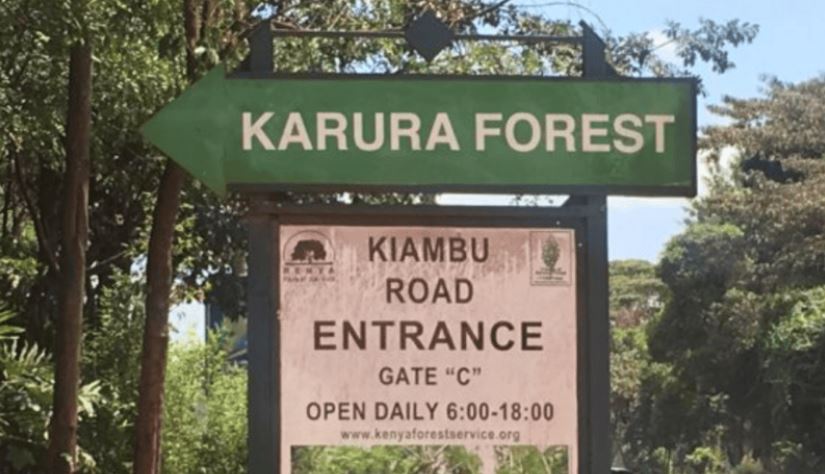
 Karura Forest/FILE
Today should be a double celebration for Kenya—not only is it Africa Environment Day, but also the day we celebrate Kenya’s hero and Nobel Peace Prize winner, Wangari Maathai.
Kenya is a world conservation leader with our extraordinary wildlife, vegetation, protected areas, and commitment to sustainability and protection of natural resources. But statements and declarations are not enough. If we really care about the environment, we must take every opportunity to preserve it.
It was 15 years ago last month that Karura Forest, a jewel in Kenya’s conservation crown, was officially opened—two years after the founding of the Friends of Karura.
The battle by Wangari and the brave neighbours to save the forest from developers was hard-fought and garnered extraordinary public support. Ultimately it resulted in the protection of one of the most successful urban forests in the world, which hosts more visits per month than any other attraction in Kenya.
Yet once again we are struggling to save this extraordinary asset. The threat comes from plans to house National Youth Service teams in containers in the “Kijiji” (Rangers’ Village), a legacy encampment from the days when Karura was insecure, located one kilometre inside the forest.
Currently the area is home to some Kenya Forest Service rangers, but under the forest management plan it is due to be returned to indigenous forest once all the rangers are moved into the nearby KFS Headquarters, which spans 136 acres. Already, with jointly managed forest revenue, new ranger housing has been built within the Headquarters enclave.
Apparently the joint forest management agreement between Friends of Karura and Kenya Forest Service (KFS) has been torn up. Ten days ago, without warning or prior consultation, a group with chainsaws was allowed by KFS to enter the forest and hack down mature trees while heavy machinery began levelling the muddy land. A great deal of work has since gone into levelling and preparing the site.
KFS says the NYS are needed to work on the tree nursery which is being planted in their headquarters—without explaining why the NYS personnel can’t be housed there or stay in their own headquarters a few kilometres away.
Questions were already asked about the intended use of the Rangers’ Village land after the overnight tarmacking of a quarter of the 800 metre track running from the KFS enclave entrance to the Rangers Village in August 2025—an incursion that is currently the subject of a court case. In theory, the partial paving of the road and development of the site could become a precedent for further development of something other than the agreed upon conservation forest area as set out in the joint management agreement.
Whatever the ultimate goal, the plans were all made in secret. Friends of Karura (FKF) has a legally binding joint Forest Management Agreement running to 2041 with the Kenya Forest Service, which makes FKF a full partner in the management and conservation of Karura Forest Reserve. However, FKF was kept in the dark despite a Joint-Management Committee meeting the previous week. Likewise, there was no contact or consultation with Wangari Maathai’s Green Belt Movement which spearheads community action to protect vital natural resources.
There was no public announcement, nothing was said to the
neighbouring communities, and forest visitors are being actively diverted from
the site.
KFS maintains the area is part of its headquarters and can be developed – but all maps clearly show the one-kilometre distance to the HQ boundary fence.
This must stop. It is damaging to the forest, the local communities, people’s welfare, and Kenya’s image. We are calling for an immediate halt to all the clearing work at the site and an immediate public discussion about the plans for the settlement, which is a Constitutional requirement for such work in a legally protected area. Community participation is not optional in such cases, and the history of Karura has always brought in the communities.
We have seen in the media and on social media that people are already speaking up to make their voices heard. We must keep up the pressure.
The authorities must demonstrate they truly believe in shared governance of public forests. The people’s voice must be heard when it comes to the future of Karura, “the people’s forest”.