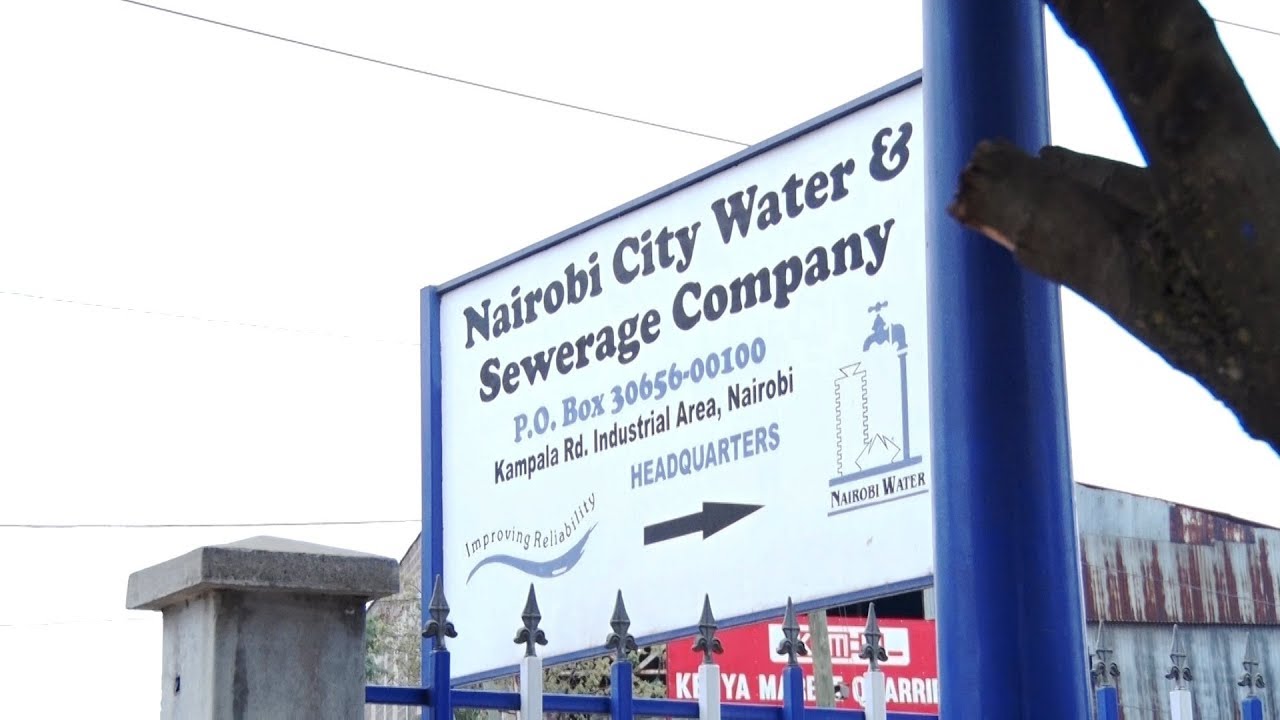
Residents of Nairobi will pay more for water and sewerage services after the Nairobi City Water and Sewerage Company (NCWSC) announced a tariff increase to finance an ambitious five-year infrastructure expansion plan.
The utility says the revised charges which have gone up by between 20 and 30 per cent depending on consumption are necessary to modernise aging systems and expand coverage in a rapidly growing city.
Under the new plan, NCWSC will construct 180 kilometres of new water pipelines and 100 kilometres of sewer lines, bringing the total new network to 280 kilometres over the next five years.
The expansion aims to boost water supply, reduce system losses, and extend sewer services, particularly in informal settlements where simplified sewer systems will be introduced.
Acting managing director Martin Nang’ole said Nairobi’s population has surpassed five million people, far exceeding the city’s original water infrastructure capacity.
“Nairobi’s population has grown above five million, way above the installed capacity, which has strained the system beyond capacity,” he said.
The tariff adjustment will see a domestic customer consuming an average of 10,000 litres per month pay Sh748, up from KSh538 previously.
However, the company maintains the structure is pro-poor, retaining the water kiosk price at Sh44 per 1,000 liters—less than Sh1 for a 20-litre jerrican.
The utility argues that rising costs of water treatment chemicals, electricity, pipe materials, and routine maintenance have made the current pricing model unsustainable. The last tariff review was conducted in 2023.
Beyond population growth, urban densification has intensified pressure on infrastructure. Estates such as South B, South C, Kilimani, Kileleshwa, and Ngumba—once low-density residential areas—have seen a surge in high-rise developments, significantly increasing water demand and sewer load.
Nang’ole said additional revenue from the revised tariffs will be ring-fenced strictly for infrastructure rehabilitation, system upgrades, and service reliability improvements.
“The cost of water treatment, sewerage infrastructure, electricity, pipe materials, and routine maintenance has increased significantly since the last tariff review in 2023. Without an updated tariff structure, the pace of essential upgrades, loss reduction efforts, and service reliability improvements will be severely affected,” Nang’ole said.
Other projects in the strategic plan include construction of a six-kilometre Ngethu raw water pipeline, rehabilitation of the backwash system at the Kabete treatment plant, and planting 50,000 trees annually in water catchment areas.
The new tariff structure was approved by the Water Services Regulatory Board (WASREB) following a public participation process involving residents, businesses, and stakeholders.