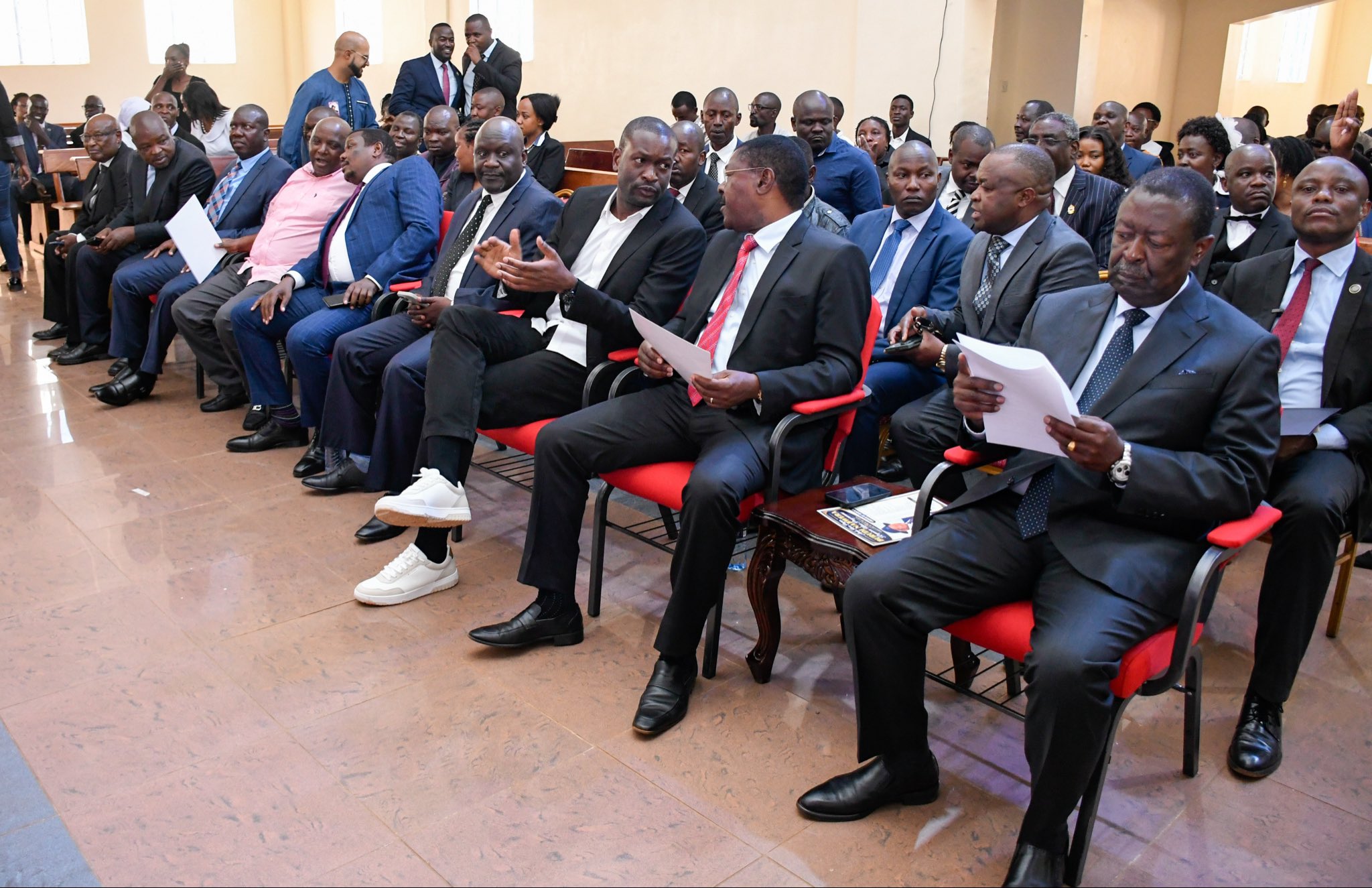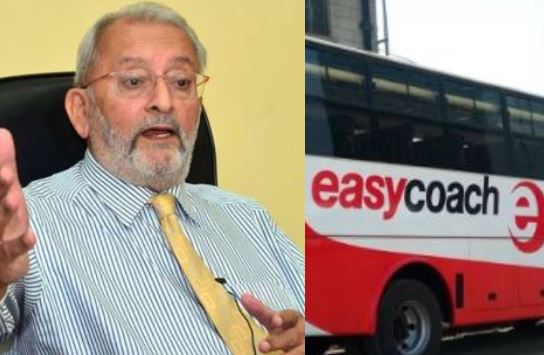
MOURNERS gathered quietly at Ismaili Cemetery in Nairobi’s Kariakor area on Saturday as one of Kenya’s most prominent transport magnates was laid to rest.
The ceremony, whose procession started at the Aga Khan Pavilion (Aga Khan Hospital) was marked not by opulence, but by humility.
The late Azym Dossa, owner and founding force behind Easy Coach, was buried in a simple grave, attended by family, close friends and a cross-section of employees who had long regarded him as more than just a boss.
There were no extravagant displays, no elaborate procession befitting a man whose company helped redefine long-distance travel across Kenya and the wider East African region.
Instead, the mood was solemn and reflective—a farewell that mirrored the quiet discipline and modesty that defined his life.
The end was simple: A handful of silent flower, incense sticks and a wall of rocks. No drama. Speechless peace.
Paul Otieno, a former customer care manager at Easy Coach who moved abroad to pursue other interests, described Dossa as a man who knew all his employees by name during his directorship.
“All employees had his phone number and would communicate freely with him. He was a very good person and genuinely caring MD. He had a good humour and never missed a day in the office whenever he was well and in the country. A very good man has rested.” Otieno told the Star.
Matatu Owners Association president Albert Karakatcha said: “Our deepest condolences to his family and a great loss to our Industry. He was a pioneer in the industry and especially in revolutionising long distance transport and championing for road safety matters in transport PSV. We will honor him, we will miss him.”
For more than two decades, thousands of travellers crisscrossing Kenya and the wider East African region entrusted their journeys to a company built on discipline, dignity and relentless attention to detail.
At the heart of that enterprise stood Dossa, the founding director and former managing director of Easy Coach, whose death on February 26 drew tributes from across the transport and business community.
In announcing his passing, the company described him as a visionary leader whose guidance and dedication shaped Easy Coach from its earliest days.
His leadership, it said, laid the foundation for its growth and instilled values that continue to define its operations.
Dossa was not merely a transport executive; he was an industry insider who understood the business from the inside out.
Before founding Easy Coach in 2003, he had served as Chief Financial Officer at Akamba Public Road Services (Akamba Bus), one of Kenya’s most established bus operators.
That tenure gave him both technical mastery of transport economics and a close-up view of what could be improved.
From seven buses to a regional footprint
Easy Coach was born modestly. In 2003, Dossa launched operations with just seven buses on a single route between Nairobi and Kisumu.
Three buses travelled to Kisumu during the day and returned at night. One was kept on standby for maintenance rotation and emergency rescue.
It was a lean, tightly managed model designed around reliability rather than rapid expansion.Demand came swiftly. Kakamega town requested services, prompting the addition of four buses.
Within three years, the fleet had grown to 40 buses serving 15 destinations. Today, Easy Coach operates more than 35 destinations across Kenya. It also had operations in Kampala (Uganda) some years back, and is widely regarded as one of the largest bus companies in the country.
Growth, however, was never accidental. Dossa believed in systems. From the outset, he insisted on structured maintenance cycles, standby vehicles and professional driver training.
As competitors fought for market share through fare wars and aggressive expansion, Easy Coach focused on predictability, safety and customer experience.
During a past interview with the Star, Dossa had noted that ethics and integrity remained key for him and in building any transport company.
“Some businesses falter due to practices driven by greed, which can compromise the company's reputation and longevity. In contrast, a robust commitment to ethical standards can engender trust among customers and partners, contributing to the company's long-term survival and success,” he had noted.
Transport is a high-risk enterprise, and Dossa never romanticised it. In a 2023 interview, he admitted that every unexpected late-night phone call triggered anxiety.
“Every unexpected phone call during the night does bring about a surge of anxiety,” he said, acknowledging the weight of responsibility that comes with carrying hundreds of passengers daily.
Road accidents, he argued, were a multi-faceted problem—ranging from speeding and fatigue to poor road infrastructure and non-compliance with regulations.
His response was rigorous compliance and culture-building. Easy Coach has always invested in continuous driver training, both practical and classroom-based, often guided by professionals recommended by the National Transport and Safety Authority (NTSA).
For Dossa, safety was not a marketing slogan but a business philosophy. He believed that disciplined operations translated into financial sustainability.
Fewer accidents meant fewer disruptions, lower legal exposure and stronger customer trust.
Redefining the passenger experience
When Easy Coach introduced waiting lounges and washrooms at its branch offices, it marked a subtle but important shift in Kenya’s bus transport industry.
Dossa sought to elevate bus travel from a purely functional service to one that respected passenger dignity.
He often said that safety, punctuality, comfort and reliability were not optional extras but core pillars of the brand.
Stopovers and meticulous vehicle checks were routine expenses he willingly absorbed as part of maintaining standards.
That approach paid off. Word-of-mouth drove expansion into new towns, and customer loyalty strengthened the brand even amid stiff competition.
The cost of doing business
Behind the polished brand was a tough operating environment. Dossa was candid about costs—from fuel price hikes to spare parts, tyres, parking fees and inter-county entry charges.
He particularly lamented unpredictable and disproportionate cost increases that operators could not easily pass on to passengers.
When fuel costs surged following tax adjustments, Easy Coach, like other operators, faced pressure to adjust fares. Yet Dossa maintained that any increment had to be reasonable and proportional.
“The public relies on us for their daily commute,” he said. “We must maintain a balance between sustainability and affordability.”
The Covid-19 pandemic tested that balance. Lockdowns drastically reduced passenger numbers, profits dwindled, and reserves were depleted.
Some landlords waived part of their rent and the company scaled down operations.
Instead of mass layoffs, Dossa opted to send employees home with advance payments and allowed them to encash leave days—a decision he described as compassionate but strategic.
He believed the company would need the same trained workforce once normalcy returned. That foresight helped Easy Coach rebound as restrictions eased.
Another notable shift during his tenure was the transition from Mitsubishi buses to Mercedes models.
While Mitsubishi had played a pivotal role in the company’s growth, supply constraints forced exploration of alternatives.
Mercedes offered availability, reliability and competitive pricing. Customers responded positively to the enhanced comfort and efficiency, reinforcing Dossa’s belief that adaptability is key to longevity.
Even as he consolidated a diesel-powered empire, Dossa kept an eye on the future. He was a firm believer in electric vehicles as the inevitable direction for transport, though he acknowledged the practical hurdles for long-distance PSVs: limited range and insufficient charging infrastructure.
His vision was phased integration—beginning with intra-city routes once charging networks matured, then gradually expanding to inter-city operations.
He was exploring partnerships with manufacturers and energy firms, signalling that Easy Coach intended to be part of the green transition rather than resist it.
From seven buses in 2003 to a fleet serving dozens of destinations, Dossa’s journey mirrored the evolution of East Africa’s transport landscape. He combined financial discipline with human empathy, operational rigour with customer-focused innovation.
In a sector where margins are thin and risks are high, he built a company that many regard as the “gold standard” for safety, reliability and passenger comfort.
His death marks the end of an era, but the systems, culture and ambition he embedded continue to steer the buses that carry thousands daily across highways linking Nairobi to Kisumu, Kisii, Migori, Homa Bay, Kakamega, Eldoret, Busia and many other towns.
For decades, Azym Dossa transported not just passengers, but possibility—connecting towns, enabling commerce and turning long journeys into predictable routines.