Recently, the opposition has been trying to strategize in the absence of the doyen of opposition politics, Raila Odinga, by forming different coalitions to challenge President William Ruto.
On one hand, there is a group smarting from the impeachment defeat of former Deputy President Rigathi Gachagua; they have been spewing vitriol against any significant development work by a government they were once part of.
The second group comprises the remnants of Azimio, after ODM joined Ruto to form the broad-based government. The third group consists of those disgruntled by the government’s success, convinced that they should have occupied the plum positions within the Executive.
Their message is devoid of unity. Even after unveiling their spokesperson, little has emerged from their collective voice, exposing their soft underbelly despite the bravado displayed publicly. Each outfit sings its own chorus, joined only by the incoherent “wantam vs tutam” rhetoric, without offering any viable alternatives for running the country. Many of them dwell nostalgically on their days in government, when their track records were unclear.
What most Kenyans are asking is what they would do differently, having previously held senior positions such as vice president, deputy president, or key ministries including Interior, Education, Justice, Agriculture, and Foreign Affairs. Their track records, tied to these dockets, are dismal. Clearly, their focus is not on delivering to Kenyans, but on pursuing power for its own sake.
Their tactics include orchestrated maandamano, knowing that confrontation between citizens—especially youth—and police enforcing the law plays to their advantage. They exploit such clashes to garner sympathy and whip up emotions. They have resorted to open lies and propaganda.
They rely on sentiment to create false narratives and confuse the public into supporting them, despite lacking a clear national agenda. At the core is a desire to prevent Kenyans from seeing the tangible progress the government has achieved in just over three years. They are well aware that the economy was on the brink when President Ruto assumed office on September 13, 2022.
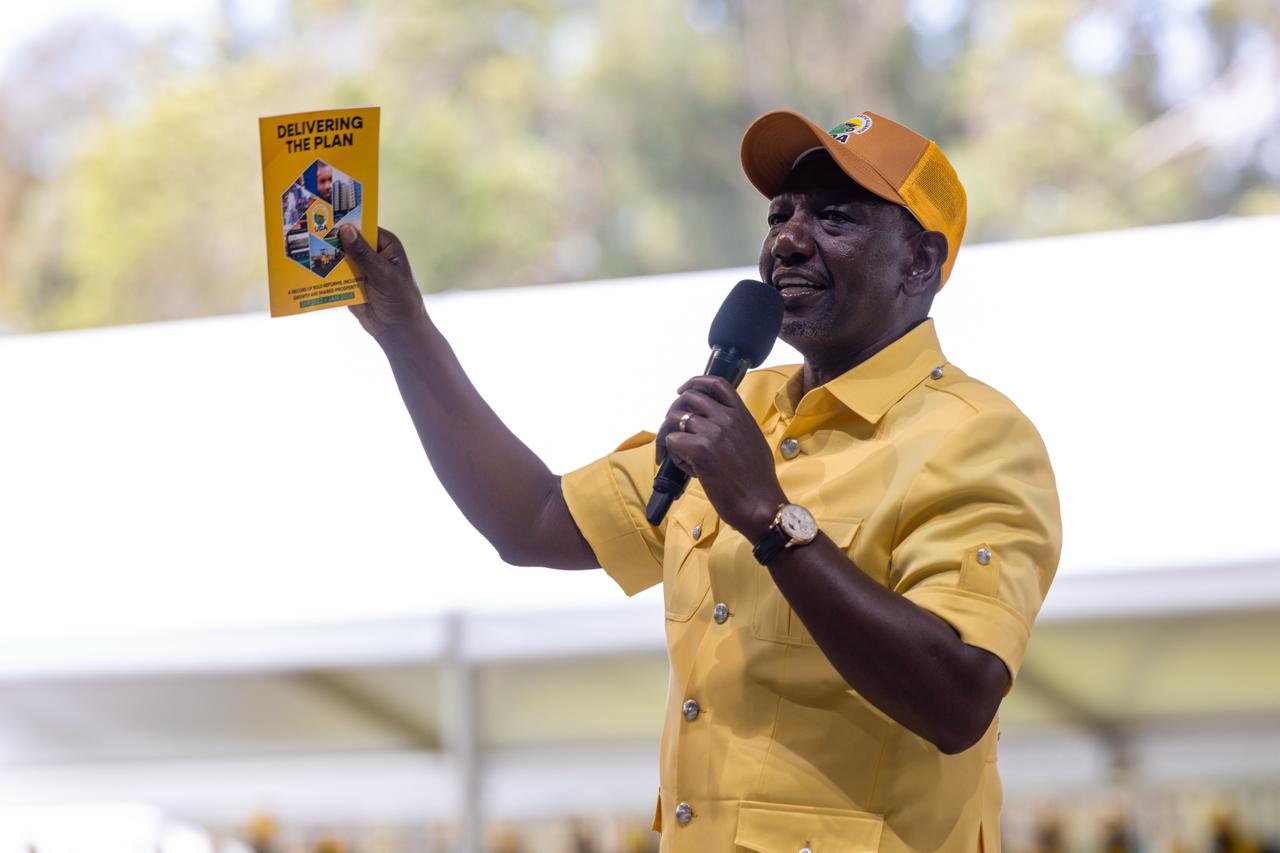
They cannot tolerate a situation in which their unimpressive past performance is overshadowed by the unassailable track record of the Kenya Kwanza–turned–broad-based government. Of all the aspiring candidates angling to be flagbearer, none matches the vision, clarity, focus, determination, energy, international appeal—and local touch—that Ruto embodies.
Evidence of promise fulfillment under the Beta Plan, particularly its five pillars, is visible nationwide. There is ample proof in how the SHA programme has helped many avoid medical poverty. At Karatina open-air market, I met Joseph, who said that despite his wife not being fully recovered, he pays nothing when taking her to the clinic. He earns only Sh5,000 as a watchman. This is just one of the small but meaningful transformations occurring across villages and towns.
These sparks of change are happening ubiquitously, in the everyday hustle of ordinary life. This is the impact of visionary leadership on a country striving toward its first-world “Singapore dream.”
The story is replicated in the Nyota programme. After protests highlighted the need to empower youth during the Gen Z demonstrations, the government listened. Today, the opposition complains even after the programme’s successful rollout.
Nyota is empowering 121,800 entrepreneurs nationwide, with at least 84 in each of the 1,450 wards. Another 90,000 youths will receive apprenticeships with a monthly stipend. Already, many beneficiaries are reporting how the programme is transforming their lives.
In affordable housing, more than 41 professions have benefited, with houses being built across counties without discrimination. Kenya has effectively become a construction site, with over 6,000 km of roads under development, supported by Sh177 billion in pending bills cleared by the government.
Clearly, President Ruto is far ahead of his competitors.
The writer is the government spokesperson