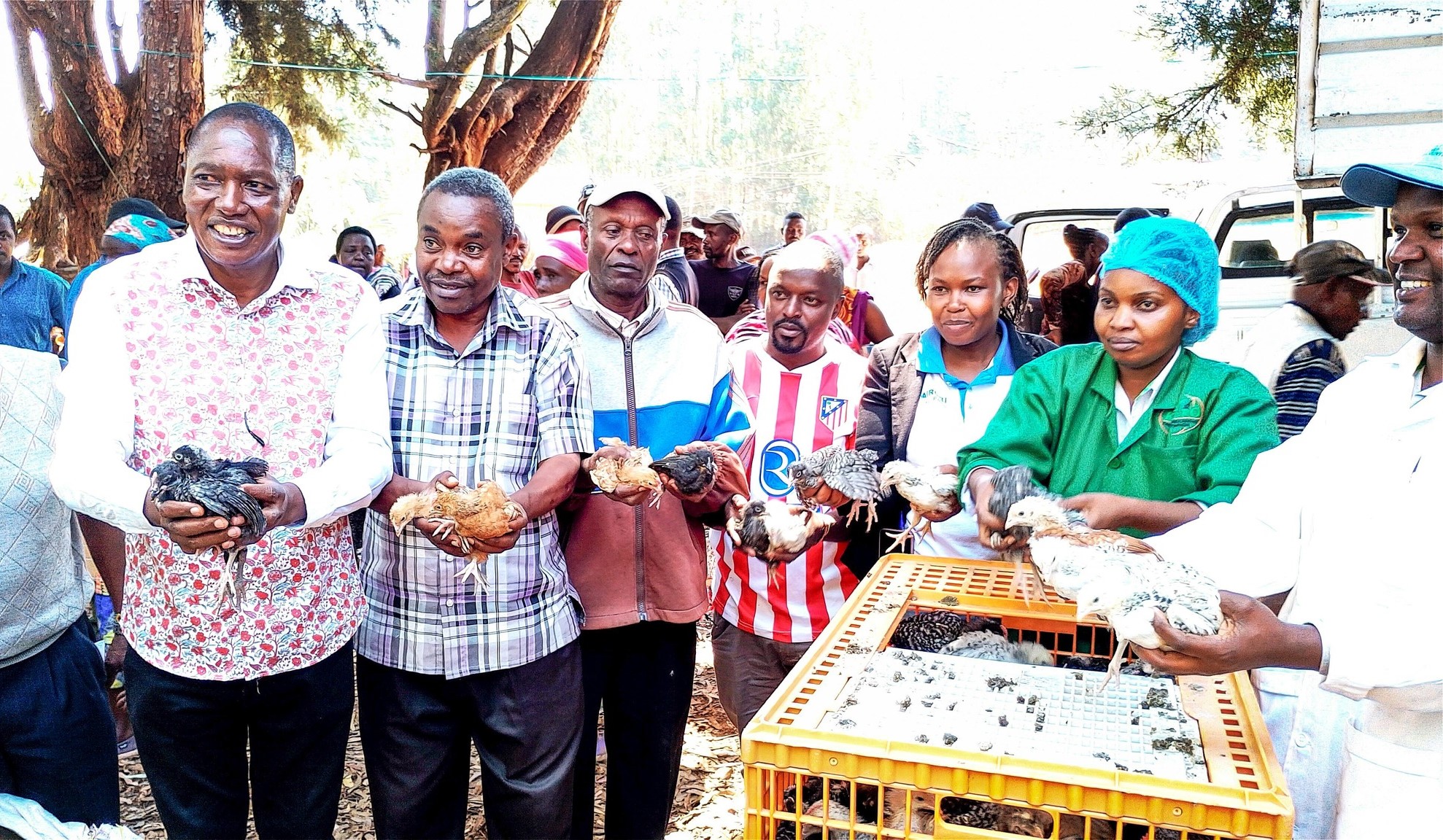
 Mukurwe-ini West MCA Atanasio Wakabaire (left) during the issuance of improved chicks to farmers /ALICE WAITHERA
Nyeri has boosted rural livelihoods and climate resilience by distributing 4,500 improved indigenous chicks to organised farmer groups in Mukurwe-ini West ward.
The chicks were issued to 28 community groups through a partnership between the county’s department of water, environment and climate change and the department of agriculture, livestock and aquaculture development under the Financing Locally Led Climate Action (FLLoCA) programme.
The initiative targets households vulnerable to erratic rainfall and rising temperatures by promoting poultry farming as an alternative and reliable source of income.
MCA Atanasio Wakabaire urged beneficiaries to treat the project
as a long-term investment.
“This is not a handout. It is an opportunity for our groups to improve household incomes, strengthen food security and protect themselves against climate-related shocks. You must take ownership, apply the knowledge you have been given and ensure the project succeeds,” he said during the distribution of the chicks.
The birds supplied are a Kenya Agricultural and Livestock Research Organisation (Kalro) improved indigenous breed, selected for their resilience and high productivity.
Unlike traditional village chickens, the Kalro variety matures in about four and a half months and can produce between 200 and 280 eggs per year.
They are also more feed-efficient and retain strong disease resistance, making them suitable for free-range and semi-intensive systems common in the area.
Wakabaire said the improved breed was chosen deliberately to enhance returns for smallholder farmers.
“These chickens grow faster and lay more eggs than ordinary indigenous birds, while still adapting well to local conditions. That means families can consume eggs for nutrition and sell the surplus for income.”
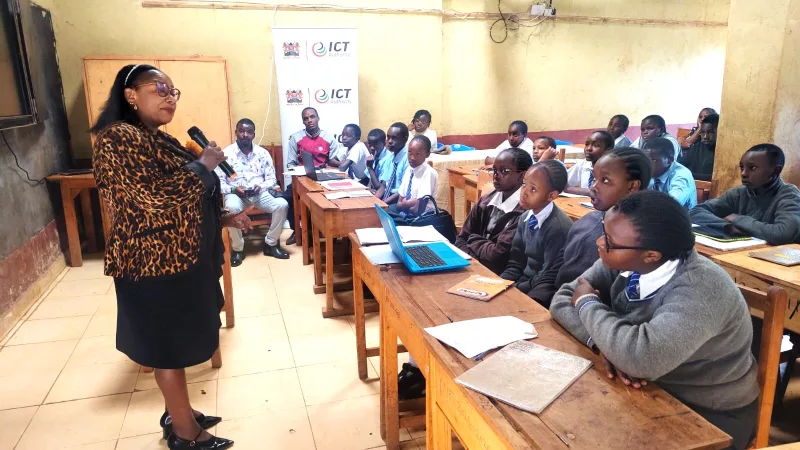
Residents were also sensitised on climate risks facing the area, including rainfall variability and prolonged dry spells and ways to improve their resilience.
The MCA said diversifying into poultry reduces over-dependence on rain-fed crops that are becoming increasingly unreliable, making households food secure.
Beyond the distribution of chicks, the county incorporated a strong training component to ensure sustainability. Livestock officers trained beneficiaries on proper housing, feeding, vaccination, disease control and record-keeping.
“We have learned from past programmes that giving out chicks alone is not enough. Farmers need technical skills to reduce mortality and run poultry as a business,” the MCA added.
The current rollout builds on previous poultry initiatives by the Nyeri government. Between 2018 and 2020, the county in partnership with development agencies distributed about 76,000 improved indigenous chicks valued at about Sh20 million to more than 180 farmer groups.
In addition, the county has in recent years supported backyard poultry farming through provision of incubators and brooders to boost local breeding capacity, as well as training farmers on improved production methods.
In 2025, Nyeri also commissioned a poultry feed processing plant to help lower feed costs and enhance value addition within the livestock sector.
Under FLLoCA framework, counties receive funding to implement community-prioritised climate adaptation projects.
In Mukurwe-ini, stakeholders identified poultry farming as a viable strategy to cushion families against crop losses while improving nutrition and incomes with plans underway to link groups to buyers and aggregation centres to ensure stable returns.
For the beneficiary groups, the improved chicks will help them to shift towards climate-smart agriculture that blends resilience with enterprise, offering a pathway to economic stability amid changing weather patterns.