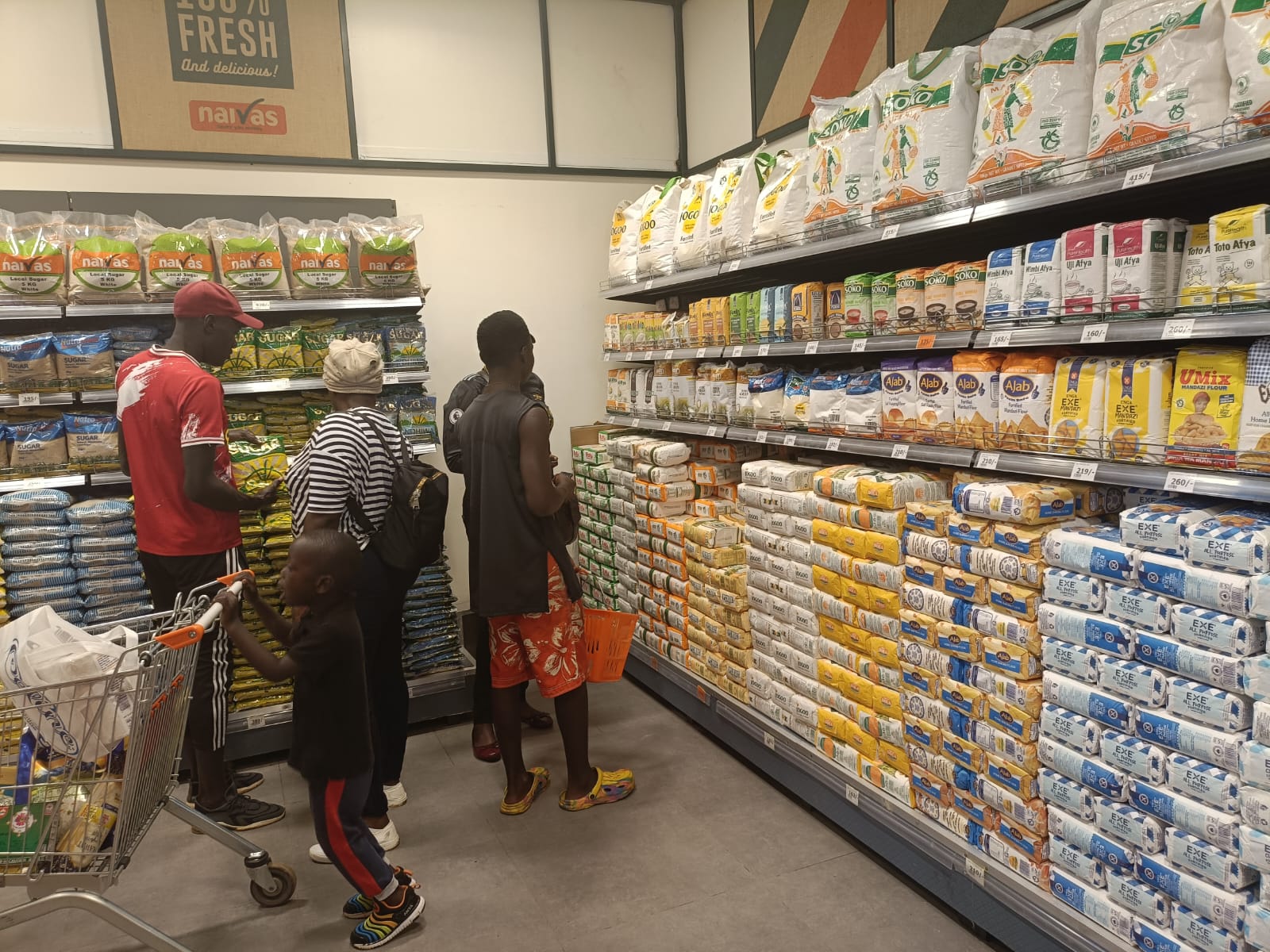
 Shoppers in a supermarket. /FILE
While lower fuel prices were expected to ease pressure on household budgets, February’s inflation shows the relief at the pump is being overwhelmed by rising food costs and sticky service charges.
The dip at the pump could be offering psychological relief but the real battleground remains at the mama mboga stalls, supermarkets and rental leases where inflation continues to bite hardest.
The latest figures from the Kenya National Bureau of Statistics (KNBS) show annual inflation stood at 4.3 per cent in February 2026, leaving many Kenyans still grappling with a higher cost of living.
On a monthly basis, consumer prices rose by 0.2 per cent, even as energy-related costs declined.
In the February–March pricing cycle, fuel prices fell across the board with Super petrol recording highest margin of Sh4.24 per litre, diesel by Sh3.93 and kerosene by Sh1, in figures released by the Energy and Petroleum Regulatory Authority (Epra).
The regulator attributed the reductions to lower import costs. Importers brought in a barrel of super petrol at $576.34, 2.69 per cent lower than $592.24 in the previous cycle.
Globally, fuel prices have softened significantly since December, with Brent crude dipping below $67 a barrel amid rising global supply and weaker demand forecasts.
The impact was visible in February’s transport index, which declined by 0.7 per cent month-on-month.
Electricity prices also fell by 2.9 per cent for 50 kWh and 2.7 per cent for 200 kWh, while kerosene and LPG registered slight decreases.
Yet this energy reprieve has not translated into meaningful relief at the counter.
Food remains the dominant inflation driver
Food and non-alcoholic beverages recorded an annual inflation rate of 7.3 per cent — well above the overall 4.3 per cent headline figure.
More significantly, the division alone contributed 2.15 percentage points to total inflation, meaning roughly half of Kenya’s inflation pressure is coming from food.
Vegetable prices illustrate the trend. Cabbage prices rose by 43.4 per cent year-on-year, sukuma wiki by 25.9 per cent and maize grain by 15.2 per cent.
"Between January 2026 and February 2026, price of Irish potatoes went up from Sh98.25 to Sh102.16 per kilogramme and that of a kilogramme of cabbage increased to Sh74.33 from Sh71.47," the KNBS report shows.
Even where monthly declines were recorded for items such as sugar and mangoes, annual price levels remain elevated.
"Over the 12 months until February 2026, the Food and Non-alcoholic Beverages division index rose by 7.3 per cent," data shows.
With food carrying the largest weight in the consumer basket, energy savings are being neutralised by higher grocery bills.
Transport relief remains limited
Although pump prices and diesel costs have eased, annual transport inflation still stands at 4.0 per cent.
This suggests that fare adjustments and logistical costs have not fallen in tandem with fuel.
In practical terms, households may be paying less at the pump but are not necessarily seeing proportionate reductions in commuting or goods transport costs.
"Over the twelve months until February 2026, the index for the Transport division rose by 4.0 per cent," report shows.
This, even as trends showed fares of country bus/matatu fares from one town to another went down by 1.4 per cent between January 2026 and February 2026.
Stagnant transport charges reflect a lack of willingness by operators to effect downward fare reviews and broader operating expenses that go beyond fuel alone.
Urban rent continues to edge upward
Housing costs are also exerting quiet pressure. Rent for houses with more than three bedrooms increased by 0.5 per cent month-on-month and 1.1 per cent year-on-year.
While modest compared to food inflation, the steady upward trend in rent compounds household expenditure burdens, particularly in urban centres.
The housing, water, electricity, gas and other fuels division recorded annual inflation of 1.8 per cent, reinforcing that shelter costs remain a significant portion of household budgets.
The broader picture shows that Kenya’s inflation challenge is increasingly structural rather than energy-driven.
Even as global oil markets soften and domestic pump prices decline, households continue to face rising grocery bills, resilient transport costs and creeping rent increases.
Core inflation eased to 2.1 per cent in February, but non-core inflation — which includes volatile food and energy items — remained elevated at 10.1 per cent.
This divergence underscores the dominance of food price volatility in shaping overall inflation outcomes.
In effect, cheaper fuel is no longer sufficient to offset price pressures in essential goods and services.