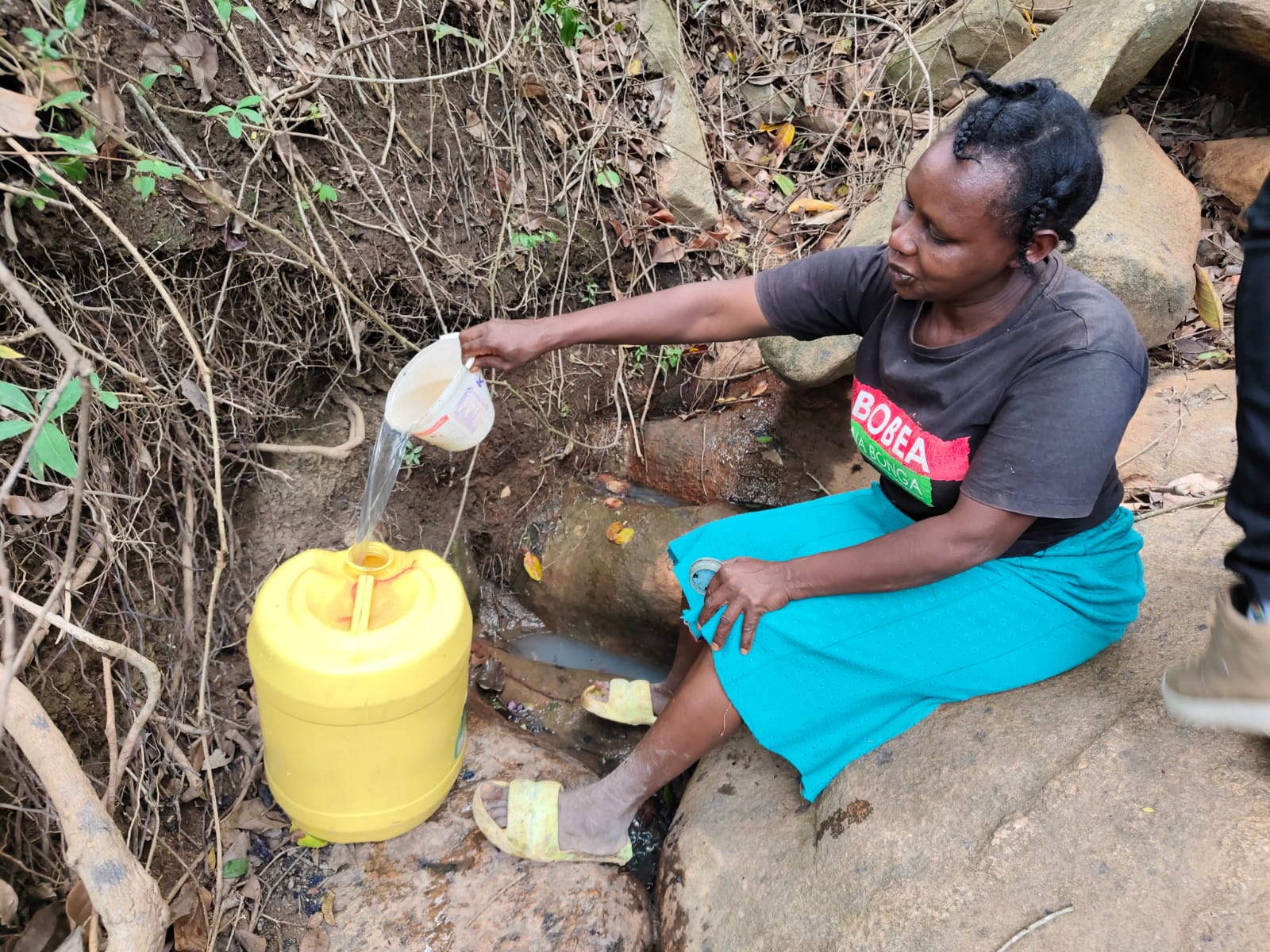
 Judy Mabuti fetching water from a spring in Rwathiga village, Gaturi ward in Murang'a county./ ALICE WAITHERA
Residents of Rwathiga village in Gaturi, Murang’a county, live each day at the mercy of a shrinking spring and the wildlife that shares it with them.
For families in the village, barely six kilometres from Murang’a town, fetching water is a risky routine that often pits them against snakes, honey badgers and hyenas straying from Kiambicho Forest, about four kilometres away.
The small spring, tucked between rocks and surrounded by indigenous trees, is the only reliable source of water for domestic use and livestock, especially during drought.
The semi-arid village depends largely on subsistence farming. However, the lack of water has left residents grappling with harsh living conditions.
Stella Wacera said she leaves home at dawn to beat the long queues at the spring.
“If you get there at 9am, you will find many others already queuing. By around 11am, the spring dries up and you have to wait for it to refill,” she said.
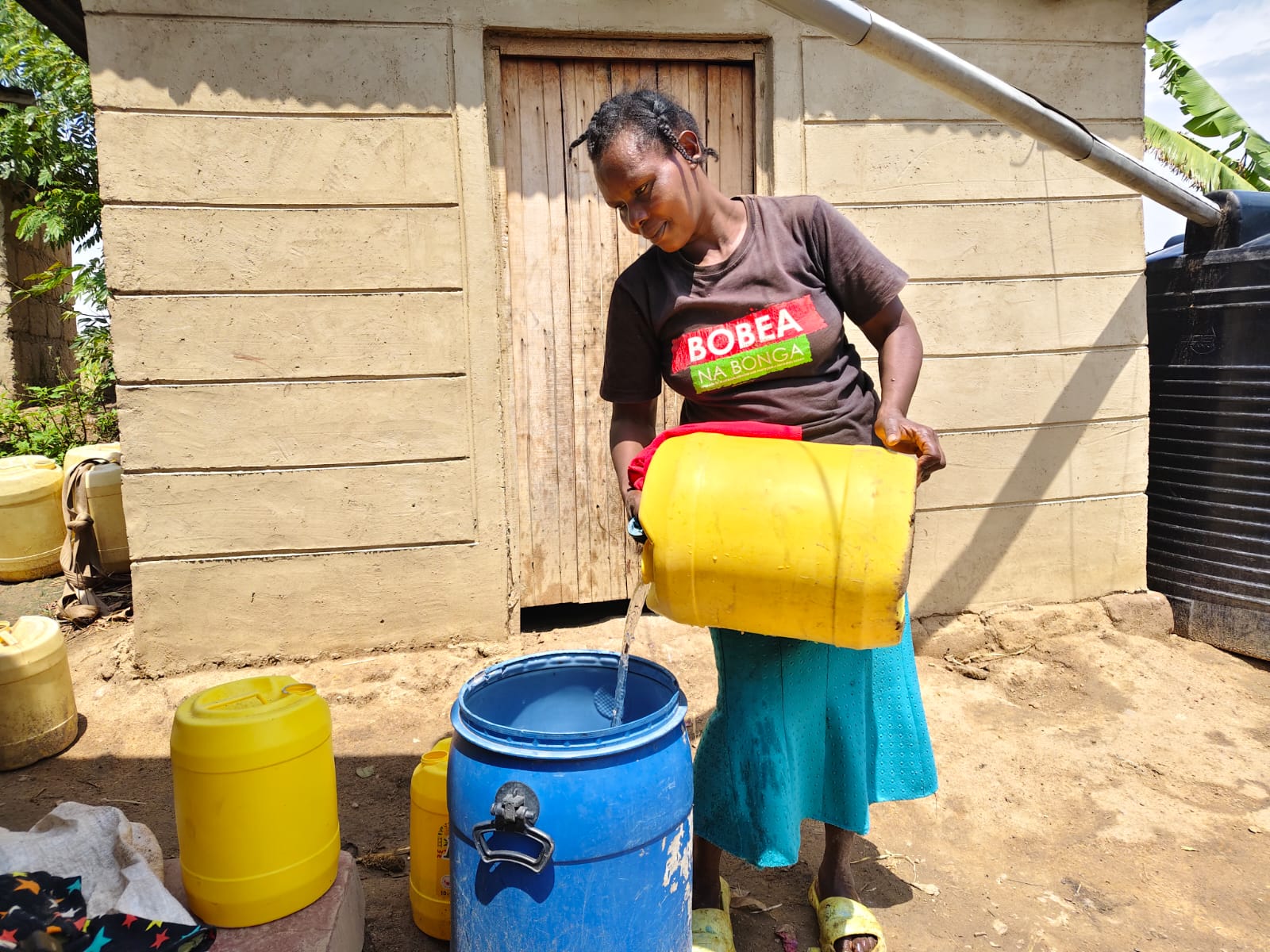 Judy Mabuti, a resident of Rwathiga village, filling a drum with water fetched from a spring at her homestead./ ALICE WAITHERA
Since most households bring several jerrycans, residents spend hours waiting their turn, scooping water with cups because the spring is too narrow to fit a container.
On a good day, filling a 20-litre jerrican takes about 10 minutes. When the spring has been overdrawn, the same container can take up to 30 minutes.
“When it’s dry, we spend almost the entire day there. You cannot do much else,” Wacera added.
After fetching the water, residents climb a steep hill back to their homes. The task becomes harder during prolonged dry spells when they must also fetch water for livestock.
Judy Mabuti has relied on the spring since she got married in the village in 1998. She recalled a frightening encounter when she went to fetch water at 3am with her daughter, hoping to avoid the queue.
“I found a green mamba lying on the rocks next to the spring. I think it had just drunk water and was resting,” she said.
She shone a light on it and it slithered away. The two fled and only returned later, just in time for her daughter to prepare for school.
“I grew up in Kirinyaga where there are many rivers and plenty of water. I was shocked when I got married here and found we had to take turns at one small spring,” she said.
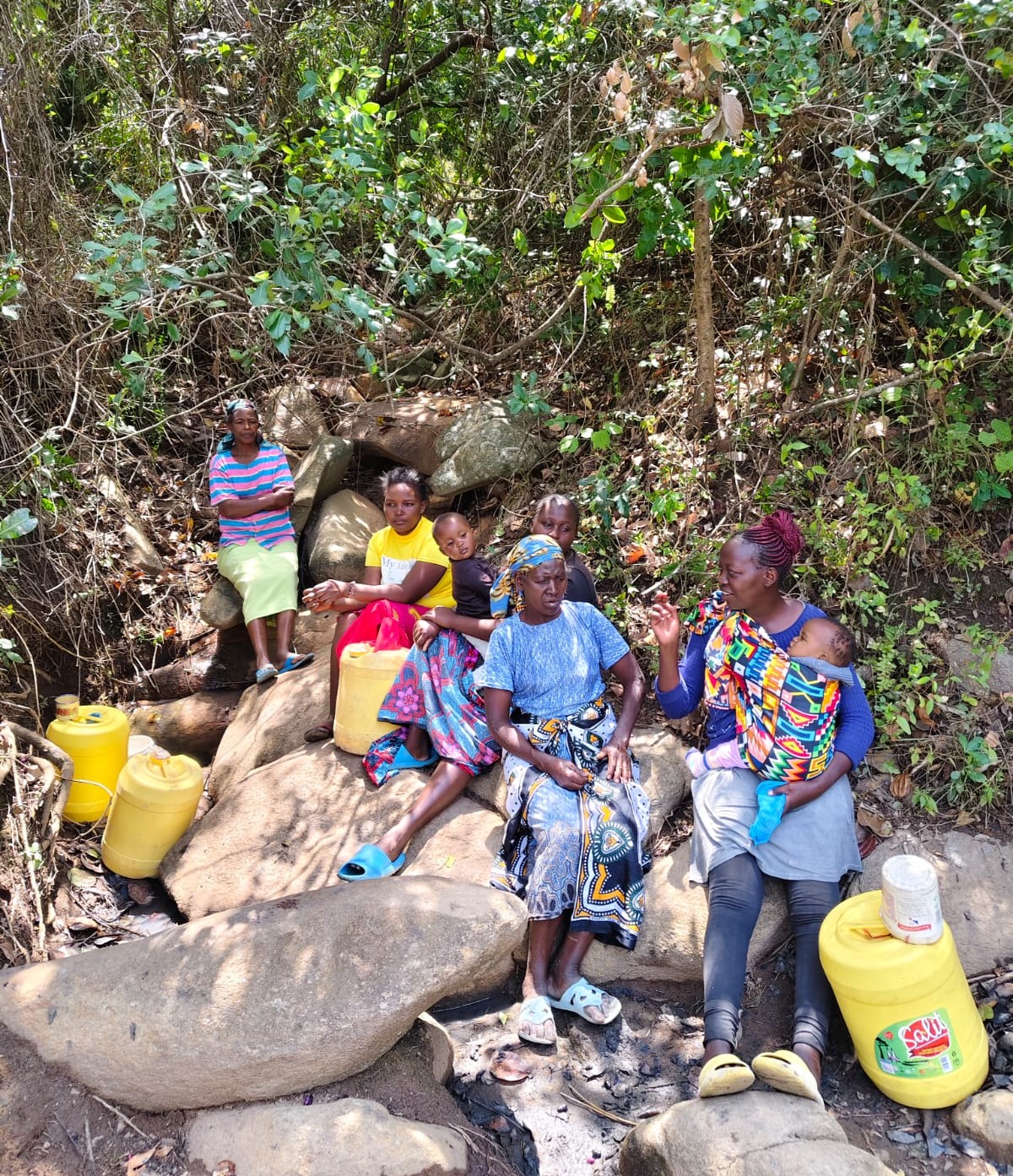 Women queue to fetch water from a small spring in Rwathiga village, Gaturi ward in Murang'a county./ ALICE WAITHERA
Beyond water shortages, Mabuti said the village remains cut off from basic services.
Many homes are yet to be connected to electricity and rely on lanterns, even as neighbouring villages enjoy both piped water and power.
Catherine Waithira said households are forced to ration water to reduce trips to the spring. The scarcity has curtailed farming activities, particularly livestock rearing, which requires significant amounts of water.
Waithira said animals are often heard making loud noises in the trees neighbouring the spring, sparking fear among the women as they draw water.
She, however, believes the village has untapped potential.
“Our soils are fertile and can produce high yields. Even if we got piped water for domestic use first, we could start kitchen gardens and improve our diets. Right now we even buy vegetables,” she said, adding that families boil the spring water before drinking it.
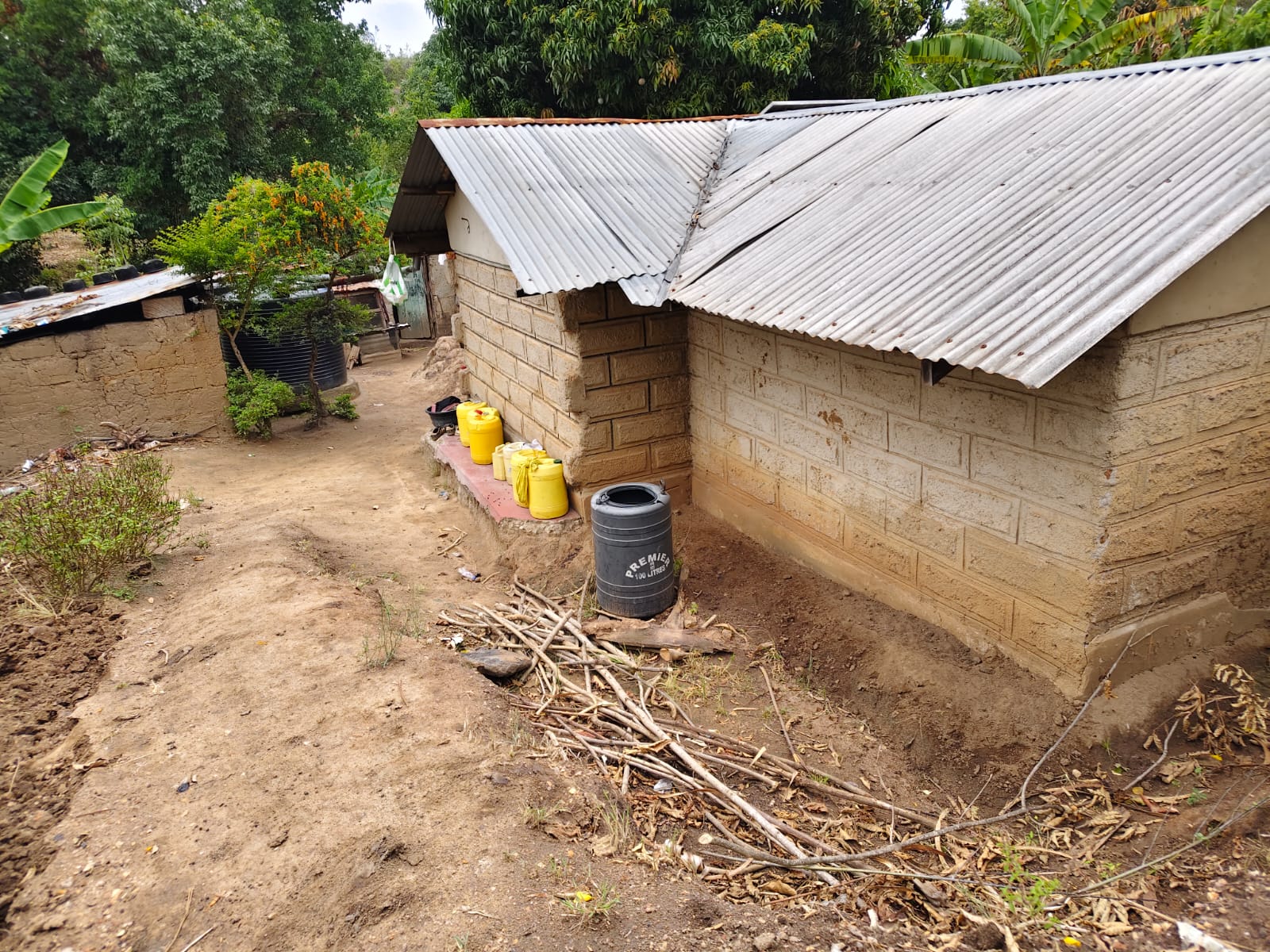 Jerricans used to fetch water in a homestead in Rwathiga village, Gaturi ward in Murang'a county./ ALICE WAITHERA
Gaturi ward is characterised by mixed agro-ecological zones. While parts of the ward benefit from relatively fertile soils suitable for coffee, tea and horticulture, other sections, including Rwathiga, fall within semi-arid belts that experience erratic rainfall.
Agriculture in Gaturi is predominantly small-scale and rain-fed. Farmers grow maize, beans and bananas for subsistence, alongside cash crops such as coffee in wetter areas.
Residents said with reliable water infrastructure for domestic use and small-scale irrigation, the semi-arid parts of Gaturi could support fruit farming and improve livestock production, significantly boosting household incomes and food security.
According to county figures, only about 67 per cent of Murang’a county’s population currently has access to clean drinking water through formal supply systems.
This leaves large gaps in rural wards such as Gaturi, where piped connections are scarce and many families still depend on natural springs and boreholes for daily water needs.
The county has set a target of 100 per cent water coverage by 2027. Until then, communities such as Rwathiga will continue to face long walks and risky encounters for a few jerrycans of water each day.