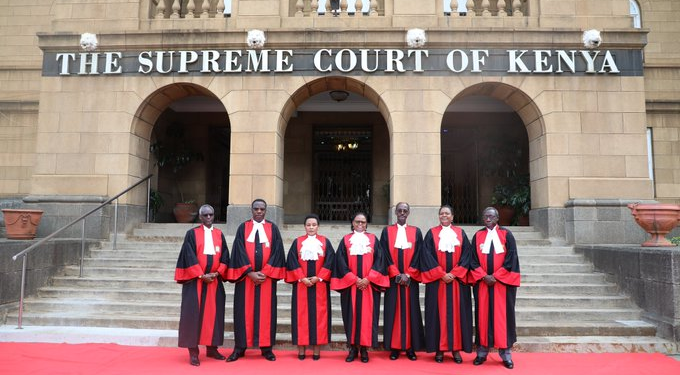
Supreme Court judges led by Chief Justice Martha Koome have urged the High Court to quash complaints lodged before the Judicial Service Commission (JSC) seeking their removal.
The judges are contesting what they describe as JSC authority to entertain disciplinary complaints arising from their judicial decisions.
The petition, filed before the High Court, seeks to halt proceedings initiated at the JSC following complaints lodged by, among others, former Law Society of Kenya president Nelson Havi, senior counsel Ahmednasir Abdullahi and former Cabinet Secretary Raphael Tuju.
The judges argue that the commission is venturing into constitutionally protected judicial territory by purporting to interrogate the merits of Supreme Court decisions under the guise of discipline.
Through Senior counsel George Oraro, Koome maintains that the complaints before the commission are anchored not on allegations of misconduct envisaged under Article 168 of the constitution, but on dissatisfaction with judicial determinations.
"The petition is in regard to supreme court decisional and administrative powers," he said.
The petitioners argue that Article 160 shields judges from being questioned over their conduct in court.
Additionally, they add that Article 163 entrenches the Supreme Court as the final arbiter whose decisions are binding and not subject to review by any other body, save for the court itself.
They contend that allowing the JSC to proceed would undermine judicial independence and upset the constitutional architecture that vests interpretative supremacy in the Supreme Court of Kenya.
According to the petition, if a party is aggrieved by a Supreme Court ruling, the recourse lies either in seeking an appeal, where permissible, or in pursuing constitutional amendment — not in instituting disciplinary action.
"The people of Kenya wanted the Supreme Court to be the final court whose decisions would be final. These were enacted by article 161, securing judiciary authority to be subjected only to law," the senior counsel submitted.
Deputy Chief Justice Philomena Mwilu, who is also among the petitioners, has similarly challenged the commission’s mandate in the circumstances.
Her counsel, Winnie Betty, argued that the core question before the bench is not whether the JSC can interrogate judicial reasoning itself.
"The petition interrogates whether JSC may interrogate merits of judicial reasoning under the guise of disciplinary jurisdiction, not whether the Supreme Court was right or wrong, but the constitutional design," she said.
In Mwilu’s interpretation, the petitions before the commission effectively invite it to examine the correctness of judgments, including issues surrounding recusal and decisional processes.
Counsel submitted that the constitution sets out exhaustive grounds for the removal of a judge — such as incapacity, bankruptcy, incompetence, gross misconduct, or breach of the judicial code of conduct.
She said neither statute nor interpretation can expand those grounds to cover mere disagreement with judicial outcomes.
“The constitution protects difficult decisions, not comfortable ones,” the counsel said, arguing that subjecting judges to the JSC proceedings over their reasoning would expose them to risks of compromising decisional independence.
Removal from office, it was argued, is the gravest disciplinary sanction and must be anchored strictly within the constitutional text.
Justice Isaac Lenaola took a more specific stance in relation to the complaint linked to former Cabinet Secretary Raphael Tuju.
Through his lawyer, Lenaola told the court that he was not part of the bench that handled the contested decision arising from the dispute between Tuju and the East African Development Bank (EADB).
That dispute concerned enforcement in Kenya of a UK judgment over a multi-billion shilling loan advanced to Tuju’s company, Dari Limited.
Kenyan courts had recognised the foreign judgment, paving the way for receivership and possible auction of properties in Karen that were offered as security.
Tuju challenged aspects of the enforcement before the Supreme Court and later filed complaints before the JSC.
Lenaola’s counsel told the High Court that his inclusion in the JSC proceedings is erroneous, as he neither sat on the bench that rendered the disputed ruling nor faces any specific complaint under Article 168.
The court was informed that correspondence from Tuju himself acknowledged that Lenaola was not part of the panel that made the decision in question, yet the petition before the JSC has not been withdrawn as against him.
The Judicial Service Commission argued that none of the judges named in the complaints before it had filed responses to the petitions before them.
The commission said the cases had been received and the judges were formally asked to submit their replies.
According to JSC, these petitions are the initial step in its disciplinary process and should first be considered and, if meritorious, certified before being sent to the President for possible action.
The hearing of the petition started before a three-judge High Court bench on Friday, February 27.
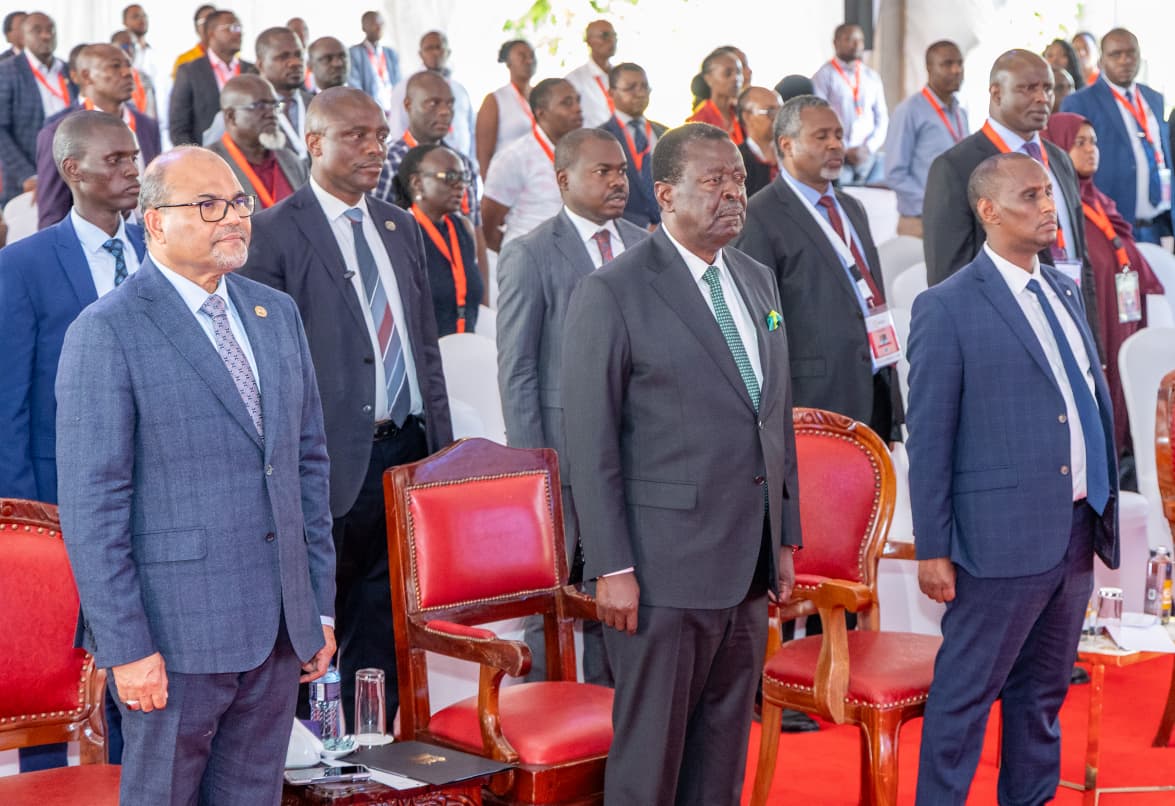
In a poignant moment before proceedings commenced, the court observed a minute of silence in honour of Justice Mohammed Ibrahim, who had been listed as the seventh petitioner but passed away in December last year, before the matter could be heard.
“Consequently proceedings shall progress with seventh petitioner as discharged. Counsel for that party is excused from further participation,” Justice Bahati Mwamuye said on behalf of the bench.