The simmering supremacy wars between senators and governors over the oversight of billions of shillings sent to counties escalated on Thursday.
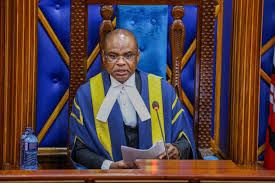
This followed Senate Speaker Amason Kingi’s decision to call off a planned meeting with the Council of Governors, which had been scheduled to address the county bosses’ grievances.
In a letter to council chairman and Wajir Governor Ahmed Abdullahi, Kingi said the February 26 meeting had been postponed indefinitely after governors failed to honour his directive. He had instructed the county bosses to continue appearing before the Senate County Public Accounts Committee (CPAC) and the County Public Investments Committee (CPIC) pending the meeting.
“In the circumstances, the condition stipulated in the earlier letter having remained unfulfilled and taking into account the gravity of the prevailing situation, the meeting scheduled for February 26, is hereby deferred,” Kingi wrote. He added that talks would only be rescheduled once governors resume appearances before the two committees in line with the constitution.
The latest development signals a hardening of positions in a long-running standoff that has paralysed audit scrutiny of counties and raised fears over accountability for public funds. Governors have been boycotting the sessions, accusing senators of turning oversight into a political tool for harassment and public humiliation.
Abdullahi said the Senate process had become punitive and repetitive, forcing governors to make multiple appearances over the same audit queries. He spoke to journalists during a council retreat in Kilifi recently.
“The Council of Governors notes with great concern the continuous and escalating political witch-hunt, harassment, intimidation and humiliation of governors by senators,” he said. The council resolved that governors would not appear before CPAC until their grievances were addressed through what they termed a structured engagement with Senate leadership.
“To this effect, the council has resolved that governors will not appear before the CPAC committee until these concerns are addressed,” Abdullahi added. They subsequently sought a meeting with Kingi to negotiate new ground rules for oversight.
But the speaker rejected any attempt to condition the Senate’s constitutional mandate, citing Article 125, which grants Parliament powers equivalent to those of the High Court to summon any person and compel the production of documents.
“No organ, authority or person has the power to suspend, compromise, vary or waive the legislature’s mandate,” Kingi said. He also referenced Article 96, which tasks the Senate with oversight of national revenue allocated to counties, and Article 229, which requires Parliament to consider Auditor-General’s reports within three months.
Kingi warned that the March 31 constitutional deadline for processing audit reports was binding, pointing to a High Court ruling that affirmed strict adherence to oversight timelines.
“In the meantime, any governor invited or summoned to appear before any committee of the Senate must do so, failing which the consequences provided for in the constitution and the law shall follow,” he cautioned.
The speaker also dismissed governors’ demands for the removal of specific senators from committees, saying membership of House committees is an exclusive preserve of the Senate under Article 124.
“The Council of Governors’ demand that certain senators be removed from the service of any committee is without constitutional anchor,” he ruled.
Senators argue that governors are undermining accountability by refusing to answer questions on how public money is spent, while governors insist the Senate is overstepping its role and engaging in political theatrics.
The collapse of the truce talks now sets the stage for a constitutional showdown, with the Senate threatening to invoke coercive powers to compel attendance.
Legal experts warn that if the deadlock persists, it could trigger court battles that further delay audit scrutiny and weaken oversight over county finances.
For now, both sides appear entrenched, with the Senate digging in on constitutional authority and governors demanding a negotiated framework for appearances.
As the March 31 audit deadline approaches, the standoff risks plunging county oversight into deeper crisis, raising fresh questions about transparency, accountability and the future of intergovernmental relations under devolution.