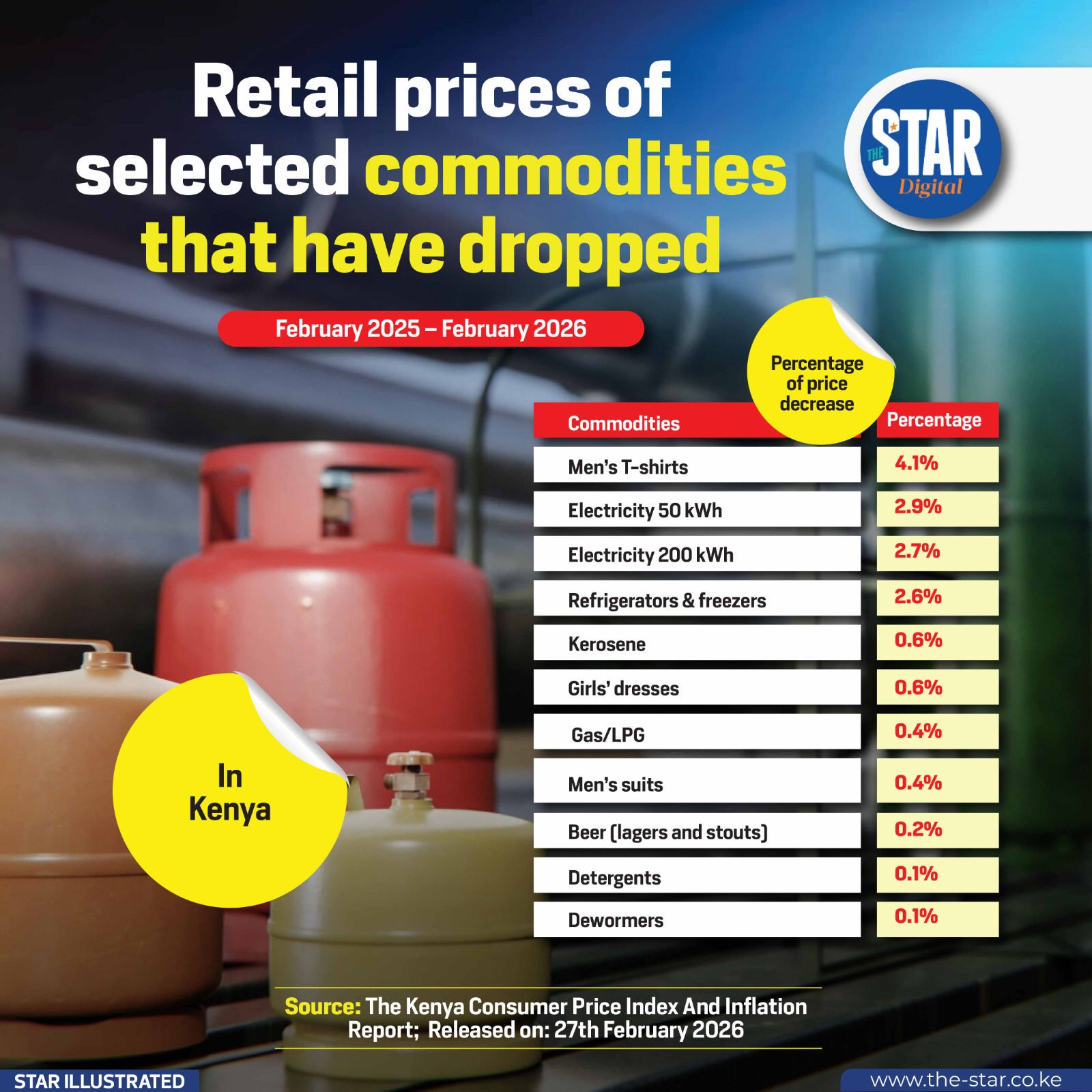
While overall inflation remains a concern, several key commodities in Kenya recorded price decreases between February 2025 and February 2026.
Men’s T-shirts saw the most significant reduction, with retail prices dropping by 4.1%.
This was closely followed by relief in the energy sector, where electricity costs fell by 2.9% for consumers using 50 kWh and 2.7% for those consuming 200 kWh.
These marginal drops offer a slight reprieve for households managing monthly utility bills and clothing expenses.
The cooling of prices also extended to durable household goods and fuel. Refrigerators and freezers saw a 2.6% price dip, while kerosene and girls' dresses both recorded a modest 0.6% decrease.
Further down the list, essential energy and apparel items like LPG gas and men’s suits saw a fractional decline of 0.4%.
The smallest gains for consumers were found in the beverage and health sectors; beer prices edged down by 0.2%, while detergents and dewormers saw a negligible 0.1% reduction.
Although these decreases are relatively small in the context of the broader economy, they represent specific pockets of the market where the inflationary pressure has momentarily eased for the Kenyan consumer.