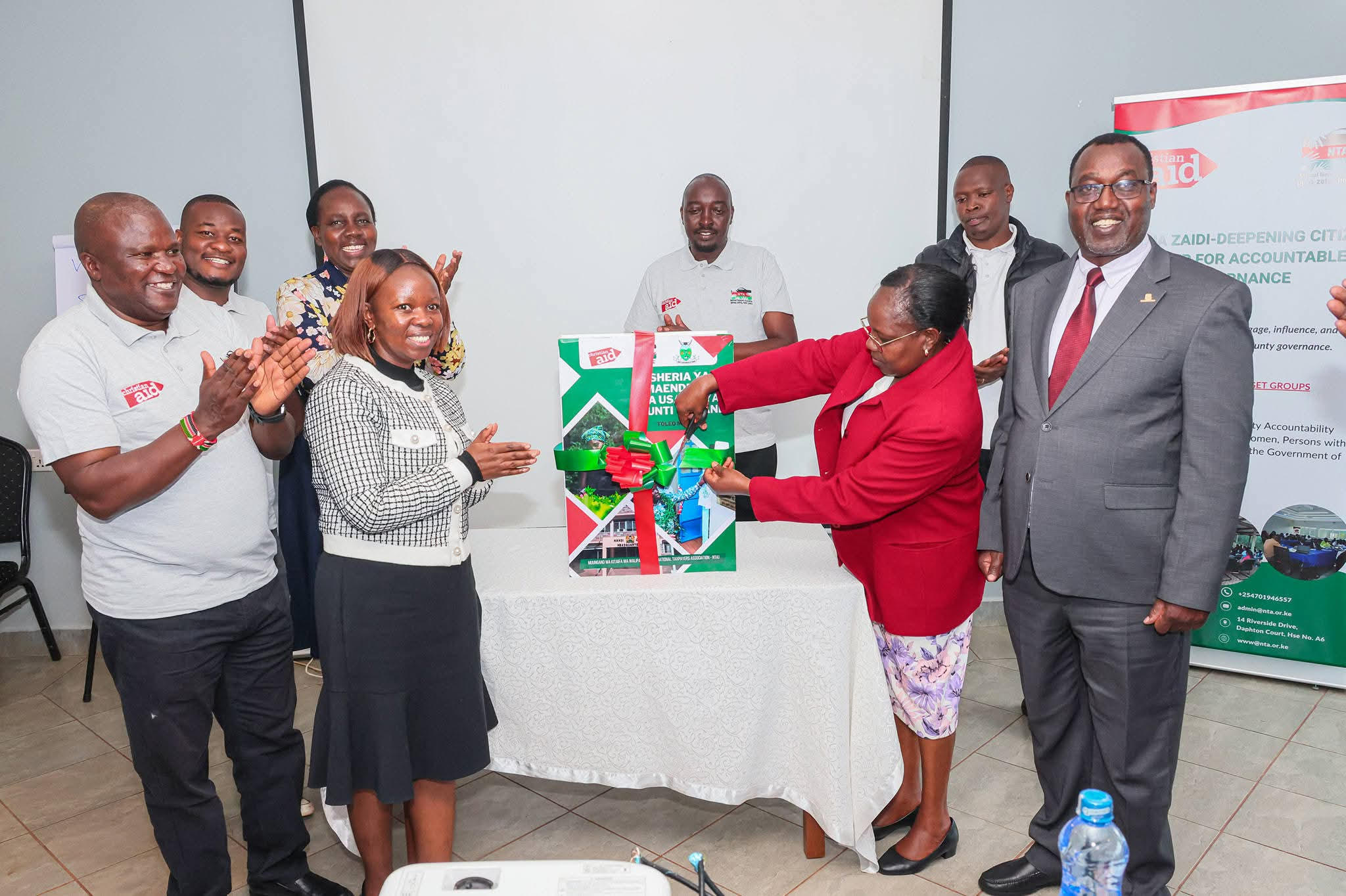
Nandi County has officially launched the Swahili version of the Nandi County Equitable Development Act, 2023, a move aimed at deepening citizen participation and strengthening accountability in the management of public resources.
During a Citizen Assembly Forum at a hotel in Kapsabet, Nandi Deputy Governor Yulita Mitei described the translation of the law into Kiswahili as a significant step toward inclusive and participatory governance.
“This milestone reflects our commitment to fairness, transparency, and accountability in the distribution and utilisation of public resources,” she said. “By translating the Act into a language widely understood by our citizens, we are ensuring that everyone can understand, own, and actively engage with the law that safeguards equitable development.”
The legislation was developed in partnership with the National Taxpayers Association and Christian Aid Kenya. County officials said the collaboration has strengthened legal frameworks guiding resource allocation and citizen oversight.
Mitei highlighted that the partnership has positioned Nandi as a model county, with the framework expected to be replicated in other devolved units.
“This marks the successful conclusion of a fruitful engagement with NTA and Christian Aid Kenya. Together, we have not only achieved our targets but also set a benchmark for best practice,” she said.
Christian Aid Kenya Country Director Janet Ngombalu praised the county for institutionalising citizen participation beyond rhetoric.
“Translating the Act into Swahili is more than a symbolic gesture; it is a practical tool for empowerment. When citizens understand the law, they can demand accountability and participate meaningfully in budgeting and development processes,” Ngombalu said. She added that Nandi’s approach demonstrates how partnerships between county governments and civil society can strengthen democratic governance.
Similarly, NTA Chief Executive Officer Patrick Nyangweso said the initiative enhances structured citizen oversight. “Accountability thrives where information is accessible. By making this law available in Swahili, Nandi has lowered the barrier to public engagement and strengthened oversight of public expenditure,” he said.
County leaders linked the milestone to the principles of the Open Government Partnership (OGP), a global initiative promoting transparency, civic participation, and accountability in governance. Nandi has embedded citizen assemblies, public expenditure tracking, and proactive disclosure of budget information into its governance systems.
Late last year, the county received the OGP Local Program Award for Excellence in Access to Information at the 2025 OGP Global Summit held in Spain. The recognition acknowledged the county’s commitment to transparency, accountability, and citizen participation in governance.
Mitei said Nandi’s dedication to open governance has positioned it as a leader in advancing OGP values at the county level. “As we celebrate this achievement, we reaffirm our resolve to build institutions that are transparent, accountable, and responsive to the people,” she said.
With the Swahili version of the Act now in circulation, county officials expect increased citizen engagement in development planning and budgeting, signalling a shift from policy formulation to people-driven implementation.