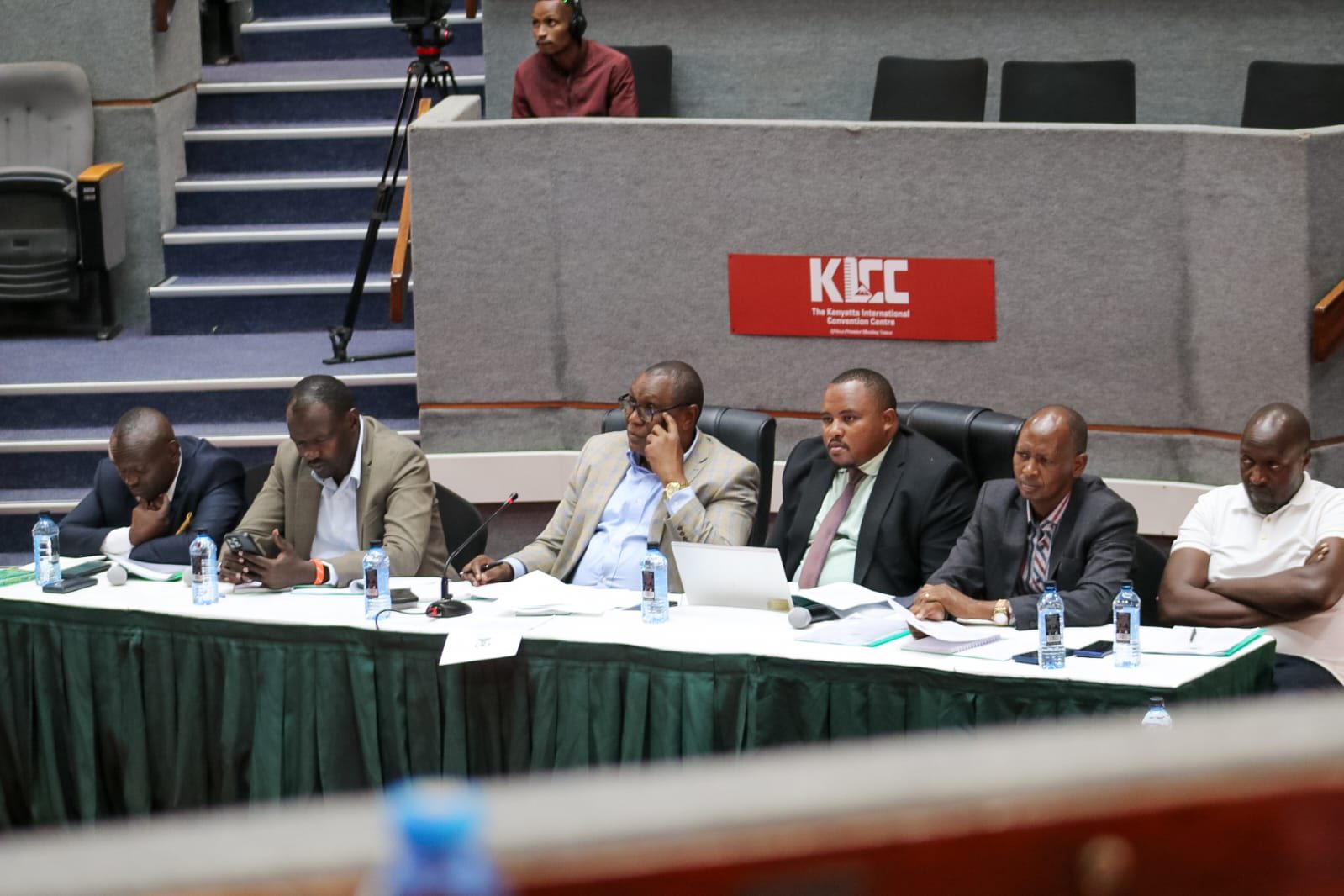
 Departmental Committee on Finance and National Planning listen to public views on the proposed National Infrastructure Fund at the Kenyatta International Convention Centre, February 27, 2026. /PARLIAMENT
Kenyans have broadly supported the proposed establishment of the National Infrastructure Fund during public hearings, but contributors insisted that strict legal and governance safeguards must be entrenched to prevent abuse and ensure value for money.
Appearing before the Departmental Committee on Finance and National Planning at the Kenyatta International Convention Centre, speakers described the Bill as a progressive step towards financing large-scale infrastructure.
However, they warned that without firm controls, the initiative risks going the way of past well-intentioned programmes that later stalled.
John Towett, a resident of Nairobi County, said he supported the Bill but underscored the need for explicit provisions to guard against misallocation and misappropriation of funds.
“I wholly support this Bill. As a matter of fact, the government has no role in doing business. The role of the government is to facilitate service delivery. This fund should, however, not be misdirected to pay debt,” he submitted.
Hagai Thenye, representing Bunge La Mwananchi, echoed calls for tighter oversight and greater parliamentary scrutiny.
He urged the committee to incorporate punitive sanctions for officials found culpable of misusing resources.
“This is a good Bill. It, however, requires safeguards and a prescription of highly punitive measures to deter any form of misappropriation. Projects must also be strictly vetted to ensure they are viable,” he submitted.
“We also want to suggest that the operations of the Fund be subjected to the provisions of the public procurement law, and that the Board be required to regularly report to the relevant Parliamentary Committee,” he added.
David Mburugu, who travelled from Nakuru county to present his views on the final day of hearings, told the committee he supported the creation of the fund but emphasised the importance of drafting the law carefully.
“I have read the Bill, and I want to say categorically I support it. We, however, need to ensure that we craft this law in such a manner that it enables us to derive maximum benefits from the fund. I support the suggestions for ring-fencing this money,” he stated.
He proposed that the Fund be restricted from financing stalled projects and suggested that administrative costs be capped at three per cent.
In addition, he recommended that only projects valued at Sh50 billion and above qualify for funding, arguing that this would focus resources on transformative mega projects capable of timely completion.
Mburugu further stressed the need for thorough feasibility studies and strict due diligence at the project design stage to ensure that only high-return investments are approved.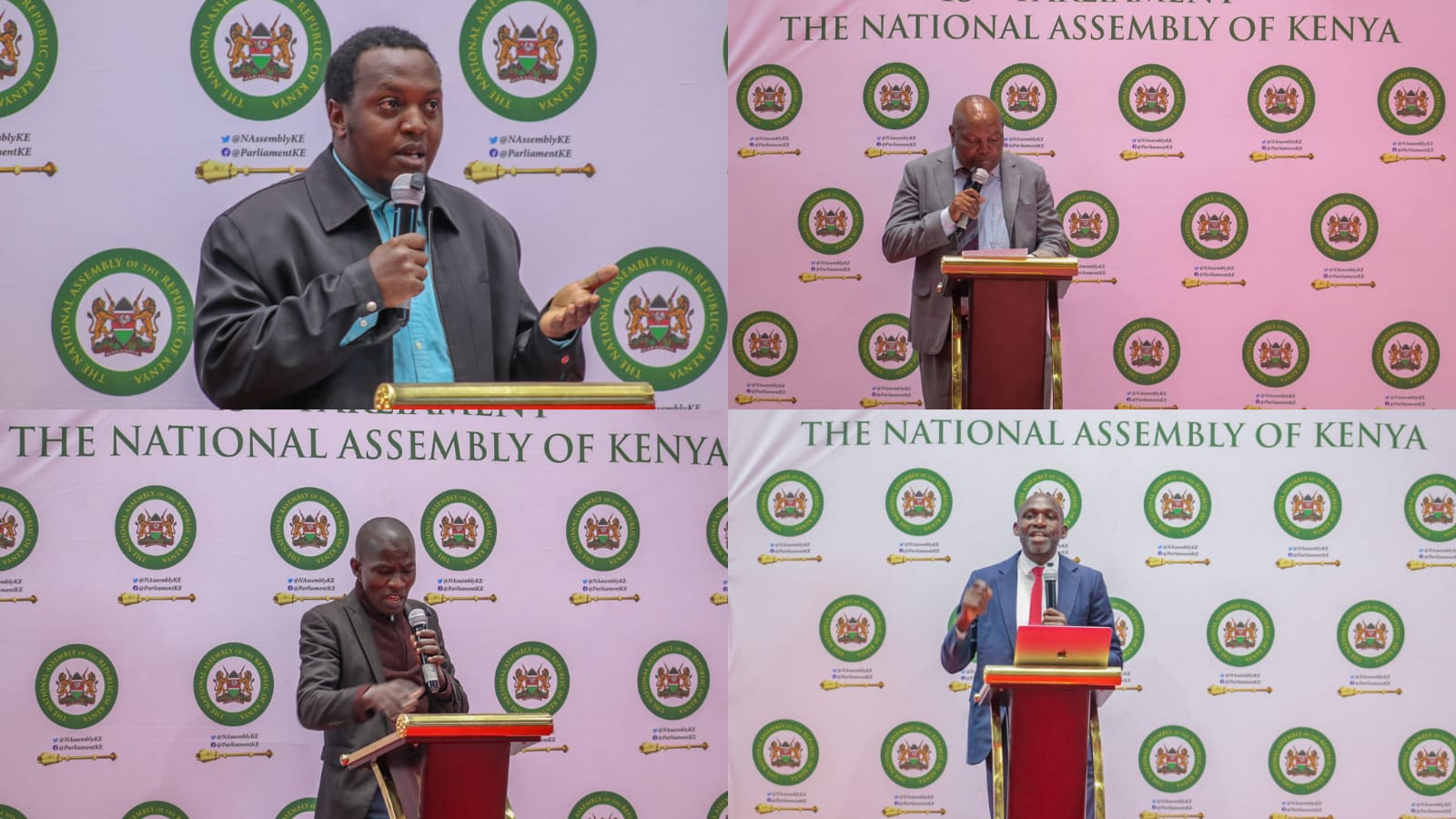 Kenyans give their views on the proposed establishment of the National Infrastructure Fund during public hearings at the KICC, February 27, 2026. /PARLIAMENT
On the governance framework, he called for a lean board with members serving three-year terms, renewable once.
He also proposed increasing the minimum experience requirement for the chairperson and chief executive officer from 15 to 20 years.
Committee members, led by session chair Kitui Rural MP David Mboni, pushed back against the proposal, cautioning that it could unintentionally sideline younger professionals.
“This recommendation means that perhaps only persons who are about 50 years old would qualify for these positions,” he argued.
Julius Rutto questioned how younger professionals would rise through the ranks under such a threshold.
“How then will the youth get an opportunity to rise to such a position? I doubt there’s anyone in the youth bracket who would be in possession of such an experience,” he observed.
However, not all submissions were supportive.
Fred Ogolla of the Liberal Democratic Party questioned the necessity of establishing a new financing vehicle, arguing that Kenya’s development constraints stem from governance and prioritisation failures rather than inadequate funding.
“Infrastructure development is essential for national growth. However, the proposed fund raises serious constitutional, fiscal and governance concerns,” he told lawmakers.
He maintained that additional legislative frameworks would not cure inefficiency. Existing laws are sufficient, he argued; what is lacking is disciplined governance.
"Execution is the real bottleneck,” Ogolla said, urging authorities to strengthen accountability in the use of existing resources.
While recognising the centrality of infrastructure to economic growth, he said implementation gaps remain the country’s core weakness.
“Kenya suffers from weak execution and governance deficits. For instance, we cannot be talking big on industrialisation with flickering too expensive electricity in Industrial Area,” he noted.
When invited to propose alternatives, the former lecturer at Strathmore University suggested prioritising rural roads to improve agricultural output and market access.
He also highlighted the need to lower energy costs to reduce production expenses, alongside improving water access and logistics systems to enhance competitiveness.
Closing the session, Mboni thanked participants for their contributions and said the committee would retreat to consolidate the submissions before tabling its report in Parliament.