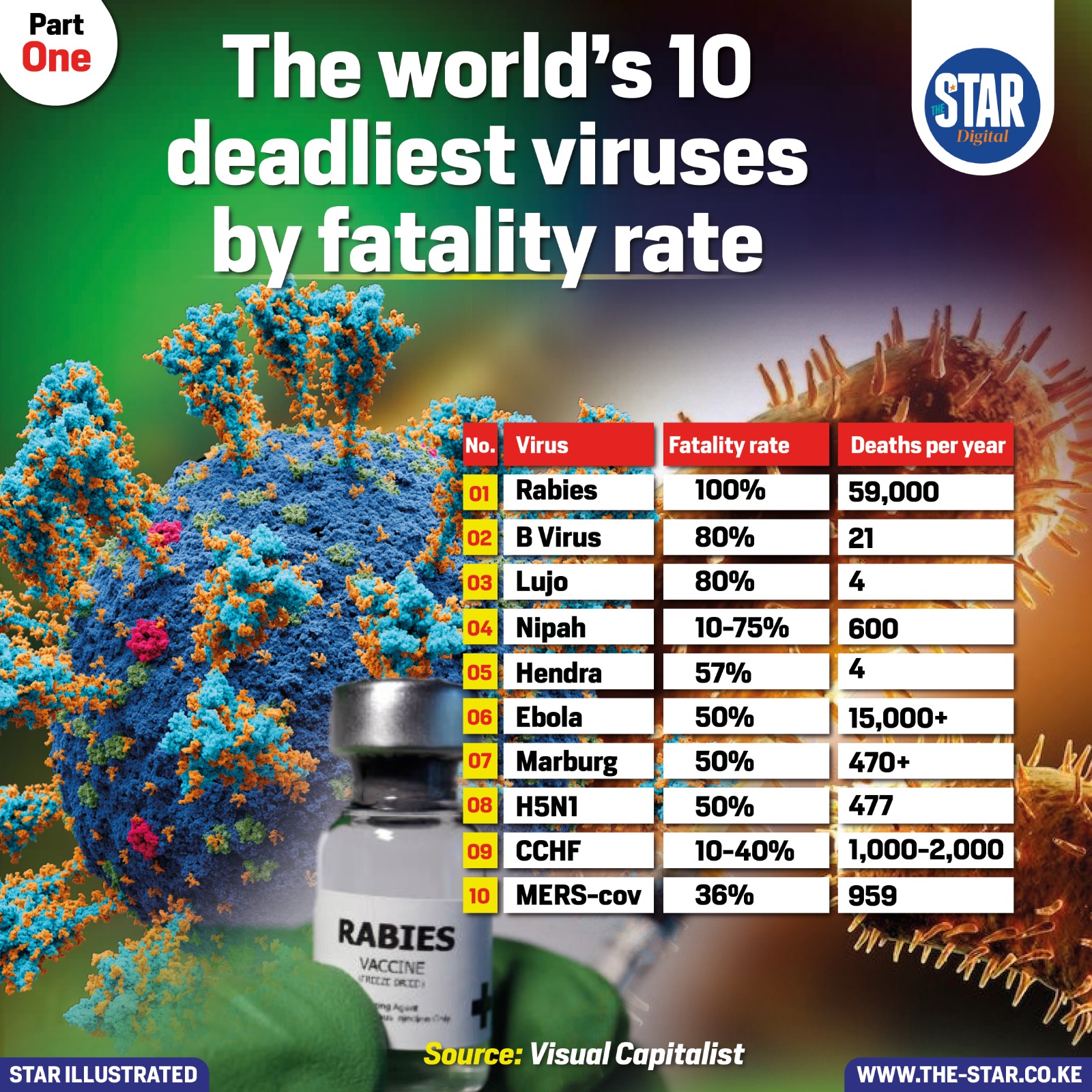
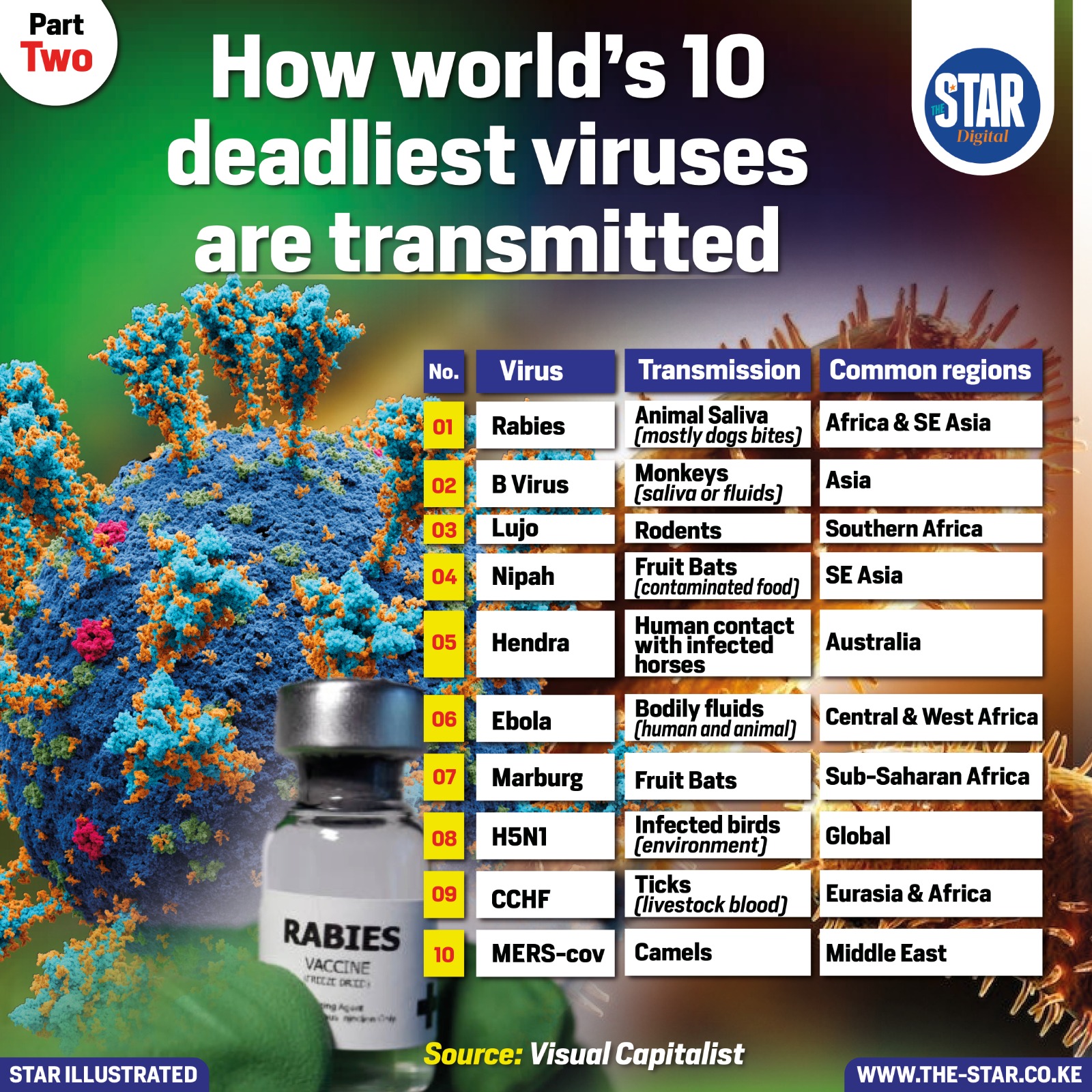
The global landscape of viral threats is defined by a group of pathogens with staggering fatality rates, with Rabies emerging as the deadliest.
While many viruses spread rapidly, the true danger of these ten specific pathogens lies in their near-certain lethality once symptoms appear.
Rabies maintains a 100% fatality rate, claiming approximately 59,000 lives annually. Following closely are the B Virus and Lujo virus, both exhibiting an 80% fatality rate, though their annual death tolls are significantly lower at 21 and 4, respectively.
The Nipah virus presents a variable but high threat, with fatality rates ranging from 10% to 75%, causing roughly 600 deaths each year. Other zoonotic threats like the Hendra virus kill 57% of those infected. Meanwhile, a trio of high-profile viruses—Ebola, Marburg, and H5N1—all share a 50% fatality rate.
Ebola remains the most prolific killer among them, responsible for over 15,000 deaths annually. Marburg and H5N1 cause fewer fatalities, with roughly 470 and 477 deaths, respectively.
Rounding out the list are Crimean-Congo Hemorrhagic Fever (CCHF), with a fatality range of 10-40%, causing 1,000 to 2,000 deaths, and MERS-CoV, which has a 36% fatality rate and accounts for 959 deaths per year.