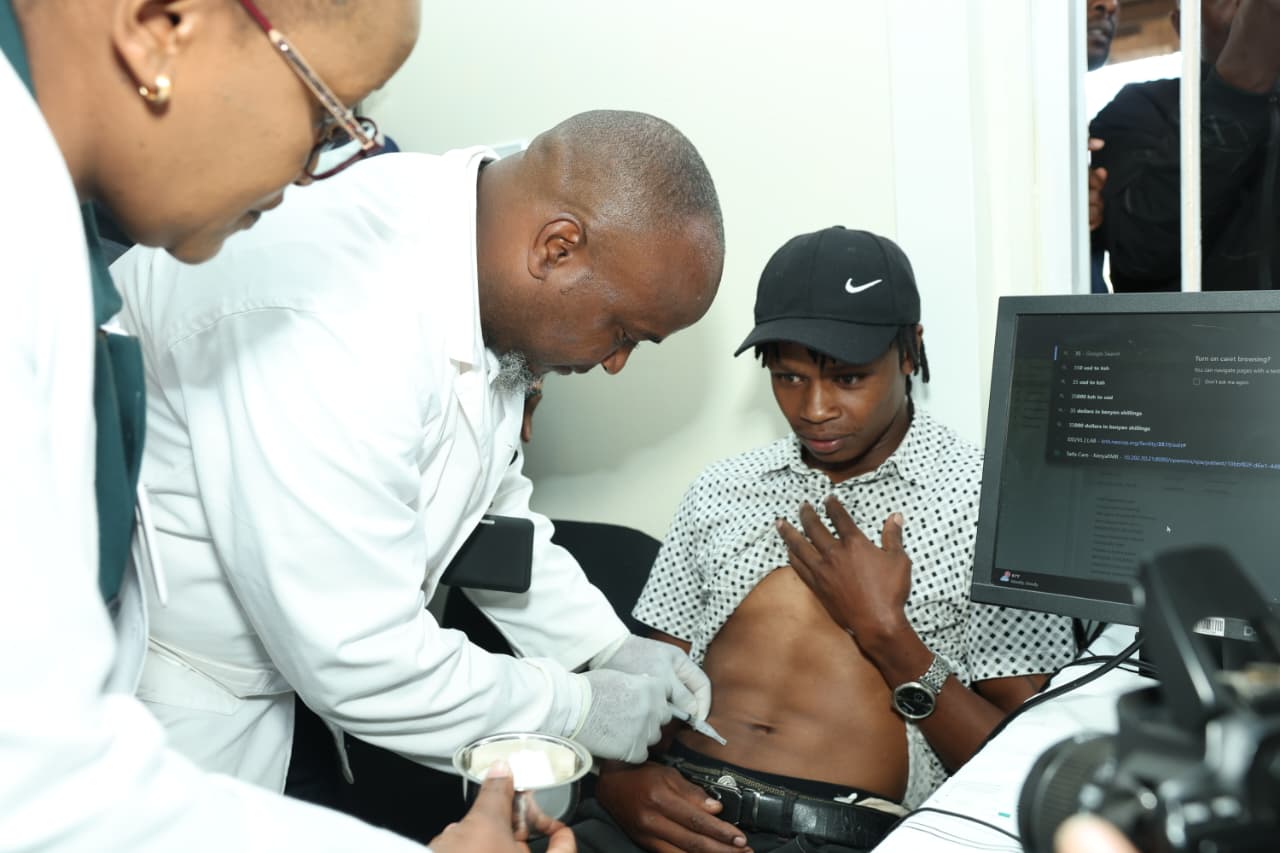
 Samson Mutua receives the injection, known as Lenacapavir, to prevent HIV, at the Riruta Health Centre, on February 26, 2026./LEAH MUKANGAI
Kenyans in 15 counties can now access the new injection that prevents HIV for six months.
The injection, known as Lenacapavir (Len), is available only in select clinics in these counties and is free of charge.
It was launched in Nairobi on Thursday at the Riruta Health Centre by Health CS Aden Duale.
The list of select clinics where the injection is available has not been made public. But interested Kenyans in the 15 counties should go to any public health facility, and they will be directed to the nearest clinic for injection, the Ministry of Health said.
These counties are Nairobi, Kiambu, Mombasa, Kilifi, Machakos, Kajiado, Nakuru, Uasin Gishu, Kakamega, Busia, Siaya, Kisumu, Migori, Homa Bay, and Kisii.
Beneficiaries will first be tested to prove they are HIV negative, and they must weigh more than 35 kilogrammes.
CS Duale said the drug has passed all safety and efficacy protocols. “So no Kenyans should fear hidden costs. It is safe for distribution. The rollout is structured, careful, and it's guided by medical professionals to ensure those who need it must get it,” he said.
Duale said anyone who has unprotected sex, even once, is at risk of HIV infection and qualifies for the injection.
The country received an initial 21,000 doses to kick-start the programme. Health prevention and treatment officials said the injectable option is expected to improve adherence because people struggle with daily oral tablets used to prevent HIV, known as pre-exposure prophylaxis (PrEP).
The injection has already been introduced in Zambia, eSwatini and Zimbabwe.
Yesterday, 27-year-old Samson Mutua became the first Kenyan to receive the injection at Riruta Health Centre.
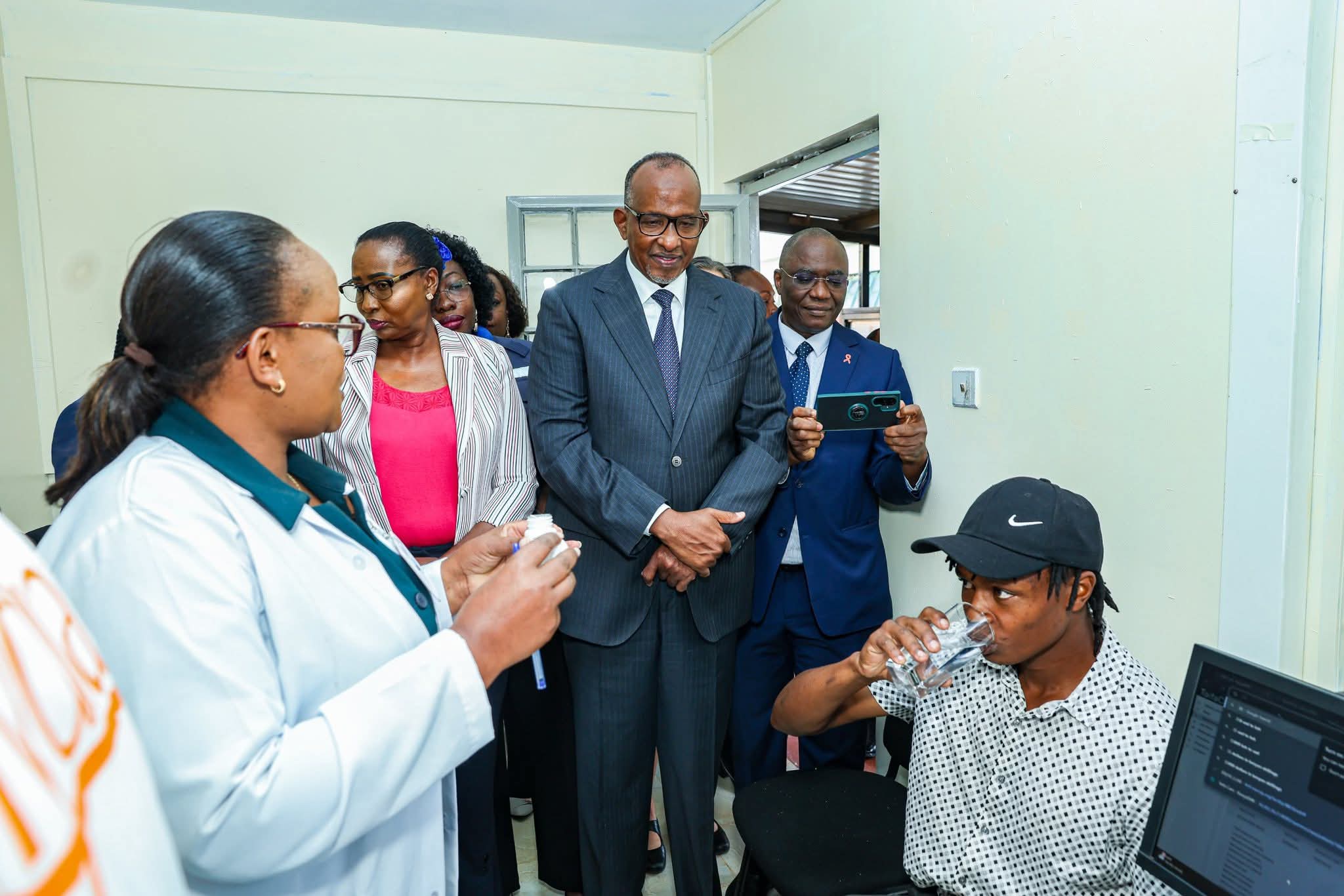 Samson Mutua, the first Kenyan to receive the anti HIV injection Lenacapavir at the Riruta health centre, swallows the two tablets given after the injection./HANDOUT
Mutua, a water vendor on Nairobi’s Lenana Road in Kilimani and a delivery rider, received two injections of Lenacapavir in the lower abdomen at the Riruta Health Centre at 8am.
Mutua, a single father of two boys, said he wants to remain alive to take care of his children.
After the injections, he swallowed two oral Prep tablets immediately to ensure day one protection.
He will take two more Prep tablets today, Friday. After that, he is protected against HIV for the next six months, after which he will return for another double injection.
He will not take any more Prep pills within those six months.
This approach aligns with clinical guidelines issued for the national rollout.
Mutua said becoming the first recipient of Lenacapavir does not mean he is reckless or promiscuous.
“I just want a longer life. I just want to help other people. I want, when cases of blood donation come across, I don't have to get worried that I am HIV positive. I just want to know that I am safe, safe for my kids, yeah, and I'll continue being safe,” he said.
He added: “It doesn't mean that you have to be promiscuous to take the jab. Even if you have sex with without getting tested, that is risky behaviour. You don't know where the person was, you don't know whether she has another boyfriend, because you guys are not married.”
Mutua has previously used oral PrEP and volunteered for the injectable after counselling last month.
Asked about the injection's side effects, he said the experience was manageable.
“I'm just feeling a little bit sore where I was injected. Other than that, I'm feeling protected. I'm feeling very protected, I'm feeling very happy,” he said.
Mutua is also a Community Health Promoter in Dagoreti South.
He is not married but takes care of his two young boys from a previous relationship.
“Normally, my day starts very early in the morning because I have two sons. It has to start at 6am because I have to prepare them to go to school. After that, I have to open my water vending shop at about 7.30pm,” he said.
After that, he switches to deliveries.
“After 6.30pm I have to cook for the kids. That normally takes about one hour. And after that, I get into Glovo [delivery app] from maybe 8pm up to 1am or 2am. I do delivery at night as an added source of income,” he said.
His eldest son is six years old and in Grade One, while the younger recently turned four.
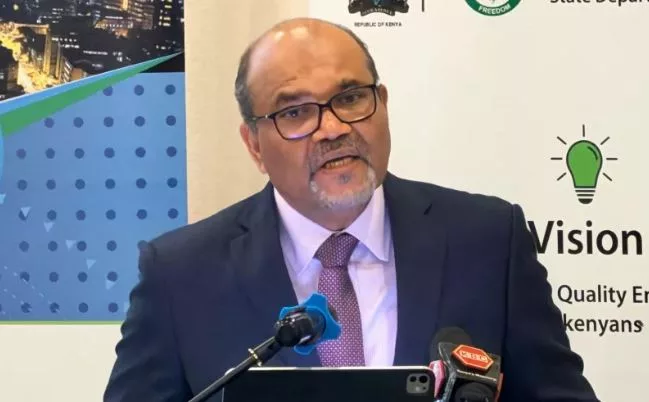
Dr Andrew Mulwa, the head of the National Aids and STIs Control Programme (Nascop), praised the quick rollout in Kenya, months after the World Health Organization (WHO) released guidelines recommending its use in July 2025.
 Head of the National Aids and STIs
Control Programme (Nascop), Dr Andrew Mulwa, speaks at the launch on February 26, 2026.
Head of the National Aids and STIs
Control Programme (Nascop), Dr Andrew Mulwa, speaks at the launch on February 26, 2026.
“This is the first time that a product gets approval globally and within seven months is in the country. As we speak here, Samson has already received his job for Lenacapavir, which is a big celebration. Those who know the journey of HIV and HIV products, by the time a product is discovered, gets approval, and gets to this part of the country, it usually takes between five and ten years,” Dr Mulwa said.
The national rollout in Kenya is managed by Nascop.
“We are here celebrating that within seven months, we already have the product in the country and our citizens are able to get this injection. This has been a result of a lot of partners who have been working with us in the background,” Mulwa added.
According to the National Syndemic Diseases Control Council (NSDCC), Kenya has made major gains in reducing HIV infections and deaths over the past decade, but new infections remain a concern, especially among young people and adolescent girls.
Acting NSDCC CEO Douglas Bosire said during the launch that while progress has been significant, the country must not slow down prevention efforts.
“In the year 2013, this country recorded 110,000 new HIV infections… In the year 2024, the number of new cases reduced to 15,000 cases. The number of deaths reduced from 110,000 to 21,000. Yes, that is significant and tremendous as we are making progress,” he said.
“However, we do not confuse our progress with success.”
Health experts say Lenacapavir works by preventing the virus from establishing infection in the body and is highly effective when administered as scheduled.
Officials emphasise that the injection does not replace other prevention methods such as condoms and regular testing, but adds another layer of protection.


![Africa CDC Director General Dr Jean Kaseya at a past event. [Photo: Arthur Mbuguah, WHM]](https://cdn.radioafrica.digital/image/2026/10/8ced213c-affb-4dff-97ca-1b6bac1f958e.webp)