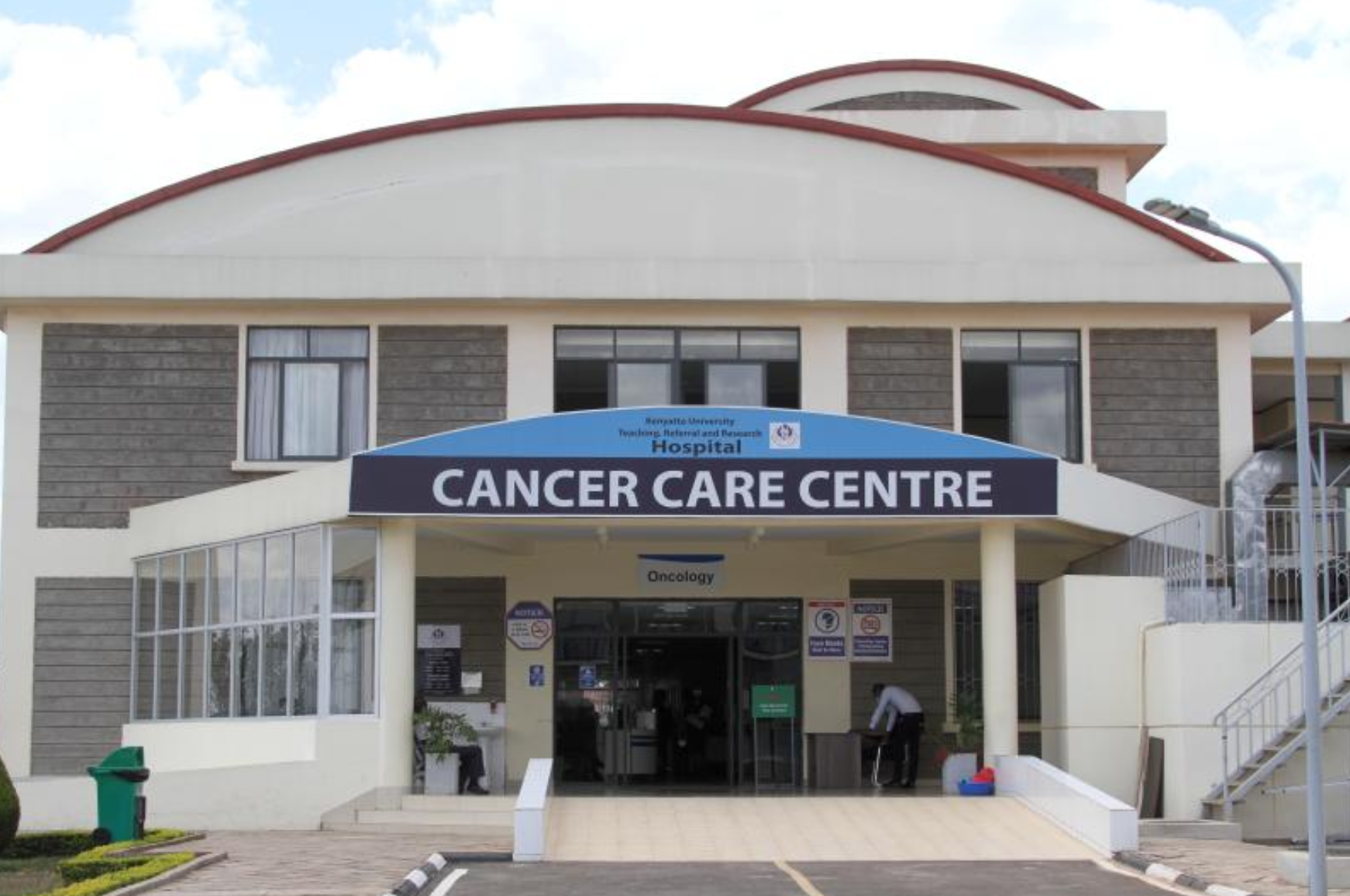
 The cancer centre at the Kenyatta University Teaching, Referral and Research Hospital (KUTRRH).
A partnership between the University of Manchester, The Christie NHS Foundation Trust and the Kenyatta University Teaching, Referral and Research Hospital (KUTRRH) has, over the past three years, introduced structured screening, expanded diagnostic capacity and trained thousands of frontline health workers.
The programme, piloted in five counties, is already showing results: a shift from late-stage diagnosis — when care is largely palliative — to early-stage detection, when treatment can save lives.
PROF KEITH BRENNAN, who leads the collaboration, says the change marks a breakthrough in a country where oesophageal cancer has long been detected too late.
Beyond screening, the initiative has strengthened local expertise, built institutional capacity and opened the door to future advances such as genomic research and precision medicine.
In this interview, Prof Brennan explains what has worked, the challenges faced, and what it will take to scale the gains nationwide. He spoke to Star's Victor Simani.
QUESTION: I understand the partnership began in 2020 and has been underway since then. What brings you to Nairobi this time?
ANSWER: Our first major project is coming to a very successful conclusion. We undertook a large study on oesophageal cancer, and we’re now at the stage of reflecting on what comes next. My visit is about building on that success — asking how we sustain the partnership, strengthen it, and scale what we’ve achieved into the next phase.
How do you measure success in this partnership?
The clearest measure of success is that we have developed and deployed a functioning screening programme for oesophageal cancer in Kenya. We’ve implemented it across five counties — Kiambu, Nyeri, Kirinyaga, Kisii, and Meru — and we’re already seeing a shift in the stage at which patients are diagnosed.
Previously, most patients presented at Stage 3 or 4, when treatment is largely palliative and focused on end-of-life care. Now we’re seeing more patients diagnosed at Stage 1 or 2, when curative treatment is possible. That shift alone represents a profound impact.
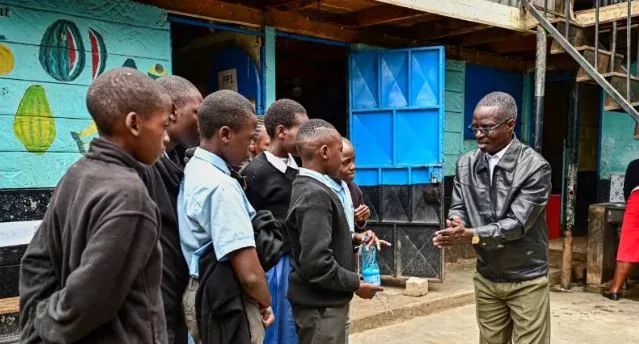
Another major achievement has been capacity building. We’ve trained Community Health Assistants (CHAs) and Community Health Promoters (CHPs) to conduct disease awareness surveys — not only for oesophageal cancer, but in ways that can be applied to other diseases. In total, 15,000 CHPs were trained in oesophageal cancer awareness, enabling outreach to virtually every household in those five counties, including rural and remote communities.
We’ve also trained 14 surgeons in endoscopy so they can detect early cancers, and two pathologists to analyse tissue samples and confirm diagnoses. This ensures the entire diagnostic pathway is locally strengthened.
Importantly, we’ve witnessed the remarkable growth of Kenyatta University Teaching, Referral and Research Hospital (KUTRRH). When I first visited, it was just opening. Today, it is a thriving referral and research institution, training medical students and contributing nationally. Our partnership has supported its development as a research hospital.
Why focus on cancer, and specifically oesophageal cancer?
The focus on cancer originated from a request by former President Uhuru Kenyatta. It was a priority raised at the highest level of government.
The specific focus on oesophageal cancer came from KUTRRH itself. It is the fourth most common cancer in Kenya and, at the time we began, the leading cause of cancer deaths. We listened carefully to our Kenyan partners — both government and hospital leadership — and shaped the programme around their priorities. That’s fundamental to a true partnership.
 Prof Keith Brennan, who leads the collaboration between the University of Manchester, The Christie NHS Foundation Trust and the Kenyatta University Teaching, Referral and Research Hospital (KUTRRH).
Did Kenyan healthcare personnel have opportunities to train in the UK?
Yes. Clinicians and researchers trained in Manchester, including at The Christie NHS Foundation Trust, one of the UK’s leading cancer centres. But the exchange has been two-way. UK colleagues have also come to Kenya to provide training locally. Many of those who trained in Manchester returned to Kenya to train others, multiplying the impact.
How do you ensure this is a long-term investment rather than a short-term project?
Sustainability has been central. The training of community health workers has been integrated into Kenya’s national cancer training framework, which ensures continuity. Screening uptake continues, showing that awareness is embedded.
The bigger question now is scale. We’ve demonstrated success in five counties — but Kenya has 47. We will be discussing with the Principal Secretary for Medical Services how to expand from a successful pilot to a national programme. How do we replicate this across the remaining 42 counties? That’s the next frontier.
What key skills are being transferred to Kenyan healthcare personnel?
First, public health research skills — conducting surveys to understand what communities know about diseases and services. That knowledge shapes effective interventions.
Second, the communication strategy. We’ve learned that radio is particularly effective in reaching communities, with newspapers also playing an important role. Understanding how best to disseminate health messages is critical.
Third, service delivery innovation. Screening services must go to the people, not the other way around. Mobile endoscopy services have proved essential. The same approach could apply to mammography and other screenings.
Looking forward, genomics is a major priority. Oesophageal cancer incidence is higher in the Rift Valley and Western Kenya than in Eastern Kenya, suggesting environmental influences. Genomic research may reveal whether something harmful is present — or something protective is missing — in certain regions. That knowledge could inform prevention strategies.
Genomics can also identify the specific genetic mutations driving these cancers, enabling precision medicine. Targeted therapies are often expensive, but genomic evidence provides the justification for their use and improves treatment outcomes.
What challenges have you faced?
Kenya’s devolved healthcare system has required us to negotiate agreements with each county individually. We couldn’t rely solely on national approvals. It was more complex than we anticipated, but we worked collaboratively and succeeded.
Financially, we’ve been well supported through funding from the UK’s National Institute for Health and Care Research, which has enabled the programme to operate effectively.
Is this truly an equal partnership?
Absolutely. The partnership was initiated at Kenya’s request. The focus on oesophageal cancer came from the hospital. Kenyan clinicians and researchers have been deeply involved in shaping the research agenda from the beginning.
Five years from now, what would success look like?
I would like to see a national genomic sequencing centre established in Kenya, ideally embedded within KUTRRH. Currently, sequencing capacity is limited. A national facility would transform research and patient care.
I would also like to see the screening programme expanded to all 47 counties, and extended to other major cancers such as cervical, breast, and prostate.
Most importantly, I want screening services to be community-based and mobile. Late diagnosis remains one of the biggest barriers to survival. If we bring services directly to communities, we can dramatically improve outcomes — not only for oesophageal cancer, but for cancer care across Kenya.
![Africa CDC Director General Dr Jean Kaseya at a past event. [Photo: Arthur Mbuguah, WHM]](https://cdn.radioafrica.digital/image/2026/10/8ced213c-affb-4dff-97ca-1b6bac1f958e.webp)