 AI ILLUSTRATION./FILE
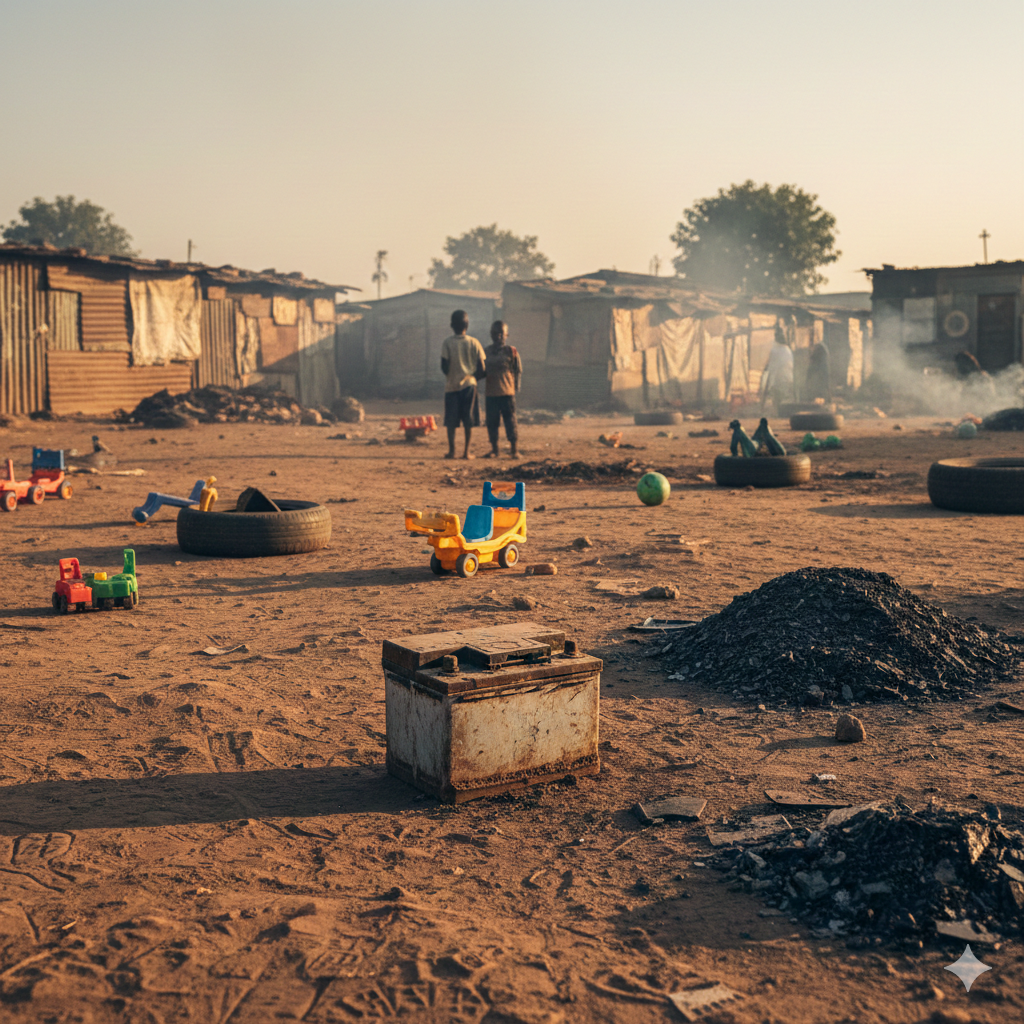
In the narrow alleys of Kenya’s industrial estates and the dusty playgrounds of informal settlements, a silent danger lingers in the air and beneath children’s feet.
It has no smell, no colour, and often no immediate symptoms—yet it can permanently damage a child’s brain before a parent even realises something is wrong. This hidden threat is lead.
Lead is a naturally occurring metal found in soil, rocks, and water. But when it enters the human body, it becomes a powerful toxin — especially for children. In Kenya, growing urbanization, informal industries, and aging infrastructure have heightened concerns about exposure.
Health experts warn that lead poisoning is often invisible until significant damage has already occurred. According to the World Health Organization (WHO), there is no safe level of lead exposure.
Even low concentrations can impair neurological development in children. The WHO estimates that lead exposure accounts for hundreds of thousands of deaths globally each year and contributes significantly to intellectual disabilities.
Similarly, a joint report by UNICEF and Pure Earth titled The Toxic Truth revealed that one in three children worldwide — up to 800 million — have blood lead levels at or above 5 micrograms per deciliter, a level that requires public health action.
In Kenya, toxicologist Joseph Wahome says similar risks exist, particularly in low-income and industrial areas. Lead contamination can occur naturally through soil and water. However, human activity has significantly increased the risk.
Common exposure sources in Kenya include:
Informal car battery recycling operations
Metal smelting and scrap yards
Contaminated soil near industrial zones
Old housing with lead-based paint
Poorly regulated manufacturing processes
In urban settlements near industrial areas in cities like Nairobi and Mombasa, families may unknowingly live near contamination sites. Children playing in soil near workshops or dumpsites are particularly vulnerable.
Battery recycling is of special concern. Used lead-acid batteries, common in vehicles and backup power systems, contain high levels of lead. When dismantled in informal settings without protective measures, toxic dust can spread into surrounding communities.
Children under six years and pregnant women are the most vulnerable groups.
Lead affects the central nervous system. In children, exposure can:
Lower IQ
Cause learning and behavioral difficulties
Delay growth and developmental milestones
Because lead accumulates in bones and teeth, it can remain in the body for years. During pregnancy, stored lead can re-enter the bloodstream and pass to the fetus, putting unborn children at risk.
Wahome emphasizes that the only way to confirm lead poisoning is through a blood test. Symptoms may not appear until damage has already occurred. While the impact on intelligence and learning is widely documented, lead poisoning can also:
Damage the kidneys
Affect the liver
Cause anemia
Trigger seizures in severe cases
Lead to coma or death in extreme exposure
The WHO warns that childhood exposure to lead can have lifelong consequences, affecting educational achievement and future earning potential—ultimately impacting national economic development.
Kenya has made regulatory progress in recent years toward phasing out lead in paints, aligning with global efforts to eliminate lead-based household paint. However, enforcement and monitoring remain challenges, particularly in informal markets.
Globally, the WHO and the United Nations Environment Programme have campaigned for the elimination of lead paint, noting that safer alternatives are readily available.
Even where regulations exist, older buildings may still contain lead-based coatings. As paint deteriorates, it can produce contaminated dust — a major exposure pathway for young children.
There are two primary approaches to managing lead poisoning.
First, remove the source of contamination. This may involve relocating families, improving water safety, regulating industrial operations, or closing unsafe recycling sites.
Second, in cases of significant exposure, doctors may use chelation therapy — a medical treatment that binds lead in the bloodstream so it can be excreted from the body. However, treatment is most effective before severe organ damage occurs.
Public health experts stress that prevention is far more effective — and less costly — than treatment. As Kenya continues to industrialize and expand urban settlements, environmental health safeguards must keep pace.
Stronger enforcement of manufacturing regulations, safe recycling practices, public awareness campaigns, and routine screening for children in high-risk areas could significantly reduce exposure.
Lead poisoning may be silent, but its consequences are loud—affecting children’s brains, futures, and the country’s long-term development.
The science is clear: there is no safe level of lead exposure. The question for Kenya is not whether the risk exists, but how urgently it will act to eliminate it.