 Co-operatives and MSMEs Cabinet Secretary Wycliffe Oparanya during the launch of Kenya's Bee Venom marketplace/HANDOUT
What was once dismissed as a painful sting is now emerging as liquid gold for Kenyan farmers.
With the launch of Africa’s first structured bee venom marketplace, Kenya is stepping into a high-value global niche that could transform ordinary beehives into million-shilling enterprises.
The marketplace was unveiled in Utawala, Nairobi, by Co-operatives and MSMEs Cabinet Secretary Wycliffe Oparanya, alongside Kyalo Mutua, CEO of Savannah Honey.
“This is a game changer for our farmers,” Mr Oparanya said during the launch.
“We are moving beyond traditional agriculture into specialised, high-value products that can compete globally.”
Globally, the venom extracts market is valued at $438 million (Sh70.08 billion) and is projected to grow to $726 million (Sh116.16 billion) by 2036. Kenya now wants a share of that market.
Locally, bee venom sells at Sh4,000 per gram, or Sh4 million per kilogramme
 Co-operatives and MSMEs Cabinet Secretary Wycliffe Oparanya during the launch of Kenya's Bee Venom marketplace/HANDOUT
For a farmer managing 50 hives, annual earnings from venom could reach Sh2 million. With 100 hives, that figure rises to Sh4 million, before counting income from honey, beeswax, propolis, and other hive products.
Mr Mutua announced a guaranteed buying price of Sh4 million per kilogram and said the company is seeking to contract and manage 10,000 hives within six months to meet an existing export order.
“This is not speculation. There is real demand already. We already have export orders to fulfil. What we are doing now is organising farmers so they can meet international standards and benefit from this opportunity,” Mr Mutua told farmers and stakeholders.
Until now, bee venom collection in Kenya has largely been informal, marked by inconsistent standards and unreliable markets.
 Co-operatives and MSMEs Cabinet Secretary Wycliffe Oparanya during the launch of Kenya's Bee Venom marketplace/HANDOUT
The new marketplace sets clear standards for venom collection, handling, and storage, and introduces a traceability system that tracks the product from hive to export market.
“This platform will aggregate supply, standardise quality, and connect our farmers directly to international buyers. We are shifting beekeeping from a traditional activity into a structured agribusiness,” Mr Mutua said.
Farmers harvest venom using specialised collection devices that apply mild electric pulses to stimulate bees to release venom onto glass plates without harming the insects. The venom dries on the plates and is then scraped off for processing.
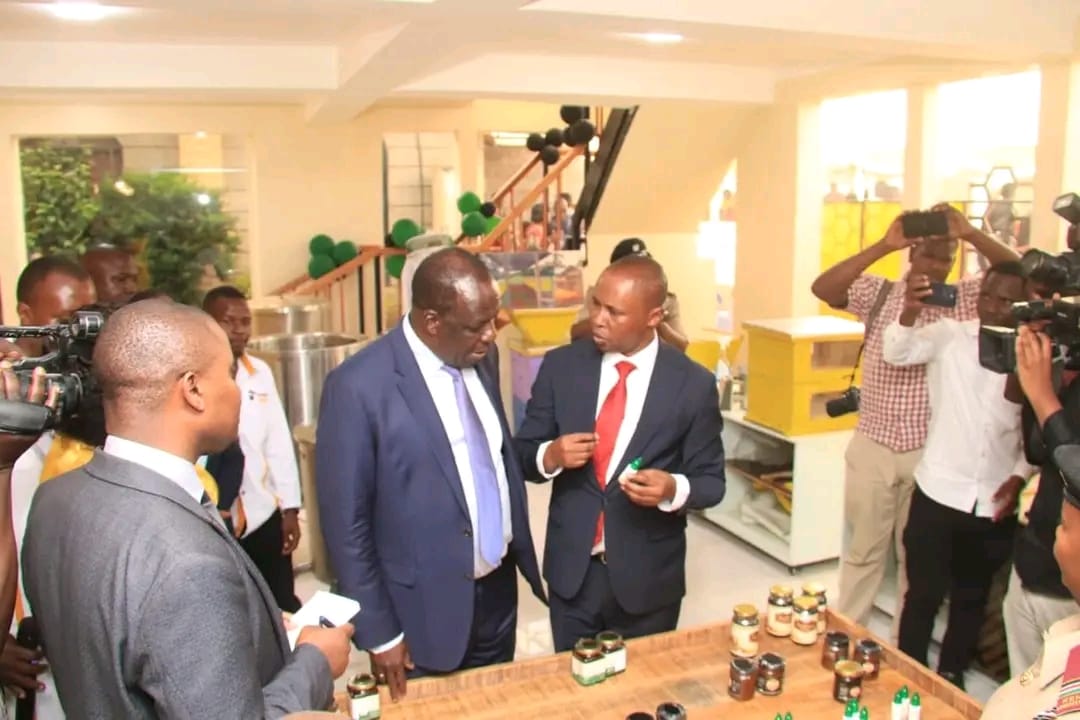 Co-operatives and MSMEs Cabinet Secretary Wycliffe Oparanya during the launch of Kenya's Bee Venom marketplace/HANDOUT
Though used in traditional medicine for centuries, bee venom’s commercial value has expanded with modern research.
Pharmaceutical companies use it in drug formulations due to its anti-inflammatory compounds. Scientists are studying its potential in treating arthritis, nerve pain, and other conditions.
Bee venom is also marketed as a natural alternative to Botox. It stimulates collagen production, temporarily plumps and smooths wrinkles, improves skin elasticity, and boosts circulation, making it a prized ingredient in high-end anti-ageing creams, serums, and facial masks sold in Europe, North America, and Asia.
“International buyers demand strict quality control and traceability. That is exactly what this marketplace is designed to deliver,” Mr Mutua noted.
Mr Oparanya emphasised that organised farmer cooperatives will be key to unlocking the sector’s full potential.
“When farmers are organised, they can aggregate produce, invest in equipment, and negotiate better prices. This is how we strengthen MSMEs and improve rural incomes,” he said.
Mr Mutua said Savannah Honey currently works with 15,780 contracted farmers in Kenya and the region. The company employs 130 staff and collaborates with 740 community mobilisers and field officers.
As venom production scales up, it plans to double both direct and indirect employment.
For decades, Kenyan beekeeping has revolved almost entirely around honey, with success measured in kilograms sold.
Today, a single hive can generate income from honey, beeswax, propolis, pollination services, and now bee venom as a premium export product.
“Bee venom does not replace honey. It complements it. A farmer can earn from multiple streams from the same hive. That is how we increase incomes sustainably,” Mr Mutua said.
Diversification also protects farmers from price fluctuations in any single commodity, turning beekeeping into a more resilient agribusiness.
Stakeholders say bee venom farming also promotes better hive management.
Farmers harvesting venom have strong incentives to maintain healthy colonies. Healthy bees produce more venom and more honey, and they play a critical role as pollinators.
Bees support food production across millions of acres. Increased profitability in beekeeping could encourage more farmers to keep bees, boosting pollination and crop yields across the agricultural economy.
Mr Mutua said farmers interested in venturing into bee venom production should register with Savannah Honey or another licensed buyer.
He said they should invest in modern hives suitable for venom collection, as traditional log hives are harder to manage.
“Farmers should acquire specialised venom collection equipment that uses mild electric pulses without harming bees, undergo training and strictly follow quality and handling standards, and scale gradually, starting with manageable hive numbers before expanding,” he said.
The launch signals more than the introduction of a new product. It marks a strategic shift in how Kenya participates in global agricultural value chains.
Rather than exporting raw commodities, the country is positioning itself to process and supply high-value speciality products. Instead of competing purely on volume and price, Kenyan farmers can now compete on quality, certification, and traceability.
Mr Mutua said the same aggregation and standardisation model could unlock export potential for other hive products such as propolis, beeswax, and speciality honey.
With global demand rising and export orders already secured, the next six months will determine whether Kenya can fully capitalise on the opportunity.
If successful, what was once feared as a painful sting could become one of the sweetest income streams in Kenyan agriculture.