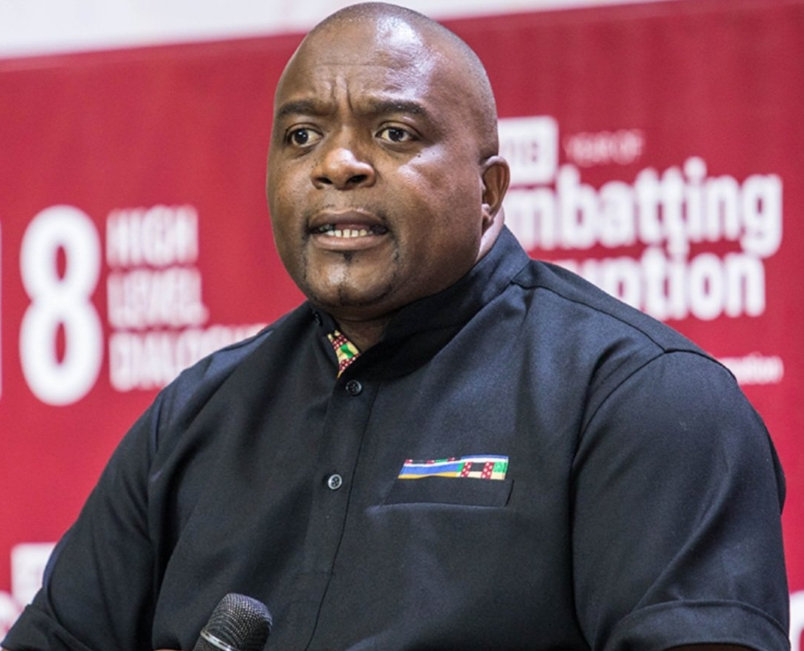
Kenyan immigration officials deported a Zimbabwean constitutional lawyer for allegedly orchestrating a foreign-funded operation to destabilise the government through renewed street protests.
Brian Kagoro, 51, was declared persona non grata and removed from Jomo Kenyatta International Airport on Sunday night after interrogation revealed what officials described as a sophisticated political mobilisation network bankrolled by international donors.
The deportation exposes the mechanics of how veteran activists leverage Kenya's civic space to channel foreign resources into domestic unrest and the government's diminishing tolerance for such operations, officials said.
Officials said investigations spanning six months tracked Kagoro through three separate visits to Nairobi last year, during which authorities allege he promised in closed-door meetings to raise $1.2 million (Sh150 million) for activist initiatives.
The move follows a decision by top security organs that civil activists from foreign countries would not be allowed to engage in political activities in Kenya.
“Should foreigners come with sinister political motives, we will deny them entry or track and deport them to their country of origin,” said a senior security official involved in Kagoro’s deportation.
The official requested anonymity because he is not authorised to speak to the media.
Security sources said the funds were intended to capitalise on economic grievances and reignite the Gen Z protests that shook the government in 2024.
Protesters have insisted there was no foreign influence and that the demonstrations were organic.
Those protests — which forced President William Ruto to abandon unpopular finance bill — left authorities hypersensitive to coordination between foreign actors and domestic mobilisers.
“We have evidence, gathered painstakingly over the last six months, establishing a deliberate strategy to manufacture civil unrest,” the official said.
Kagoro denied the allegations during interrogation, saying his visit was for a family event and a speaking engagement on “critical minerals and artificial intelligence”.
He acknowledged contact with Kenyan activists but rejected claims of coordination.
Security officials said Kagoro’s public activities — including attending a Judiciary Accountability Report launch in December and a technology innovators’ forum in April — served as networking opportunities that advanced his alleged operational objectives.
Investigators have identified the Open Society Foundations — the philanthropic network founded by billionaire George Soros — as the institutional backer of Kagoro’s Africa-wide activities.
The foundation’s relationship with Nairobi is already strained. The 2024 Gen Z protests triggered government scrutiny of foreign funding flows to civic groups, with officials openly questioning whether such philanthropy amounts to political interference.
Security sources said Kagoro participated in encrypted WhatsApp coordination channels. He is also under investigation for alleged involvement in stoking election-related unrest in Tanzania, though Kenyan authorities provided no details on those claims.
Kagoro’s deportation ends a two-decade presence in Nairobi that positioned him as a key behind-the-scenes figure in East Africa’s democracy ecosystem.
A co-founder of the Crisis in Zimbabwe Coalition, he relocated to Kenya in the mid-2000s as Nairobi consolidated its status as a hub for governance programming and international donor operations.
Unlike frontline protesters, Kagoro operated largely behind the scenes — convening strategy sessions, brokering introductions and translating international funding into local political capacity.
Colleagues describe him as an “intellectual anchor”; critics call it influence without accountability.
His low public profile — marked by rare media appearances and no formal institutional affiliation — allowed him to move between the formal seminar circuit of hotels and conference centres and the informal networks where protest logistics are arranged.
That ambiguity, observers say, provided operational cover and limited scrutiny.
Officials said months of surveillance and investigative interest in his activities preceded the airport interception, underscoring what they described as enhanced targeting capacity within Kenya’s security apparatus.
“He reached out to one prominent activist after his detention,” an immigration source said. “The activist declined to engage.”
For two decades, Kagoro helped build transnational activist infrastructure — including fellowships, mentorship programmes and cross-border strategy sessions that professionalised democratic mobilisation across East Africa.
His deportation removes a node in that network, not the network itself. But it sets a precedent: Kenya will no longer tolerate the presence of foreign actors it believes are organising domestic political disruption, regardless of their human rights credentials or institutional affiliations.
Kagoro has not publicly commented on his deportation.