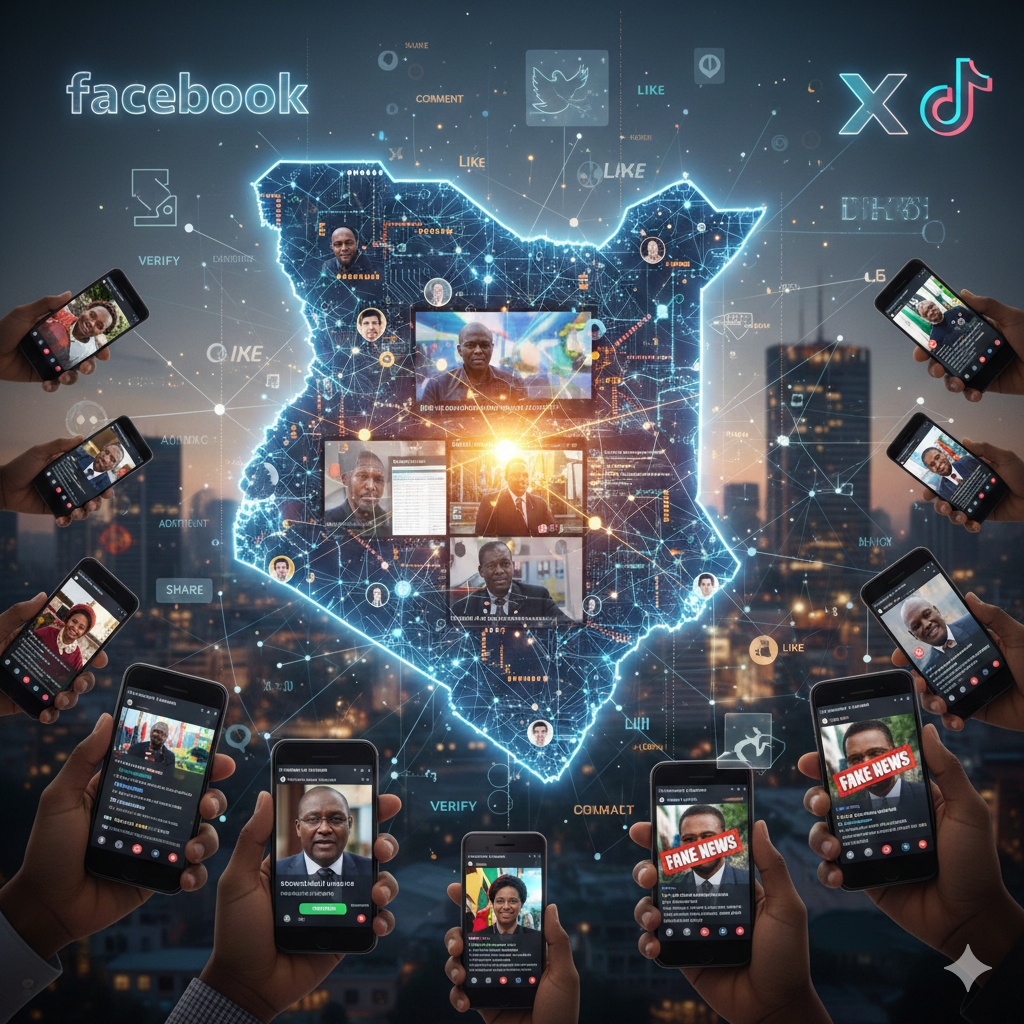
 AI ILLUSTRATION
In Kenya today, politics no longer begins at the rally ground or ends in the TV studio. It starts on the phone screen.
Before the evening news bulletin airs, Nairobi residents have already scrolled through timelines, debated viral clips, and dissected speeches in WhatsApp groups, X threads, and TikTok videos.
Political discussion in the country is largely fuelled by social media. Facebook, X, and TikTok have become dominant platforms for accessing information. A single speech can go viral within minutes, often triggering hashtags, memes, and debates long before analysts weigh in on television.
Rising internet penetration has accelerated this shift. Young voters receive updates on political matters through billions of active mobile data subscriptions, bypassing traditional media and relying on social feeds as their primary sources of information. For many first-time voters, social media is their main source of news.
This digitisation has made participation more accessible than it was decades ago. Citizens challenge leaders directly. They upload videos of speeches, share screenshots of budget allocations, and host online forums demanding accountability. Today, all one needs to join the national discourse is a smartphone and a data bundle.
This access has fuelled the growth of online activism. Support is mobilised through hashtags within hours. Thousands of signatures are gathered through digital petitions. Social media gives visibility to issues that might otherwise receive little attention.
Political leaders have quickly adapted to this environment. Campaign teams now invest heavily in online strategies, trimming speeches into one-minute videos paired with trending music.
Influencers host live sessions with candidates to attract younger audiences. The strategy is perception-driven, as algorithms prioritise engagement. Posts that provoke strong emotional reactions often gain more prominence than well-researched analytical content.
However, the speed and accessibility that make social media powerful also pose risks. Deepfakes spread faster than verified information. A misleading graphic or edited video can reach thousands before fact-checkers intervene. Once false information goes viral, it may be too late to reverse the narrative.
Many Nairobi residents acknowledge that while social feeds are now essential, they are also dangerous. A short clip taken out of context can distort the meaning of a speech. Headlines can exaggerate. Screenshots circulate without proof of origin. In such an environment, discernment becomes critical for anyone engaging in politics online.
Influencers sit at the centre of this conversation. Some provide thoughtful analysis that encourages healthy debate. Others promote partisan content without disclosing sponsorship. Sponsored political material often blends seamlessly with personal opinion, making it difficult for followers to distinguish between genuine commentary and propaganda.
Social media platforms also reinforce consumption patterns. Users are frequently shown content aligned with their views, limiting exposure to opposing perspectives. Over time, discussions become less open, positions grow more rigid, and political debate shifts from policy to personal attacks—deepening polarisation and eroding trust.
Despite these challenges, social media remains an important democratic space. It offers immediacy that traditional media cannot match. Marginalised voices gain access, independent journalists can distribute investigations directly to the public, and civil society organisations organise campaigns without relying on traditional gatekeepers. Citizens can record and share events in real time, promoting transparency and accountability.
The real challenge lies in digital literacy. Access alone does not guarantee informed participation. Users must evaluate sources, question claims, and think critically. Verifying original publishers, comparing multiple reports, and watching full speeches rather than short clips are essential steps before sharing political content. Responsible consumption requires understanding who created the content and why.
Regulation adds another layer of complexity. Governments face pressure to curb harmful content, but regulation can threaten freedom of expression.
Tech companies continually adjust moderation policies, yet enforcement often lags behind the speed of content creation. Online political advertising further complicates matters, as targeted ads deliver different messages to specific audiences—raising questions about transparency.
For many Kenyans, social media is immediate and convenient. News arrives instantly, debates unfold in real time, and communication requires no physical movement.
But with millions of unfiltered voices online, the responsibility of verification rests heavily on users. Some voices inform; others mislead. Distinguishing between them demands vigilance.
Kenya’s political arena has become pocket-sized. Influence spreads through shares, likes, and comments. Kenyans are not only consumers of political messaging but also amplifiers. Every scroll has the power to shape public perception.
The future of democracy in Kenya is now intertwined with digital platforms. Social media will continue to shape campaigns, debates, and civic participation as internet penetration grows.
The question is no longer whether social media will influence political discourse—it already has. The real question is how citizens, leaders, and platforms will harness its power responsibly without allowing it to be abused.