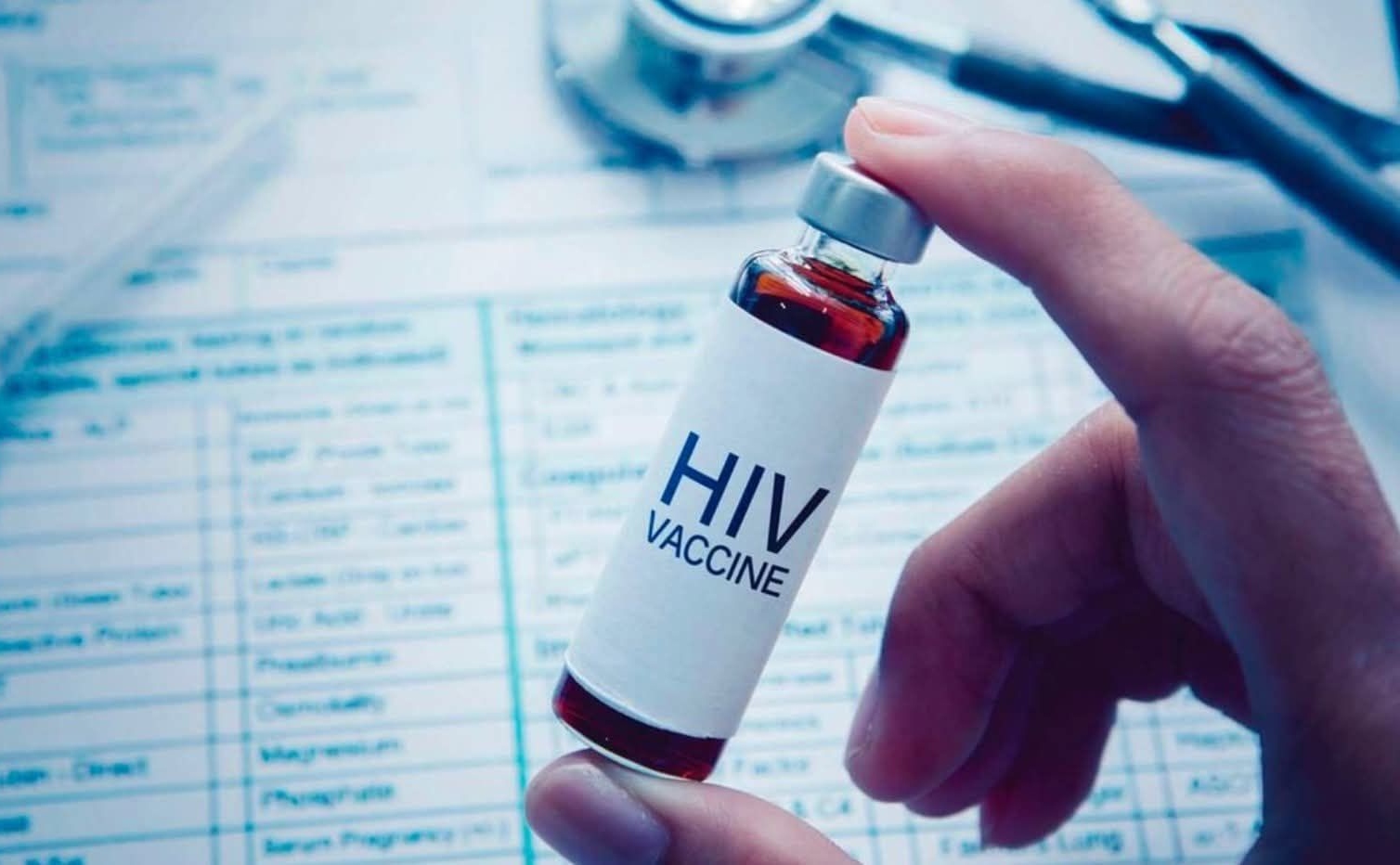
 HIV injectable vaccine. /FILE
Kenya will on Thursday, February 26, take its fight against HIV Aids a notch higher with the rollout of the long-acting prevention injection Lenacapavir across 15 high-burden counties.
It follows the arrival of the initial consignment of 21,000 starter doses of injectable HIV pre-exposure prophylaxis (PrEP) on February 17, marking the start of accelerated efforts by Kenya to end new HIV infections by 2030.
The Ministry of Health said a further 12,000 continuation doses are expected by April to support individuals initiated on the product.
The injection, administered twice per year, will be offered for roughly Sh7,800 annually.
According to the National Syndemic Disease Control Council, approximately 1.3 to 1.4 million people are living with HIV in Kenya as of 2024-25, with national prevalence at roughly 3 per cent to 4.5 per cent.
While new infections occur at a rate of over 20,000 annually, significant progress has been made, with about 97 per cent of diagnosed individuals receiving antiretroviral therapy (ART).
The injectable PrEP option, therefore, offers a promising solution and supports long-term HIV prevention for those at highest risk.
Endorsed by the World Health Organisation (WHO), the Pharmacy and Poisons Board (PPB) of Kenya officially registered Lenacapavir for national use in January 2026, following a comprehensive scientific review.
Lenacapavir injection and tablets belong to a class of ARVs called capsid inhibitors that reduce the ability of HIV to replicate at multiple essential steps in the virus’s cycle.
It is systemic and is absorbed throughout the body. Each single-dose vial contains lenacapavir sodium equivalent to 463.5 mg of lenacapavir in 1.5 mL.
The lenacapavir injectable solution is sterile, preservative-free, clear, and yellow to brown, with no visible particles.
Each Lenacapavir tablet contains 300 mg of lenacapavir. The tablets are beige, capsule-shaped, film-coated, and marked with ‘GSI’ on one side of the tablet and ‘62L’ on the other side of the tablet.
How lenacapavir works
Lenacapavir is a first-in-class capsid inhibitor with a novel mechanism of action, targeting HIV-1 at multiple stages of its life cycle.
It interferes with three essential steps of HIV replication, namely.
- Nuclear Transport: It disrupts the transport of the viral capsid into the host cell nucleus, preventing the integration of viral DNA into the host genome.
- Virus Assembly and Release: Lenacapavir affects the assembly and release of new viral particles from infected cells, hindering the production of new virions.
- Capsid Core Formation: Lenacapavir interferes with the formation of the
capsid core, leading to malformed capsids, which are crucial for protecting the
viral RNA and enzymes necessary for replication.
Ahead of the rollout on Thursday, experts have outlined the criteria and applicable rules guiding the administration of the injection.
First off, not everyone qualifies to receive the injection. Recipients must be HIV-negative and must not have been exposed to the virus 72 hours prior to receiving the injection.
As such, one must take an HIV test. Dr Ruth Kamau, programmes officer at the National AIDS and STI Control Programme (NASCOP), said one may be at risk but still not eligible to receive the injection.
"Eligibility is a clinical decision to be made by a healthcare provider," she said.
People living with HIV and are on ARVs and have achieved a suppressed viral load are still advised not to use Lenacapavir or any other form of PrEP, due to the risk of developing antiretroviral drug resistance.
Health experts said persons cleared by doctors to receive Lenacapavir injection, but who are on other medications, such as sexual performance enhancement drugs and TB treatment, must also disclose this information to prevent potential severe drug interactions.
"TB drugs will break down your Lenacapavir faster," Dr Elizabeth Irungu, regional technical advisor for PrEP and implementation science at Jhpiego, said.
She said that, as such, patients on TB treatment will be given an extra dose of Lenacapavir to supplement what will be broken down by TB drugs.
"What will happen is the day you start your TB treatment, we do another dose of Lenacapavir so that you have higher doses. For Viagra or people using medication for erectile dysfunction, the recommendation is to begin with a lower dose of Viagra," she added.
This, she explained, is because Lenacapavir acts as a catalyst and can make the Viagra dosage higher, making it toxic.
When used as directed, lenacapavir reduces the risk of HIV acquisition by at least 96 per cent.
However, the drug does not protect users from sexually transmitted infections, unwanted pregnancies, nor cure HIV.
Whereas the injection is administered twice annually, every six months, this follows a sequence that must be adhered to for maximum protection.
Initiation dosing includes four tablets over two days, two per day, and two initial injections.
"On the initial day, you receive two injections either on the abdomen or on the thigh — one injection on each side," Dr Irungu explained.
"Then you are given two tablets to take at that time when you are taking the injection, and then you are given two tablets to take tomorrow at about the same time," she added.
Two continuation injections will thereafter be administered once every six months from the date of the last injection, with a two-week window before or after.
Protection from HIV becomes effective (the drug levels reach prevention target levels or IQ4) on day three, two days after the injection.
The loading dose tablets must be taken 2 x 300 mg on day one with the injection and 2 x 300 mg on day two after the injection.
Lenacapavir has been shown in clinical trials to be highly effective in preventing HIV acquisition among adolescents, women, pregnant and breastfeeding persons.
It has no overlapping resistance to any currently approved antiretroviral classes and is fully active against HIV variants resistant to other antiretroviral drugs.
"You can be on oral drug use and switch to injectable PrEP. If you reach a point and feel like you don't want it anymore, you can switch back to oral treatment," Dr Irungu said.
To maintain effective protection, users should receive their injections as scheduled to ensure consistent levels of the drug in the body.
If an injection is missed or lenacapavir is discontinued, the drug levels gradually decline during a period known as the pharmacokinetic “tail.”
During this time, protection against HIV diminishes, and the risk of HIV acquisition increases if HIV exposure continues.
The most common side effects are injection site reactions, such as nodules, pain, erythema, swelling and induration.
Dr Irungu said that often, the nodules are palpable but not necessarily visible.
Other side effects include headache and nausea.
Kenya has outlined a three-phase rollout, with the initial phase targeting 15 high-risk counties, phase two targeting another 15 counties, while phase three will target the last 17 counties with the least HIV infection rates and overall HIV burden.
Kenya joins a growing list of countries adopting the long-acting injectable PrEP as it intensifies efforts to curb new HIV infections and accelerate progress towards the 2030 elimination target.
Others are South Africa, Eswatini, Zambia, Tanzania, Uganda, Zimbabwe, Lesotho, Nigeria and Mozambique.