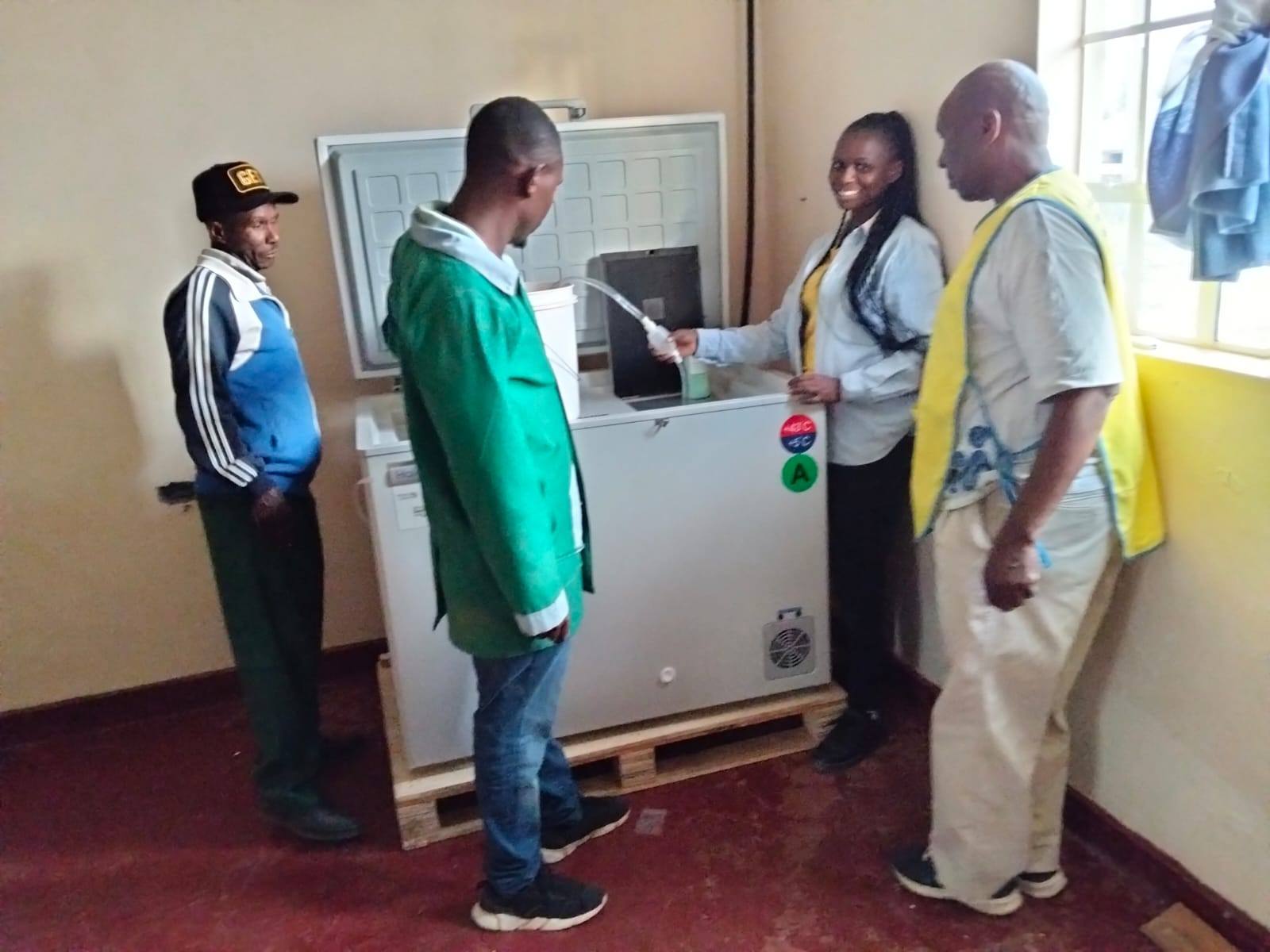
The Nakuru county government is adopting solar-powered refrigerators to strengthen vaccine storage and delivery, particularly in remote areas with limited or no electricity, in a bid to reduce vaccine wastage.
According to the devolved unit, this investment means Nakuru’s health facilities can keep lifesaving vaccines and essential medicines fresh even in areas with inconsistent power supply, directly improving service delivery and health outcomes for residents.
County Biomedical Engineering Officer Kibet Keitany said the initiative has significantly expanded storage capacity at public health facilities in hard-to-reach and off-grid areas.
Solar drive vaccine fridges have already been installed at Munanda dispensary in Gilgil subcounty, Gacharage dispensary in Kuresoi North, and Roret and Lomolo dispensaries in Rongai subcounty, with support from the Ministry of Health and United Nations Children’s Fund.
“Solar-powered fridges are game-changers as they reduce electricity costs, require minimal maintenance, and ensure reliability for frontline health services. Facilities such as Chepakundi, Tendwet, Kiplemeiywo, Masaita, Kapsinendet, Ndoroto, Kinungi, Ngondi, Korabariet, St. Joseph’s Hospital and Mwangi Michuki dispensaries already benefit from solar cold chain systems,” Keitany said.
He added that installations are ongoing at Rongai Turi, Kamosop, Kigonor, Lusiru, Arus and Kapyemit dispensaries.
Keitany said the innovation ensures vaccines are safely stored at optimal temperatures without relying on electricity or fuel-powered generators.
A solar-powered refrigerator runs on electricity generated from the sun, with a compressor powered directly by sunlight.
Keitany said the adoption of solar-powered vaccine storage refrigerators aligns with Governor Susan Kihika’s commitment to strengthening primary healthcare systems and expanding equitable access to essential health services across all 11 subcounties.
“This initiative is part of the continued commitment by Governor Kihika’s administration to strengthening primary care and expanding access to quality healthcare for all residents,” he added.
To maintain vaccine potency and availability, Keitany underscored the need for a robust cold chain system that reliably delivers vaccines on time and in optimal condition to every person.
He emphasised the often-overlooked importance of cold chain systems in public health, adding that a reliable cold chain is one of the most vital aspects of public health.
“As we celebrate vaccines, we must always remain alive to the fact that without a functional cold chain they lose their potency and the promise to save lives,” he said.
Keitany said the dispensaries are now better equipped to serve residents, bringing essential health services closer to families and reducing the need for long-distance travel in search of vaccination services.