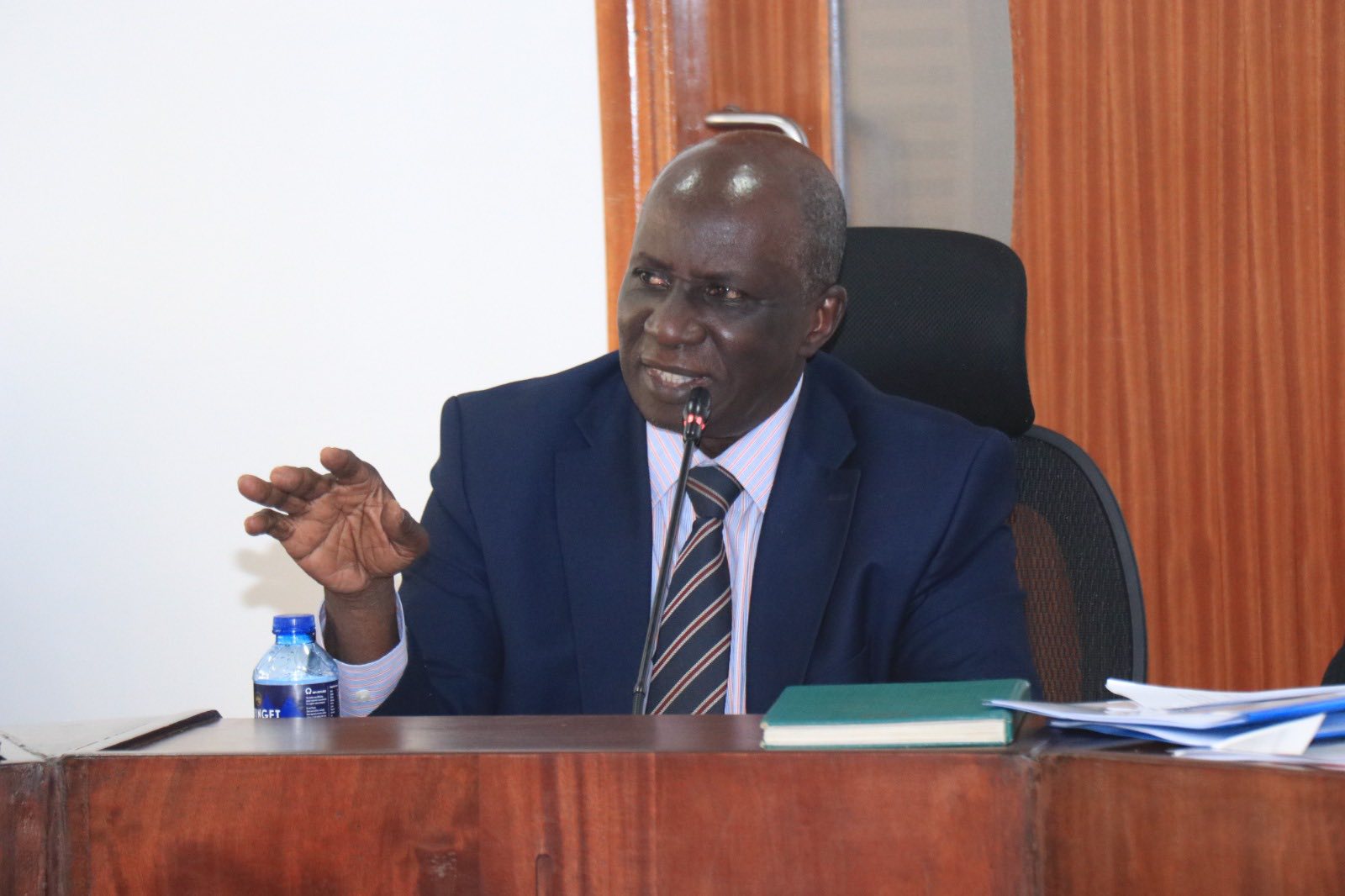
 National Assembly's Departmental Committee on Health chairperson and Seme MP Dr James Nyikal speaks on Tuesday, February 24, 2026. /PARLIAMENT
Members of Parliament have endorsed a Sh280.8 million request aimed at addressing funding gaps in HIV prevention, cautioning that recent donor cuts could derail Kenya’s target of ending AIDS as a public health threat by 2030.
The appeal came as lawmakers scrutinised the State Department for Medical Services over the proposed additional allocation, pressing officials to justify the request amid tightening fiscal space.
National Assembly's Departmental Committee on Health chairperson and Seme MP Dr James Nyikal emphasised the need to prioritise critical interventions, noting that the identified requirements exceed the available budget ceiling.
President Donald Trump’s funding pauses on US foreign aid in early 2025 severely disrupted Kenya’s HIV response, after USAID halted support for numerous programmes.
Of the 149 USAID-operated initiatives, only 30 remained operational, affecting critical interventions across the country.
The reductions triggered acute shortages of antiretroviral drugs, stalled prevention programmes targeting vulnerable populations and put the jobs of more than 41,000 health workers at risk.
Approximately 18 per cent of Kenya’s health workforce, supported by PEPFAR, faced potential layoffs, weakening the country’s capacity to manage HIV care.
Appearing before the National Assembly Departmental Committee on Health, National Syndemic Diseases Control Council acting chief executive officer Douglas Bosire said changes in global financing have left prevention efforts — particularly those focused on young people and vulnerable groups — exposed.
“In 2024 alone, we recorded 18,900 new infections, with 41 per cent among those aged 15–24,” he said, warning that awareness levels among young people stand at just 55 per cent.
Bosire observed that donor backing has increasingly prioritised treatment, leaving prevention activities such as community outreach, drop-in centres and voluntary medical male circumcision underfunded.
He further cautioned that interruptions to support groups for pregnant women risk reversing progress made in preventing mother-to-child transmission.
Lawmakers voiced concern over whether the proposed allocation would be sufficient to curb rising infections.
Ndhiwa MP Martin Owino questioned if the amount sought could meaningfully reverse the trend and urged the department to provide proper documentation to justify an expanded budget ceiling.
Samburu MP Pauline Lenguris pointed to high infection and teenage pregnancy rates in her county, warning that inaction could “cost a generation.”
Committee vice chair and Chuka Igambang'ombe MP Patrick Munene underscored the importance of safeguarding gains achieved in HIV, TB and malaria control, describing any resurgence as both a public health and economic threat.
Medical Services Principal Secretary Dr Ouma Oluga told the committee that discussions on external financing are ongoing, although the expected resources have not yet been captured in the Budget Policy Statement.
Treasury has until March 31 to finalise the development budget.
The debate comes at a time Kenya is launching the long-acting injectable HIV prevention drug Lenacapavir, offering a twice-yearly dose for high-risk populations.
According to the Ministry of Health, the rollout with an initial 21,000 doses targets 15 high-burden counties to complement existing HIV prevention methods.
A further 12,000 continuation doses are expected by April to support individuals initiated on the product, while an additional 25,000 doses from the US government will strengthen early implementation.
The cost is estimated at around Sh7,800 per patient per year, administered twice a year, providing six months of protection
Lenacapavir is used as a highly effective Pre-Exposure Prophylaxis (PrEP) to prevent HIV infection, not a cure.
In January 2026, the Pharmacy and Poisons Board completed a comprehensive scientific review and registered both the oral and injectable formulations for national use.
The initiative makes Kenya one of the first African nations to adopt the product, alongside countries like South Africa, Uganda, and Nigeria.