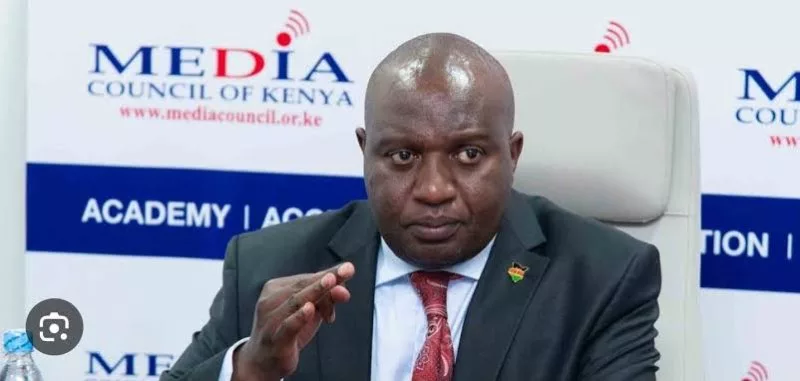
 Nairobi lawyer Mathew Kyalo Mbobu
The killing of Nairobi lawyer Kyalo Mbobu has exposed a gap in Kenya’s forensic architecture after ballistics tests failed to match recovered bullets to any recorded firearm.
The September 9, 2025, murder has presented investigators with an unexpected complication.
Bullet heads retrieved from the scene and from Mbobu’s body do not correspond with any weapons logged at the National Forensic Laboratory based at the Directorate of Criminal Investigations headquarters on Kiambu Road.
The mismatch has raised troubling questions about the scope and completeness of the country’s ballistic database.
Detectives believe the weapon used may have been an illegal firearm not captured in official records, or one issued to a government agency whose ballistics signature has never been entered into the system.
Either scenario exposes structural weaknesses in the national tracing mechanism.
Sources within the investigative team say officers have urged their superiors to push for mandatory ballistics testing of all government-owned firearms across agencies.
They argue that such a move would significantly enhance the ability to resolve complex cases that have remained unsolved for years.
At present, the laboratory maintains ballistics data for privately owned licensed firearms, as holders are required to present their weapons for testing and recording of unique ballistics features.
This civilian database has played a crucial role in linking crimes to legally held guns.
There are about 15,000 licensed firearm holders in Kenya.
However, insiders concede that ballistics data for government-issued weapons is not comprehensively captured.
An official familiar with the probe said there is a pressing need to test all such weapons and retain their data for future investigative use.
Kenya is estimated to have around 300,000 government-owned firearms distributed across agencies, including the military, police, prisons, the Kenya Wildlife Service, the Kenya Forest Service and the National Youth Service.
Investigators believe the absence of a centralised ballistics record for these weapons creates a loophole that could be exploited by rogue officers.
Past concerns have included allegations that firearms are swapped before submission for ballistics examination, frustrating accountability efforts.
According to another insider, comprehensive ballistics data would resolve the majority of such cases, although there are suggestions that resistance may emerge from individuals unwilling to support better scrutiny.
Mbobu, a former chairman of the Political Parties Disputes Tribunal, was shot dead at about 5.30 pm on Magadi Road as he drove towards his Bogani residence in Karen.
A postmortem conducted by Chief Government Pathologist Dr Johansen Oduor established he was shot eight times at close range.
His spine was severely injured and most of the bullets had entry and exit wounds, apart from two that were recovered. Some struck his neck, head and chest below the arm.
The pathologist concluded the injuries caused severe bleeding, leading to death.
Police recovered three spent cartridges from his vehicle. Investigators say the attackers trailed Mbobu from near Galleria Mall as traffic slowed past Brookhouse School.
CCTV footage shows a motorcycle rider overtaking his vehicle before making a U-turn.
The pillion passenger, believed to be the gunman, alighted about 40 metres away and walked towards the vehicle, which had halted in traffic.
Finding the driver’s window partially open, the assailant fired multiple shots at close range.
The vehicle rolled forward and struck a matatu ahead as bystanders fled. The gunman then returned to the waiting motorcycle and escaped. Nothing was stolen.
The case has placed renewed scrutiny on the DCI’s National Forensic Laboratory, identified as a flagship security project under Kenya's Vision 2030.
Officials describe the facility as central to investigations into murder, robbery with violence, fraud, terrorism and cybercrime.
The laboratory houses 10 scientific sections, including forensic ballistics, digital forensics, biology and chemistry, and has significantly expanded investigative capacity.
DCI director Mohamed Amin has described the laboratory as a key investment that continues to assist in solving crimes.
Authorities are also revamping the cybercrime unit, with support from the Universal Service Fund administered by the Communications Authority of Kenya to address emerging digital and financial crimes.
Officials say offences involving money siphoning through mobile services are becoming increasingly complex, reflecting a broader shift in criminal patterns over recent decades. Cybercrime and cryptocurrency offences, once rare, now demand advanced forensic capability.
Experts from the directorate have undergone local and international training and have been deployed according to their areas of specialisation.
A major component of the facility is the Digital Forensic Laboratory, mandated to identify, seize, acquire and analyse electronic devices linked to cyber-enabled offences. Its role is to collect digital evidence suitable for presentation in court.
The unit is divided into sub-units with clearly defined responsibilities for digital forensic analysts.
The DCI is also working with other agencies, including the Ministry of Health, in crime prevention and detection initiatives.
The laboratory’s history reflects prolonged institutional delays. Plans to establish the facility began in the 1990s under former President Daniel Moi but stalled amid corruption scandals.
An initial Sh4.1 billion project collapsed in 2003 after being linked to the Anglo Leasing scandal. Although the physical structure was completed in late 2015, installation of equipment followed later.
Despite its classification within the security, peace building and conflict management sector and its inclusion under Kenya Vision 2030’s First Medium Term Plan (2008–2012), the project only took off following its launch in March 2014.
As detectives continue to pursue leads in Mbobu’s killing, the inability to match the murder weapon has sharpened debate over whether Kenya’s forensic progress has outpaced its data integration.
Investigators believe a comprehensive ballistic database covering all state-owned firearms could unlock not only this case but numerous unresolved investigations.
For now, the murder stands as both a test of the laboratory’s capabilities and a measure of the system’s remaining blind spots.