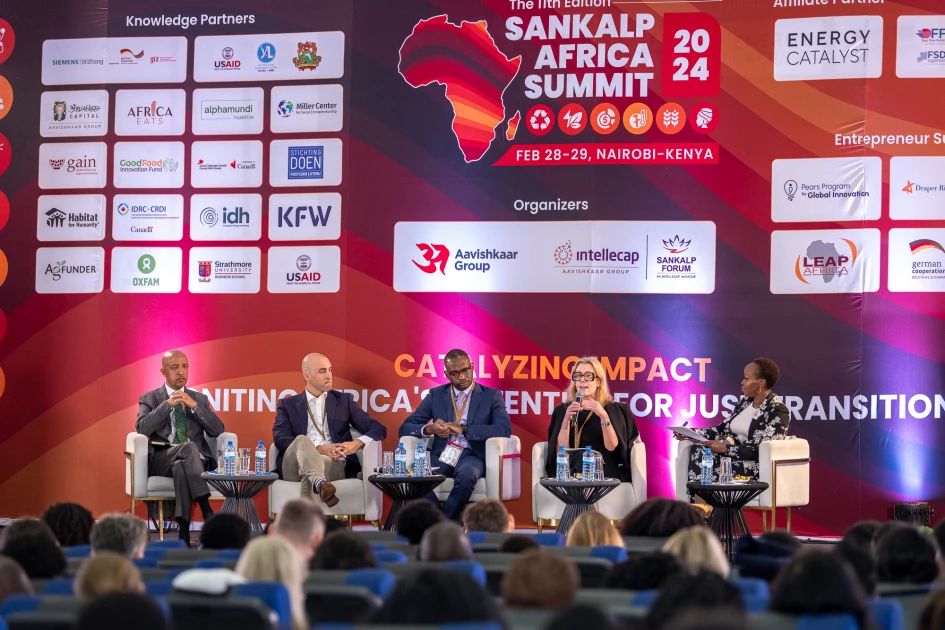
Nairobi will from Tuesday host the Sankalp Africa Summit, a three-day gathering bringing together entrepreneurs, investors and policy leaders under the theme “South–South Rising.”
The forum, running from February 25 to 26 in Nairobi, positions the city once again as a regional hub for conversations on enterprise growth and climate resilience.
Ahead of the main summit, Energy Catalyst, an Innovate UK programme, will run a three-day showcase from February 24 to 26, featuring leading African clean-energy enterprises. Organisers say the showcase provides an early opportunity for investors, policymakers, and entrepreneurs to engage with innovative technologies before the full summit opens on February 25.
The firm will also host a flagship session: “Energy as infrastructure for agriculture- powering the food systems,” featuring innovators whose market-ready technologies are improving productivity, reducing post-harvest losses and enabling reliable cold-chain solutions
A key feature of this year’s summit is a showcase of clean energy and climate technology innovations aimed at expanding clean, affordable and reliable energy access in underserved markets — a persistent challenge across much of sub-Saharan Africa.
Among the solutions expected to attract investor attention are solar-powered milling systems designed to reduce fuel costs in staple food processing. Developers say replacing diesel-powered mills could lower operating expenses for smallholder farmers and rural enterprises.
Industrial decarbonisation will also feature prominently, with biomass-to-energy systems that convert agricultural waste into heat and power for tea factories and other processors seeking alternatives to wood fuel and fossil fuels.
In the fisheries sector, solar-battery microgrids — branded as “GoHubs” — will be showcased for their ability to provide ice production, cold storage and refrigerated transport services to artisanal fishing communities in Mozambique, where unreliable electricity contributes to post-harvest losses.
The exhibition will also feature pay-as-you-go induction stoves targeting off-grid and peri-urban households, aimed at expanding access to electric cooking through flexible financing models.
Africa faces one of the world’s largest energy access gaps, with around 600 million people lacking electricity and more than a billion without clean cooking solutions.
According to the World Bank and the Institute of Economic Affairs, these deficits constrain economic growth, limit educational and health opportunities, and undermine small businesses and industrial development.
The World bank notes that rising energy demand driven by population growth and industrialisation, coupled with the disproportionate impacts of climate change in Africa, has made the clean energy transition urgent.
Analysts highlight that closing these gaps through clean energy is both a development necessity and a climate imperative, offering economic, social, and environmental benefits across the continent.