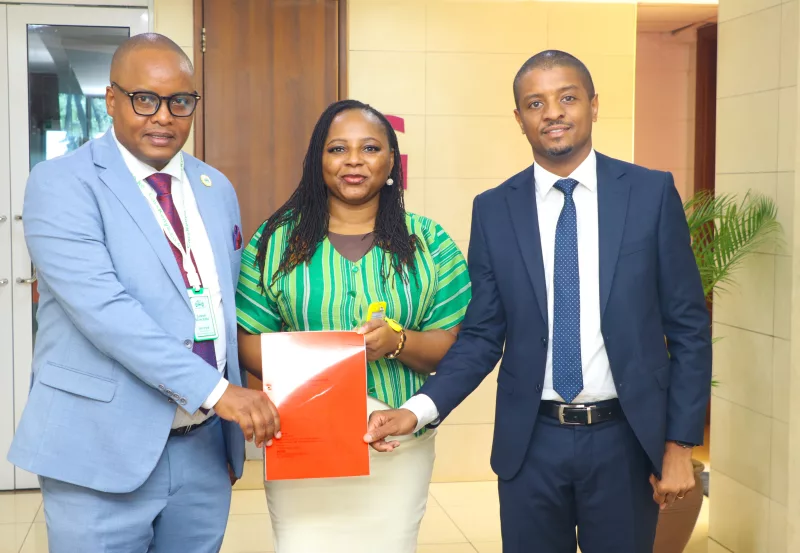
Finance and National Planning Committee chairman, Kimani Kuria, has challenged the National Treasury to move swiftly in establishing a nationwide framework to standardise school uniform prices.
Kuria made the remarks during a meeting with Investment Principal Secretary, Cyrell Odede, after lawmakers raised concerns over the rising cost of uniforms across the country.
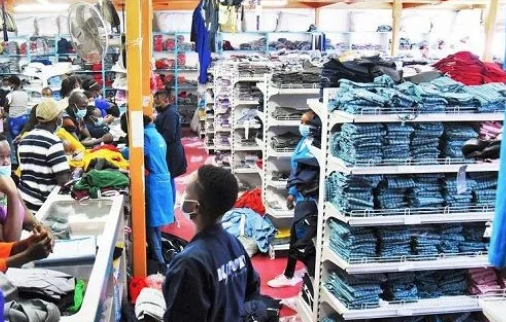
The Molo lawmaker faulted what he described as “unregulated price manipulation” by suppliers and individual schools, arguing that parents were being subjected to unnecessary financial pressure at the start of every academic year.
“You find a shirt or trouser is sold at Sh1500 in select shops and schools and these are the shops that parents are directed to go buy. Can we just have the same price if it’s a shirt, whether in Nairobi or northern Kenya?” asked Kuria.
However, the PS said that the Public Procurement Regulatory Authority (PPRA) has already launched investigations into suppliers accused of inflating uniform prices.
He pointed out that the regulator had formally taken up the matter and was expected to produce actionable recommendations soon.
“The PPRA has taken up the issue as a regulator so that they can rein in those people who are selling school uniforms at exorbitant prices,” said Odede.
“That matter is under investigation, and very soon we will have a solution.”
He added that a committee expected at the treasury will work hand-in-hand with the PPRA to establish clear guidelines that would promote fairness, transparency, and affordability.
He stressed that the government must intervene to prevent uniform suppliers and certain schools from exploiting parents.
Lawmakers noted that some schools prescribe specific shops for uniform purchases, a practice Kuria said often leads to artificial price inflation.
He called for the abolition of exclusive supplier arrangements unless they are justified and regulated.
Odede acknowledged the concerns and assured lawmakers that the Treasury would collaborate with the PPRA to tighten oversight, noting that the ministry was committed to finding a solution that balances affordability with quality standards.
Kuria insisted that the issue must be treated with urgency, warning that the cost of school uniforms was becoming a barrier to education for low-income families.
He underscored the need for a standard national price range to protect parents while ensuring that suppliers meet required production standards.
The committee chair also reiterated that the investigation by the PPRA is only the first step, emphasising that enforcement and long-term policy reforms will be necessary to curb opportunistic pricing.
“We have to protect parents from exploitation. A standardised pricing framework will ensure fairness and restore sanity in the procurement and distribution of school uniforms,” said Kuria.
![Hamisi Mwaguya [in coulored baseball cap] at the Kings Arena at Khadija estate in Nyali subcounty on Tuesday / BRIAN OTIENO](https://cdn.radioafrica.digital/image/2026/10/340e650a-21d8-475b-b658-a429e82e9367.jfif)