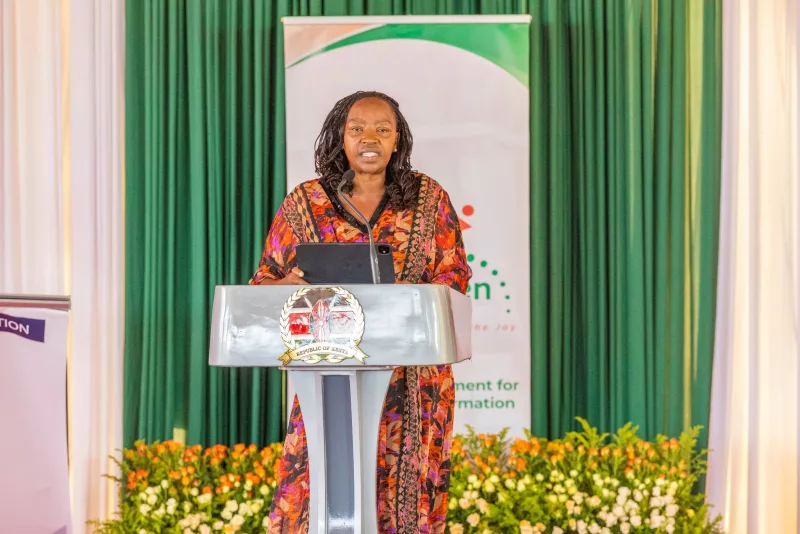
In an era when countries are locked in fierce competition for scarce global capital, Kenya’s ability to attract, retain and convert investment into real jobs and growth has never mattered more. At the centre of this effort is Kenya Investment Authority (Invest Kenya), the State agency charged with selling the country’s value proposition to the world and smoothing the path for investors on the ground.
The Star sat down with its chairperson, Sally Mahihu, to discuss Kenya’s investment outlook, the reforms shaping investor confidence, the role of women in finance and leadership, and what success would look like for the country over the next five years. She lays out the opportunities, the persistent challenges and the thinking guiding Kenya’s investment strategy at a critical moment for the economy.
As Invest Kenya chairperson, what is your main role and areas of focus?
My primary role as Kenya Investment Authority (Invest Kenya) chairperson is to provide strategic oversight and governance to an institution mandated to promote and facilitate both local and foreign investment into Kenya.
This includes strengthening investor confidence, enhancing the attractiveness of Kenya’s value proposition, advising government on investment-enabling policies and ensuring that the authority’s strategic plans and operational frameworks are aligned with national development priorities.
Most importantly, we focus on investor facilitation, aftercare support to existing investors and fostering partnerships that deepen economic integration and sustainable impact across key sectors.
Leadership roles for women in investment and finance remain limited. What barriers do you personally face and how can things be improved?
Women still encounter systemic barriers such as gender-biased expectations, limited access to elite networks and under representation in technical finance forums. However, things have improved more than they were before, so there is some progress and the barriers women face are definitely less.
One barrier I personally face is in trying to balance the responsibilities I have to my family, my home Church and my work in the marketplace, and this basically requires working smarter as opposed to working harder and adopting the right mind-set.
Who has mentored or influenced you most in your career and what lessons from them still guide you today?
My father and my husband who may not even know how they have mentored me through their commendable work ethics and their inborn wisdom in handling relationships, which has taught me many lessons in particular that right relationships are crucial.
How do you balance long-term national economic goals with the short-term pressures investors often bring to the table?
Balancing these goals with short-term investor expectations is core to Invest Kenya’s mandate. We align investor opportunities with Kenya Vision 2030 priorities by promoting sectors that advance industrialisation, technology, sustainability and job creation.
At the same time, we support investors through digitised services and deal-closing mechanisms that enable efficient licensing, clearance and engagement ensuring short-term wins contribute to sustained economic transformation. Investors want certainty and speed; we deliver predictable processes while upholding standards that secure long-term competitiveness and ESG outcomes.
Kenya is competing aggressively with regional peers for FDIs. What sets it aside and where is the country still falling short?
Kenya stands out in Eastern and Central Africa as a large, diversified economy with strong regional connectivity, a robust services sector and status as a gateway for trade across the region.
Notably, Kenya was ranked Africa’s most competitive economy in the 2025 International Institute for Management Development (IMD) World Competitiveness Ranking, an improving it positioning globally, a testament to improvements in government efficiency, business environment, and infrastructure.
To stay on this progressive track, we are tackling key challenges in areas such as technological readiness, regulatory consistency and cost structures that can affect investor perceptions and operating costs. Strengthening these areas will be pivotal to sustaining Kenya’s competitive edge.
Investors often cite policy inconsistency and regulatory uncertainty as key concerns. How is Invest Kenya addressing this perception?
The government fully recognises the importance of clear, stable frameworks for investment. Invest Kenya collaborates closely with the State Department for Investment Promotion and other agencies to advise on policy reforms, simplify investment procedures, and digitise service delivery.
Our mandate includes facilitating licensing and permits, helping investors navigate regulatory requirements, and advocating for reforms that strengthen predictability in the business environment.
Has the cost of doing business in Kenya—energy, logistics, taxes become a deterrent to investment, and what reforms are most urgent?
Operating costs are an important consideration for investors globally. While Kenya’s renewable energy mix and improvements in digital infrastructure make us competitive, areas such as energy tariffs, logistics efficiency and complex tax compliance can influence decision-making.
This is why we are implementing continued reforms to improve reliability of supply, streamline tariff structures, enhance logistics throughput and rationalise regulatory costs to further enhance Kenya’s investment climate and align with global investor expectations.
What sectors currently offer the strongest investment opportunities in Kenya and which ones are underperforming despite high potential?
The country’s investment opportunities are broad and sector-diverse. We are prioritising leather, textiles and apparel, Business Process Outsourcing (BPO), agro-processing and e-mobility.
These are industries with strong potential for export growth, job creation and value addition and they also align with global demand trends and Kenya’s competitive advantages, including a skilled workforce, natural resources, renewable energy capacity, and regional market access. Overall, the focus is on addressing the enabling factors that unlock growth across the board, including infrastructure readiness, skills development, streamlined regulatory processes and improved access to finance.
How is Kenya converting investment pledges and MOUs into actual capital inflows and jobs?
Conversion of investment pledges into tangible capital and jobs requires sustained execution beyond headlines. Invest Kenya supports significant facilitation efforts and continues to emphasise deal tracking, aftercare engagement and streamlined investor services that help translate memoranda of understanding into operational projects.
Progress in digital services, collaborative stakeholder platforms such as the upcoming Kenya International investment Conference (KIICO 2026), and targeted sector strategies have strengthened our ability to turn commitments into real economic impact.
How can foreign investment be structured to better support local SMEs rather than crowd them out?
Foreign investment should be leveraged to strengthen local ecosystems through supplier-development programmes, mandates for local sourcing in strategic value chains and incentives for joint ventures that embed technology transfer. In addition, Public–private partnerships (PPPs) and structured capacity-building initiatives ensure that SMEs are integrated into FDI success stories, fostering inclusion and shared growth.
What role should county governments play in investment promotion and how aligned are they with national strategies?
County governments are critical partners in the investment value chain. They manage devolved functions like land administration, local services and zoning elements that directly affect investment implementation. Therefore, we continue strengthening alignment with national strategies through coordinated planning platforms, capacity building on investment facilitation and integration into Invest Kenya’s digital portals ensures a unified national pitch that expands job creation and economic growth at all levels.
What lessons can Kenya learn from countries that have successfully built strong domestic investor ecosystems?
Countries with strong investor ecosystems prioritise policy predictability, transparency, skills development, and innovation infrastructure. They establish mechanisms that ease firm creation, protect investment rights and support capital formation across both SMEs and larger enterprises. Through Invest Kenya, the country is adapting these lessons by deepening digital governance tools, enhancing access to credit and skills training, and strengthening legal frameworks that support private sector growth.
Looking ahead five years, what would success look like for Invest Kenya under your leadership?
Success will be reflected in measurable increases in quality FDI inflows, higher conversion rates of investment commitments into operational projects, expanded jobs across priority sectors and strengthened digital facilitation tools. We aim to see Kenya firmly established as a top investment hub in Africa, characterised by predictability, inclusion and sustainable impact.
What major risks—global or domestic—keep you most concerned about Kenya’s investment outlook?
Like any other destination, We face global risks such as tightening capital markets, geopolitical volatility and shifting trade patterns. Domestically, maintaining policy continuity, managing macroeconomic stability and accelerating implementation of structural reforms are key areas of focus. Early identification and proactive mitigation are essential to preserving investor confidence.
What legacy would you like to leave at Invest Kenya and what message do you have for young Kenyans aspiring to leadership in economic policy and investment?
I would like to be remembered for my disciplined focus in fulfilling the mandate that I was given faithfully with accountability and integrity. My advice to young Kenyans; putting your people and Nation first will inevitably and automatically yield great benefits to them personally.