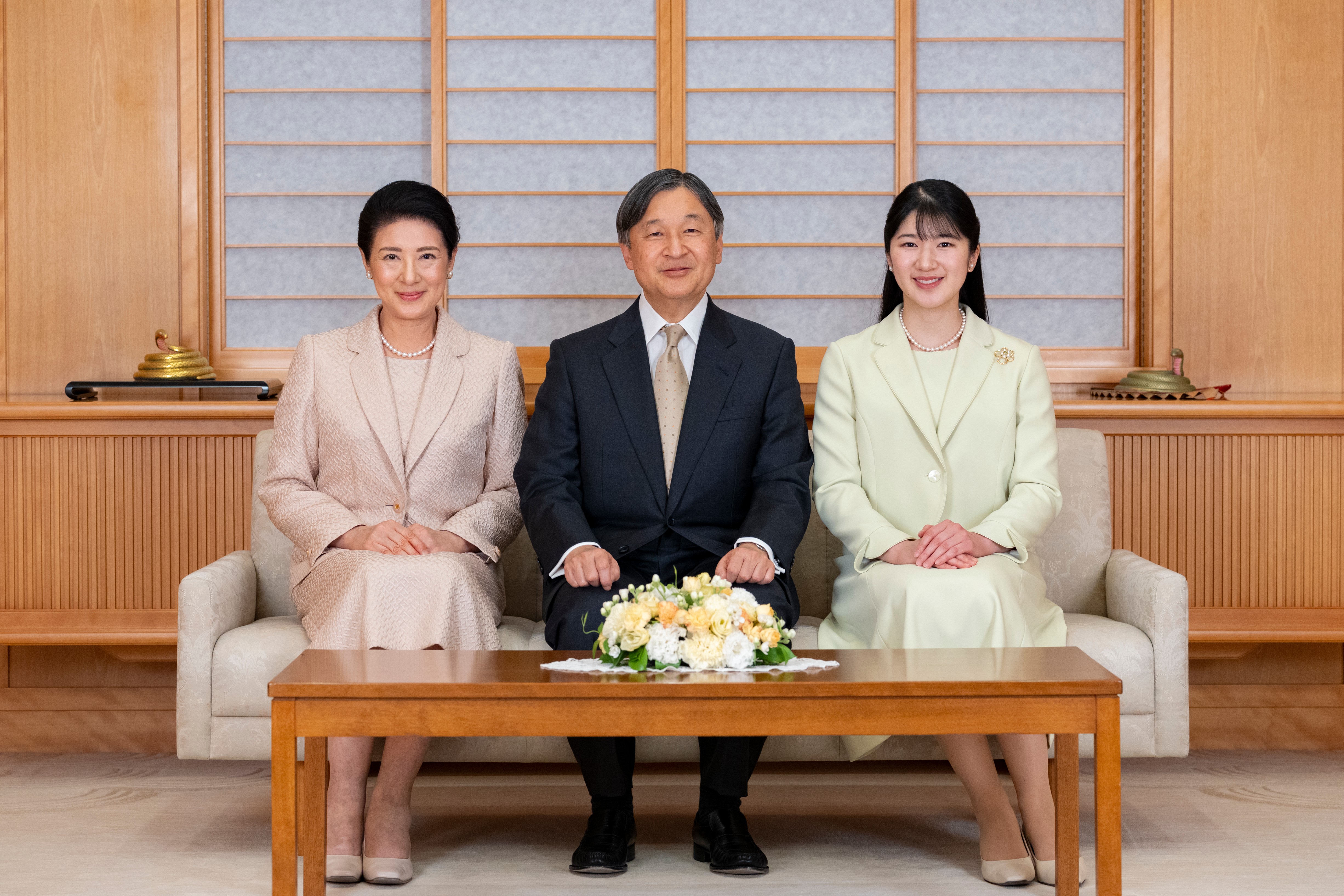
In Japan, it is a national holiday when we celebrate the birthday of His Majesty Emperor Naruhito. And for all of us who value the long and rich Japan-Kenya partnership, this is a joyous occasion.
On February 23, His Majesty will be 66 years old. Prime Cabinet Secretary Musalia Mudavadi has turned age 65, the republic will be 62 years old this year and I will also be 62 in this April.
In each year, this is an invaluable moment in which all of us sense that we walk together: Tutembee pamoja. It is profoundly meaningful for our bilateral relations that all of us celebrate that day together in one place.
Back in 2010, His Majesty came to Kenya during his first visit to sub-Saharan Africa as Crown Prince. The other day, I saw a video of his speech at the state dinner during his stay in Nairobi. He greeted the audience by saying “Hamjambo?” and “Habari gani?”
He even quoted the famous Kiswahili proverb “Milima haikutani, lakini binadamu hukutana.” Also, in the course of the visit, he bought a wooden jigsaw puzzle in the shape of the African continent, with each jigsaw piece in the shape of an African country. That was a souvenir for his beloved daughter, Her Highness Princess Aiko.
Her Highness has grown up by playing this puzzle for the past 16 years, including for the purpose of reviewing her understanding of African geography before tests in school. Thus, Princess Aiko has deepened her affinity for Africa, together with her father, His Majesty the Emperor.
Last year was a momentous year for our Japan-Kenya relations.
First, with President William Ruto’s visit to Japan in August, Japan and Kenya achieved the mutual visits by our leaders for three consecutive years. These promoted bilateral relations very strongly.
Kenya was powerfully represented at the ninth Tokyo International Conference on African Development held in Yokohama in August 2025, by the team of the President, and other top officials. The Kenya team effectively led the discussion at Ticad-9.
Second, in December, Asahi Group Holdings announced its takeover of the 65 per cent ownership of East African Breweries Limited with a $2.3 billion(Sh2,967,000,000) investment.
This has been the largest investment by a Japanese business in East Africa. It was big news at the end of the year, but also it demonstrated the great importance and enthusiasm that Japanese businesses attach to the Kenyan and African market.
At the reception I recently held to mark the emperor’s birthday, I asked four of such enthusiastic Japanese investors to showcase their products and services.
Asahi Intecc provides catheter and other products for cardiovascular surgery and operates the heart centre for the cardiovascular medicine at the Eldoret hospital.
One of the many products which Sojitz introduces to the Kenyan market with high enthusiasm, is Nala, an instant noodle, readily available nationally at supermarkets.
Pigeon specialises in baby-rearing products, such as bottles for powdered milk.
Maison is the provider of wigs which exclusively use the synthetic hair produced by Kaneka, a Japanese chemical manufacturer.
All in all, the four products capture the changing consumer demand in the changing Kenyan society, which is increasingly busy, increasingly fashionable, nourishing babies with increasing care and increasingly worried about the possibility of heart diseases.
In this way, these companies show how the Japanese businesses are attentively engaging in the Kenyan market.
Third, last year was the year of Expo 2025 Osaka, Kansai. Lee Kinyanjui, the Cabinet Secretary for Industry, Trade and Investment, attended the Kenyan national Day in June, which gave a strong impression to all the attendees of the power of Kenyan culture.
The total number of the people who visited the Kenya pavilion at the Expo from April to October was 2.3 million. It is a big number, and this number of Japanese were exposed to Kenyan culture and goods.
In September, Kenyan athletes performed superbly at the World Athletic Championship in Tokyo. Under the on-site presence of the Salim Mvurya, the CS for Youth and Sports, they earned 11 medals and broke three records at the championship.
Such names as Beatrice Chebet, Faith Kipyegon and Lilian Odira, have become familiar ones on the lips of Japanese people.
Also in September, we heard the refreshing sound of Nyatiti played by Eriko Mukoyama, also known as Anyango. Despite the fact that she is a Japanese and a woman, she has become an accomplished player of Nyatiti, hitherto preserved for Luo men.
To commemorate the publication of her autobiography Anyango Nyar Siaya (NyatityQueen,) she gave a performance at the Alliance Francaise.
Put together, the cultural and sport interest and understanding between Japan and Kenya were dramatically expanded and deepened both ways last year.
We need to recognise that the bilateral relationship has entered a qualitatively different stage by now. This year, we should build upon this excellent status, moving from strength to strength. The Japanese public see the dynamic progress of our bilateral relationship as the symbol of the growing Japan-Africa relationship.
I greatly look forward to working closely with Kenyan leaders on this.
I am reminded at this point of a New Year article published in The EastAfrican weekly newspaper, written by the Foreign Affairs CS Mudavadi. In it he emphasised four principles of Kenyan diplomacy, namely the rules-based liberal international order, peace and stability, multilateralism and Pan-Africanism.
Indeed, Kenya is the anchor of the four principles in East Africa, as Japan is the anchor of the four principles in East Asia. We have many tasks ahead of us to advance the Free and Open Indo-Pacific together.
Mudavadi also mentioned in the same article the importance of further integration of the East African Community market. I cannot agree more. I wish to work together with the government of Kenya on this cause as well.
Further to this, allow me to raise the matter of multilateralism again, as the Permanent Representative of Japan at the United Nations Office at Nairobi. Last year we had a successful UN Habitat Assembly and a successful UNEA-7 at UNON. Given the fragility of multilateral diplomacy nowadays, these were commendable outcomes.
We are now in the implementation phase of the outcomes. Japan is ready to join forces with other member states to do that. That will show how Japan remains committed to the strengthening of multilateralism.
The re-strengthening of multilateralism should begin here in Nairobi. In the second half of last year, I served as the chair of the Asia-Pacific Group in Nairobi, supported by the members of the group and by UNON director-general Zainab Bangura. I thank you for all the support. This year, I will support the group’s current chairman, Ambassador Witjak of Indonesia, and its subsequent chairperson.
To conclude, I come back to the original point of our relations. Japan’s wish has always been simple: we hope to see a Kenya that is resilient and navigates its destiny by itself with confidence.
Japan also tries hard to be resilient and navigate our destiny by ourselves. We like to do it together with Kenya, by learning from each other. Because we, Japanese, see many common characteristics with us in Kenyans.
Both of us are optimistic, have an open mind to new things, respect our traditions, work hard and believe in ourselves. In this simple conviction, Japan has been consistent.
We never flip-flop. We never see Africa as a stage for hegemonic competition. We always humbly wish to be trusted by Kenya and the Kenyans as such. That has been the basis of our long friendship and will continue to be so.
Let us continue building mutual trust between our two countries.
(This is an extract from the speech given by Ambassador Hiroshi Matsurra for the celebration of the Emperor of Japan’s Birthday, held in Nairobi on the February 10)