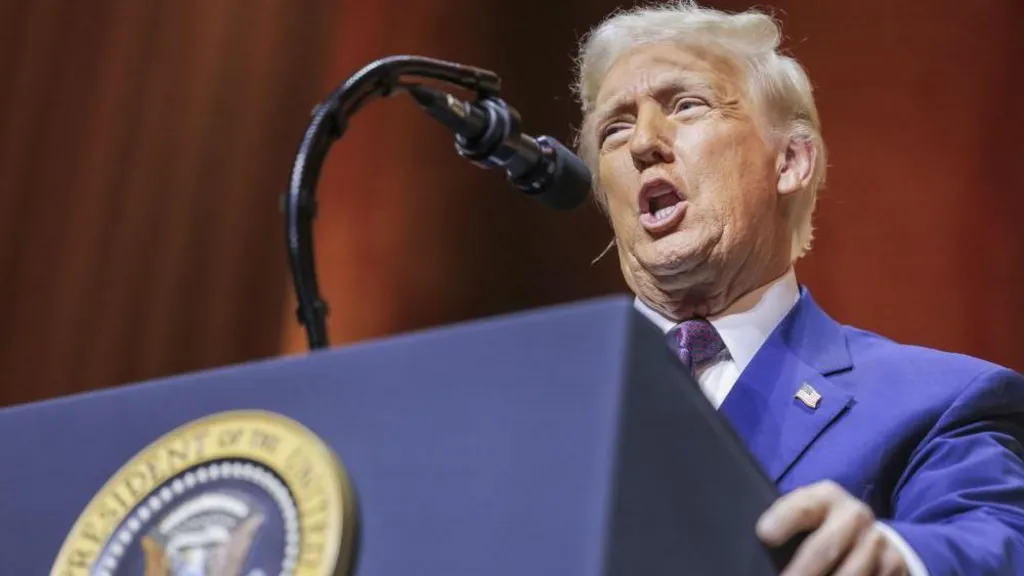
The world is living through a moment of strategic realignment, and much of it can be traced to the revival of unilateral instincts in Washington. Under the leadership of Donald Trump, American foreign policy has increasingly leaned toward go-it-alone decision-making—withdrawals from multilateral agreements, aggressive tariff regimes and a transactional approach to alliances.
While supporters argue this restores sovereignty and leverage, the broader effect has been to accelerate a global search for alternatives. In that search, the “Asian Giant”, China is emerging as a central pole of attraction.
Unilateralism is not new in US history, but its contemporary form is distinct in both tone and consequence. The US has long anchored global institutions, from trade regimes to security alliances.
When it signals unpredictability, whether by revisiting trade commitments or applying sweeping tariffs, it unsettles not only adversaries but also partners. Markets dislike uncertainty; smaller states fear abandonment; major economies hedge their bets. The result is not a vacuum but a redistribution of trust.
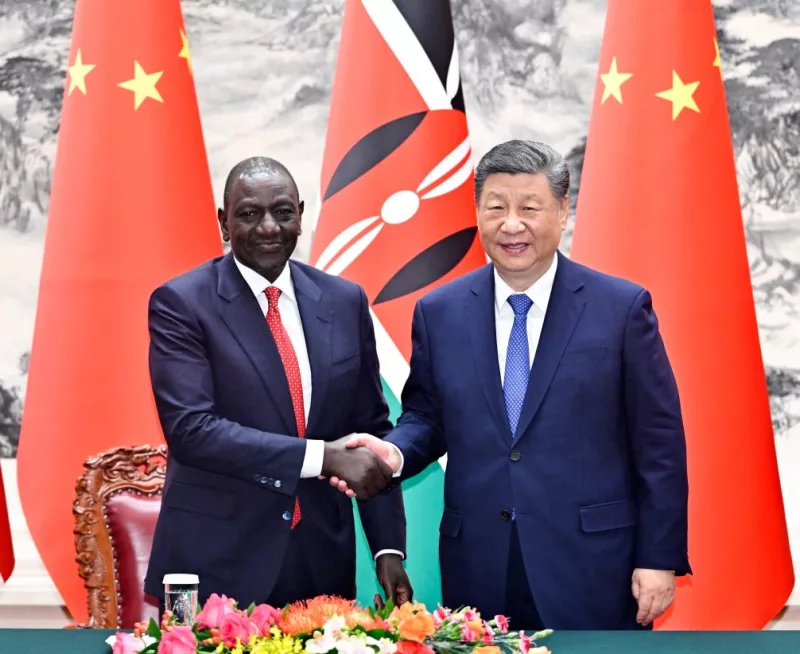
The Asian Giant has positioned itself to absorb that redistribution. Unlike episodic engagement that fluctuates with political cycles elsewhere, Beijing has cultivated an image of long-term planning and policy continuity.
Through initiatives such as the Belt and Road Initiative, it has embedded itself deeply into infrastructure, logistics and industrial development across Asia, Africa, Latin America and parts of Europe. The scale and ambition of these projects underscore a commitment to connectivity and shared growth. At a time when American policy signals retrenchment or conditional engagement, China’s pitch of partnership and development gains resonance.
Trade is the most visible arena of this shift. When tariffs become the preferred instrument of policy, supply chains adapt. Companies diversify away from political risk, and governments accelerate regional trade agreements that exclude the US.
Asia’s economic architecture increasingly revolves around frameworks where China plays a central role. The message received globally is clear: if access to the American market can be constrained unpredictably, diversification toward Asia becomes not just prudent but necessary.
Financial diplomacy reinforces this dynamic. As Washington tightens sanctions regimes and leverages the dollar-based financial system for geopolitical ends, countries begin exploring complementary arrangements.
While the dollar remains dominant, incremental steps—bilateral currency swaps, local-currency settlements, new development finance institutions, reflect a gradual diversification strategy. China’s steady advocacy for multipolar financial cooperation aligns with the interests of states seeking greater stability and resilience in global finance.
Security alliances are also feeling the strain. Trump’s insistence that allies “pay their share” resonates domestically, but it alters the psychological foundation of alliances. NATO members, East Asian partners and Gulf states are recalibrating.
None are abandoning the US outright, but many are expanding diplomatic and economic ties with Beijing as part of a broader strategy of balance and engagement. Strategic autonomy, once a regional slogan, is becoming a global impulse.
Importantly, China’s growing centrality in global affairs is not merely a byproduct of shifts in Washington; it is also the outcome of decades of domestic transformation. Industrial upgrading, technological innovation and disciplined statecraft have given Beijing the tools to convert opportunity into influence.
From green energy supply chains to digital infrastructure, China offers tangible goods, advanced technology and financing at scale. When combined with rhetoric emphasising sovereignty and non-interference, this approach appeals to governments seeking development without political preconditions.
The irony is that unilateralism aimed at restoring American primacy may, in practice, dilute it. Leadership in a complex, interdependent world depends less on coercion than on predictability and coalition-building. When multilateral forums are sidelined or treated as zero-sum arenas, other actors step forward to shape norms and standards.
China has been increasingly active in international standard-setting agencies, trade forums and development banks, portraying itself as a defender of globalisation, an inversion of roles that would have seemed improbable two decades ago.
For many countries in the Global South, this shift is less ideological than pragmatic. They seek infrastructure, market access and strategic space. If Washington’s approach feels transactional and conditional, while Beijing’s appears consistent and development-oriented, alignment follows incentives. The growing web of Asian-centered trade corridors and financial arrangements reflects this calculus.
None of this suggests an inevitable eclipse of American influence. The US retains formidable innovation ecosystems, military reach and cultural capital. Yet influence is relational.
It depends on how others perceive reliability and respect. Trump’s unilateral style, whatever its domestic appeal, has catalysed a broader reassessment of dependence on US-led systems.
History shows that power transitions rarely hinge on dramatic confrontations alone; they unfold through accumulated decisions, hedging behaviours, and shifts in confidence.
By privileging unilateral leverage over multilateral leadership, Washington has inadvertently hastened the world’s tilt toward Asia. In doing so, it has strengthened China’s claim to be not merely a rising power, but a central architect of the emerging global order.