On International Mother Language Day, the world celebrates spoken languages—but for millions of deaf people, the language of their hands is just as vital.
Observed every February 21 worldwide, International Mother Language Day honours linguistic diversity and cultural heritage. It is a reminder that language is more than vocabulary. It is identity, belonging, and access to the world.
For 18-year-old Wesley Otieno, sign language isn’t an alternative—it is home, identity, and connection.
“I was born unable to hear nor speak. I literally don’t know what they feel like,” Otieno said.
Like many children, he began communicating at around two years old. But unlike most, his first words were not spoken—they were signed.
His parents, having known of his condition from birth, learnt sign language so they could connect with him fully and consistently. They became his first teachers.
“My parents were well exposed. After they knew my condition at birth, they started learning sign language because they wanted us to be connected,” Otieno said his parents told him.
Sign language became his mother tongue, his language for correction, storytelling, and everyday life.
Today, he communicates fluently in signed English and Kiswahili and is able to read and write in both languages.
Growing up, he attended a school with other deaf learners, a space that created what he describes as a “small world” where he felt normal.
“Growing up was not very difficult because I was taken to a school that had people with the same condition, and that created a small world for me that made me feel normal,” he said.
Discrimination, when it came, was occasional and usually rooted in misunderstanding.
“On rare circumstances I would be discriminated against by other children in church and in the neighbourhood. I understand they could not understand me, nor could I understand them,” Otieno said.
Today, he speaks about his identity with ease. He completed secondary school last year and is preparing to join campus in September.
“I am used to my condition, and there is no discomfort that I ever feel,” he said.
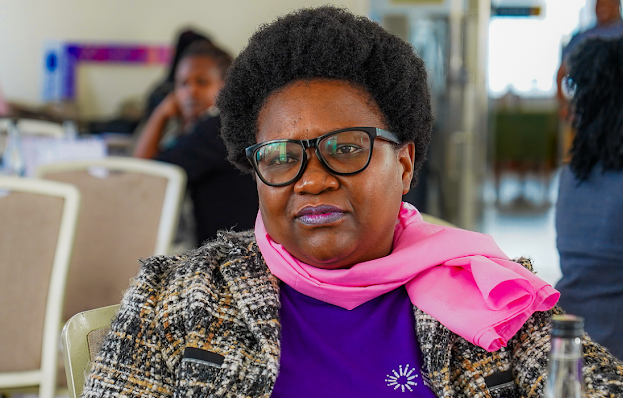
On International Mother Language Day, his message is straightforward: “Sign language is just a mother language like any other language for different communities.”
“People make effort to learn German, French, and other languages for fun. Sign language as a mother tongue should not be neglected. It is high time sign language is made compulsory worldwide.”
Otieno’s experience reflects what early exposure to sign language can mean: connection within the family, confidence in school, and a stable sense of belonging. But for many, access to sign language as a first language is neither immediate nor guaranteed.
For Maria Chale, a founder of Tsogolo Lowala Deaf Foundation in Malawi and an advocate for linguistic rights, the journey towards sign language was shaped by loss before it became empowerment.
“Mother language means the first mode of communication that inherently bridges communication between the wider community and us,” Chale said.
“It is language that embodies shared cultural values, beliefs, and norms.”
Her first language was Chichewa, also known as Chinyanja. She acquired speech before losing her hearing at the age of 10 due to cerebral malaria.
The transition altered not only how she communicated but how she experienced the world.
“I had an inborn passion for music and learning foreign languages. Losing these opportunities was a depressing moment for me during my childhood,” she said.
Communication within her family became strained.
“It was difficult for them to adjust. Any form of heavy communication for me was through letters; otherwise, I was mostly left alone,” Chale shared.
She taught herself lip reading and relied heavily on books, reading novels by Jeffrey Archer, Robert Ludlum, and Danielle Steele from a young age. Yet literacy could not replace full linguistic access.
Despite her abilities, school was complicated. She remained in mainstream education after her mother refused to transfer her to a specialist school for the deaf. Teachers treated her equally but often forgot her distinct communication needs.
“Communication remained a huge barrier. Poor communication led to poor grades, and I underperformed in many significant subjects,” she said.
At the time, there was no effective inclusive education policy in place to guide schools on accessibility or additional support. Chale became increasingly aware of the legal gaps when she enrolled in secondary school.
“The Education Act in my country offered no protection or direct guidance on inclusion, accessibility, and additional learning support for persons with disabilities,” she said.
Her academic journey continued despite these barriers. Following the ratification of the United Nations Convention on the Rights of Persons with Disabilities in 2006, she became the first deaf girl to enrol at the University of Malawi, graduating with a Bachelor of Social Science. Yet even at university level, sign language support was absent.
She said the institution was ill-prepared to support the deaf due to a lack of awareness of sign language as a medium of communication.
Her experience shows a broader issue that extends beyond one country: sign language is often treated as an accommodation rather than a primary language.
She added that the lack of structured access to interpreters, trained teachers, and policy recognition has resulted in learners being left to navigate systems that were not designed for them.
It was only after graduating that Maria says she fully understood the transformative power of sign language.
Through engagement with faith communities that used sign language to communicate with deaf congregants, she began to see it not as a substitute but as a linguistic right.
“Sign language is the mother tongue of the deaf,” she said.
“It deserves recognition and respect for being able to bridge the communication gap between the deaf and the community at large.”
Her advocacy is now focused on strengthening that recognition at the institutional level. Through her organisation, she works to expand vocational training, legal awareness, and community outreach conducted in sign language.
Her foundation has trained 25 women and youth as peer educators in vocational skills and aims to deploy them to underserved communities.
Beyond economic empowerment, the organisation pushes for structural change, from translating legal frameworks into sign language to lobbying for interpreter services in public and private sectors.
It also partners with disability federations and technical working groups to ensure sign language is included in discussions on education, social protection, and disaster response.
“Sign language is a basic human right and part and parcel of the Universal Declaration of Human Rights,” Chale said. “Any infringement should be treated with appropriate legal action.”
Yet challenges persist. Funding remains limited, and many policy documents are not available in accessible formats, including vernacular or sign language versions.
Technical terminology often lacks standardised glossaries, making it difficult for deaf communities to engage fully with legal frameworks.
Despite these limitations, she believes the shift must begin with how society conceptualises language itself.
“As long as the foundation exists, so will sign language,” she said.
The contrast between Chale’s delayed access to structured sign language support and Otieno’s early immersion underscores a central point on International Mother Language Day: the timing of language access matters.
Early identification and early sign language acquisition, Chale argues, create a conducive emotional and academic environment for deaf children.
Without it, she says learners risk isolation and underachievement—not because of inability, but because of systemic neglect.
On a day dedicated to celebrating the richness of the world’s languages, their stories expand the definition of what a mother language can be.
According to UNESCO, sign languages are complete linguistic systems with their own grammar, structure, and cultural histories. They are not universal and vary across countries and regions, just as spoken languages do.
Chale noted that International Mother Language Day was created to promote multilingualism and cultural diversity, advising that in many parts of the world, the conversation should centre on preserving endangered spoken languages.
Additionally, for millions of deaf people, however, the urgency is different, she said, adding that it is about ensuring that the language of their hands is recognised as equal to the language of voices.
“As policymakers, educators, and communities reflect on linguistic rights today, the question is not whether sign language fits within the idea of a mother tongue. The question is whether institutions are ready to treat it that way,” Chale concluded.