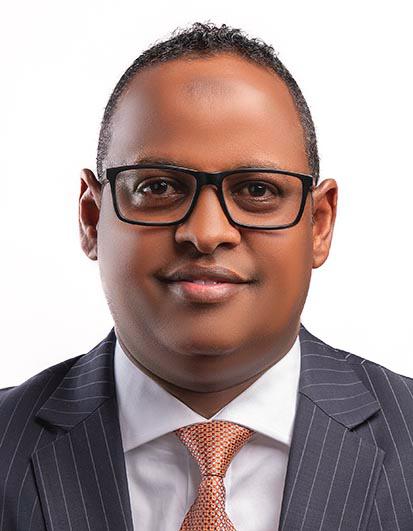
 Hon. Mustafa Abdirashid Ahmed MCA Iftin and current Deputy Speaker of Garissa County Assembly./COURTESY
The Orange Democratic Movement party (ODM) stands at one of the most consequential turning points in its history.
The question before it is stark and unavoidable; will it choose unity, or will it slide into rupture?
In the aftermath of the death of its towering leader, H.E. Raila Amolo Odinga, the party is wrestling not merely with leadership transition, but with identity, strategy, and legacy.
At the center of the unfolding contest is Senator Edwin Sifuna, the Nairobi City County Senator, Minority Whip in the Senate, and until recently, Secretary General of ODM. Charismatic, articulate, and unflinching in his public engagements,
Senator Sifuna rose to the rank under the direct mentorship and blessing of H.E. Raila Odinga.
Though he was not universally considered the likeliest candidate for the powerful Secretary General position, H.E. Raila’s confidence in him settled the matter. He became one of the party leader’s most trusted political defenders.
The stability of that arrangement was tested when ODM entered into a ten-point agenda agreement with the United Democratic Alliance, giving birth to the broad-based government under President William Ruto.
The agreement resulted in the appointment of three senior ODM figures to Cabinet positions and several other high-level government placements. To some within the party, this was strategic pragmatism, an opportunity to influence governance from within and secure tangible gains for supporters. To others, it risked diluting ODM’s long-held identity as a resolute opposition movement.
Throughout this period, Senator Sifuna maintained a firm and vocal stance against the Kenya Kwanza administration.
Even as colleagues accepted executive appointments, he continued to criticize government policies and defend his belief that ODM must retain ideological clarity and prepare independently for the 2027 elections. Until his death, H.E. Raila Odinga reportedly stood by his Secretary General, offering political backing amid internal murmurs.
However, leadership transitions after the passing of a political titan are rarely seamless. Following H.E. Raila’s death, his elder brother, Dr. Oburu Odinga, Senator of Siaya County, was appointed as the new party leader.
The decision aimed to preserve continuity and stabilize the movement during an emotionally charged period. Yet, beneath the surface, strategic disagreements were deepening.
A central point of contention emerged over ODM’s future direction. One camp argued that Raila’s final political posture supported continued engagement within the broad-based government and potentially backing President Ruto’s 2027 bid.
Another faction, led prominently by Senator Sifuna, insisted that ODM must disengage from the arrangement, reassert its independence, and prepare as a competitive force in the next general election.
Senator Sifuna’s persistent public criticism of the government unsettled sections of the party leadership who viewed his position as disruptive to internal cohesion. Matters came to a head when the National Executive Committee convened and resolved to remove him from the position of Secretary General. The decision exposed visible cracks within the party, transforming internal disagreements into a full-blown political confrontation.
In response, Senator Sifuna moved to court and secured interim orders pending the hearing and determination of his case. Simultaneously, he and his allies, launched nationwide drive, dubbed “Okoa Mwananchi.” The first rally held in Kitengela attracted significant public support, signaling that his message resonates beyond party boardrooms. A subsequent gathering in Kakamega is expected to further test the depth and breadth of that support.
These developments present ODM with a defining choice. Political parties are sustained by structures, yes, but more fundamentally by shared purpose and disciplined engagement. If competing camps entrench their positions without dialogue, the risk is not simply temporary turbulence, it is the possibility of a permanent fracture. History offers many examples of dominant political movements weakened not by external opposition, but by internal implosion.
Yet this moment need not culminate in rupture. At its core, the dispute reflects competing but arguably legitimate strategic visions. One emphasizes pragmatic engagement for immediate influence; the other stresses ideological independence and long-term electoral preparation. Both approaches can claim fidelity to aspects of H. E. Raila Odinga’s political legacy, for he himself balanced resistance with negotiation across decades of struggle.
What must remain paramount is the preservation of that legacy. H. E. Raila’s political journey was marked by detention, teargas, sacrifice, and relentless mobilization in pursuit of democratic reform. He built ODM into a national force over more than twenty years of endurance and strategic recalibration. To allow his life’s work to unravel through unresolved factional rivalry would diminish not only the party, but the broader democratic space he helped shape.
The path forward demands structured dialogue and internal constitutionalism. ODM’s organs; the National Delegates Convention, the parliamentary group, and its governing councils exist precisely to manage ideological disputes. Transparent consultation with grassroots members would reinforce legitimacy and restore confidence in whichever direction the party ultimately adopts.
Unity does not mean uniformity of thought; it means disciplined management of difference. Rupture, by contrast, risks eroding public trust, fragmenting support bases, and weakening ODM’s national bargaining power at a critical juncture.
The moment calls for sobriety, restraint, and statesmanship. The choice before ODM is not merely about personalities or positions, it is about whether it can transition from the era of its founding titan into a mature institution capable of self-renewal.
Unity or rupture? The answer will define not only the party’s future, but the enduring strength of the legacy it was built to protect.
The author is the MCA for Iftin ward and Deputy Speaker Garissa County Aasembly. A columnist and A playwright.