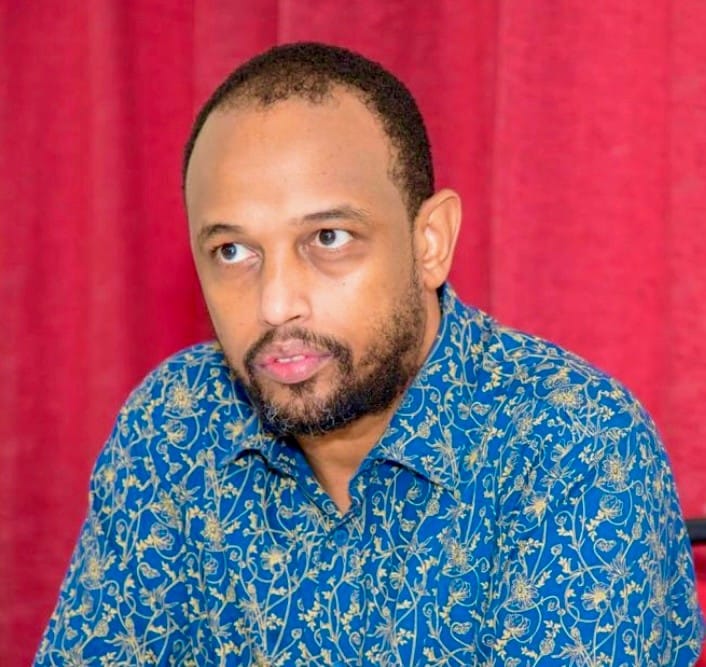
 Garissa County Executive for Health Ahmednadhir Omar/HANDOUT
 There is a peculiar power in being able to speak where one cannot be answered.
Parliamentary privilege was designed to make that possible, not for comfort, but for necessity. A legislature that must look over its shoulder before it speaks cannot perform its constitutional duty; the law removes that hesitation. It creates a protected space within which scrutiny may be exercised without fear.
That protection is deliberate. So, too, is the imbalance it creates.
This reflection was triggered by a recent instance concerning a county government, framed as an intervention by a Member of Parliament. The MP raised a matter in which the manner of delivery proved more consequential than the details themselves.
To those familiar with public sector operations, the matter was, in substance, an internal administrative or procedural issue. The honourable member, however, recast it as a systemic failure of the entire health sector under devolution, and cast aspersions against county officials holding public office within the law.
The result was to simplify a complex issue and invite public judgment in a forum where response was not equally available. The concern, therefore, lies less in the individual intervention than in the standard such parliamentary moments begin to establish.
Parliament is, by design, a rules-governed institution. It is equipped with the leadership and rules necessary to sustain its own discipline. Its authority rests not only on the freedom to speak, but on the discipline within which that freedom is exercised.
Where personal interest intersects with public function, the standard, and indeed the tradition of the House, is disclosure. That is how trust is maintained. Where serious allegations are made, they are expected to be grounded in prior engagement and supported by verifiable material.
The House provides the mechanisms for rigour; it is incumbent upon members to utilise them. Where such steps are not evident, the basis of an intervention becomes uncertain, and the oversight it seeks to advance risks being weakened.
Absent that discipline, the use of privilege begins to drift from public purpose toward private advantage.
In Parliament, when a member speaks about individuals who cannot respond, that speech carries immediate and lasting consequence. Statements made under privilege do not remain within the chamber; they carry the weight of having been said in a place where they could not be directly challenged. That weight shapes perception. It colours judgment.
Outside the chamber, those who are the subject of such remarks are often left with limited or delayed avenues for recourse.
The system accepts this asymmetry because it serves a constitutional purpose: the necessity of unhindered oversight. The health of Parliament, however, has never depended on law alone. It rests equally on fidelity to truth and on moral restraint, exercised through procedure and ultimately through the judgment of the member.
There is a difference between scrutiny and narration; between interrogating a system and constructing a version of it. Parliamentary privilege protects scrutiny. It was never intended to serve narration.
The Constitution recognises the authority of Parliament, while also affirming the dignity of individuals and the centrality of due process. These safeguards are not in competition. They are interdependent.
The power to speak within the insulation of privilege, conferred by the sovereignty of the people, carries a corresponding obligation. When exercised without sufficient care, it risks casting a shadow beyond the individual member and onto the institution itself.
In a constitutional order that vests privilege in Parliament for the public good, that obligation rests with those who exercise parliamentary privilege. They bear the responsibility of ensuring the institution is not diminished by individual indiscretion. It rests, too, with those of us who value the institution enough to insist that it is used well.
The writer is the Garissa County Executive for Health
Contact: [email protected]