 Vaccine development.
Researchers say the approach, known as a Human Infection Study (HIS), could speed up efforts to develop the world’s first widely used Shigella vaccine.
The study is being conducted by the KEMRI-Wellcome Trust Research Programme at its Kilifi research facilities.
Scientists there say the work is driven by one urgent goal — protecting children in regions where diarrhoeal diseases remain a major killer.
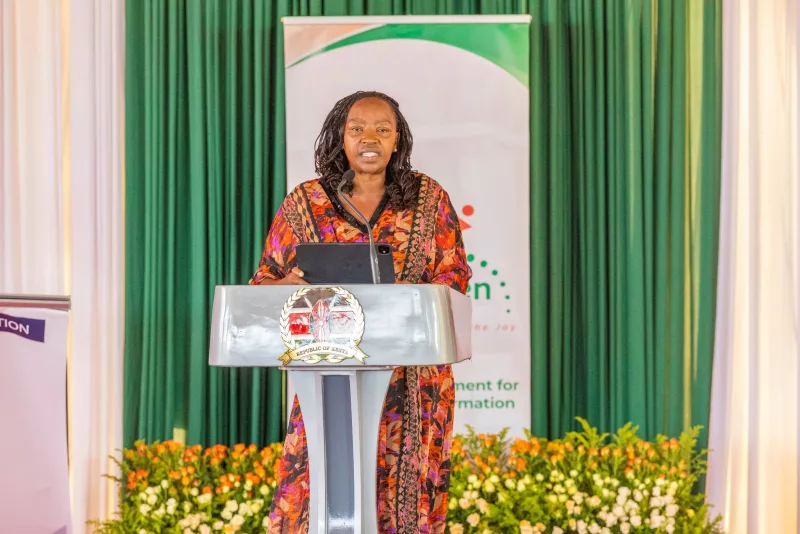
“The main objective is vaccine development,” said Joyce Shikuku, Project Manager for Human Infection Studies at KEMRI-Wellcome Trust.
“We test whether what we have is efficacious and can achieve the study endpoints. Once we confirm safety and efficacy, we move to dose-finding and larger trials.”
Human infection studies involve the deliberate exposure of healthy adult volunteers to a disease-causing organism under strict medical supervision.
In Kilifi, volunteers are first screened extensively to confirm they are in good health. Only those who meet all safety criteria are enrolled.
“Human infection studies involve the deliberate infection of healthy adult volunteers with a pathogen,” Shikuku said. “We screen you thoroughly, confirm you are healthy, infect you in a controlled setting, and then monitor you very closely.”
Participants are admitted to a dedicated ward for about 14 days. Medical staff observe them around the clock. Researchers collect laboratory samples and monitor for symptoms. Once clear signs of infection appear, treatment begins immediately.
Shigella spreads through contaminated food and water and can cause severe diarrhoea, fever and abdominal pain. While most healthy adults recover with treatment, the infection can be dangerous for young children, particularly in low-resource settings. There is currently no licensed Shigella vaccine in routine global use.
Coastal Kenya carries a significant burden of diarrhoeal diseases. In Kilifi County, Shigella contributes to hospital admissions among children and, in severe cases, death. Researchers say developing a vaccine that works well in African populations is critical.
By conducting the study locally, scientists can better understand how people in endemic areas respond to infection and to vaccine candidates. Immune responses may differ depending on previous exposure, nutrition and other environmental factors. Instead of waiting for natural infections to occur in the community, researchers can observe the disease process in a controlled setting. This reduces the time needed to determine whether a vaccine candidate shows promise.
If early results are positive, the research moves to larger trials involving more participants. The idea of deliberately infecting healthy people often raises alarm. “When you tell someone, ‘We will infect you,’ the first reaction is fear,” Shikuku said. “People ask, ‘What if I die?’”
She emphasised that such studies are only done for diseases that have established and effective treatment. In the Kilifi study, volunteers receive antibiotics as soon as symptoms develop. They are discharged only after doctors confirm full recovery.
According to Shikuku, the programme has conducted human infection studies for more than a decade without any participant deaths or severe complications linked to the research. After leaving the ward, volunteers are followed up for up to 18 months.
During that period, they continue to receive medical care, even for unrelated conditions. Emergency systems are in place. The research unit is equipped with resuscitation equipment, and ambulances are available if a participant requires advanced care. So far, researchers say no severe case has required escalation beyond standard treatment.
Before any volunteer is enrolled, the study must pass several levels of ethical and regulatory review. Independent ethics committees and national regulators assess the protocol to ensure it meets safety standards. Shikuku said community consultation begins even before the study is submitted for approval.
"We seek community views early,” she said. “If they say the study would not be acceptable in this context, we revise it. Their input is incorporated before we go to regulators.”
Public meetings are held to explain the research in simple language. Residents are encouraged to ask questions and raise concerns. Researchers say this ongoing dialogue is key to building trust in studies that may otherwise be misunderstood.
The KEMRI-Wellcome Trust programme began conducting human infection studies in Nairobi in 2013 before expanding to Kilifi. Volunteers are recruited from the local demographic surveillance area, allowing for close monitoring and follow-up. For researchers, the stakes are high
A safe and effective Shigella vaccine could dramatically reduce severe diarrhoeal disease among young children in Kenya and other African countries.
For volunteers, participation is a personal decision rooted in trust. “Everything we do is about safety,” Shikuku said. “But it is also about finding solutions that will save lives especially for children.”