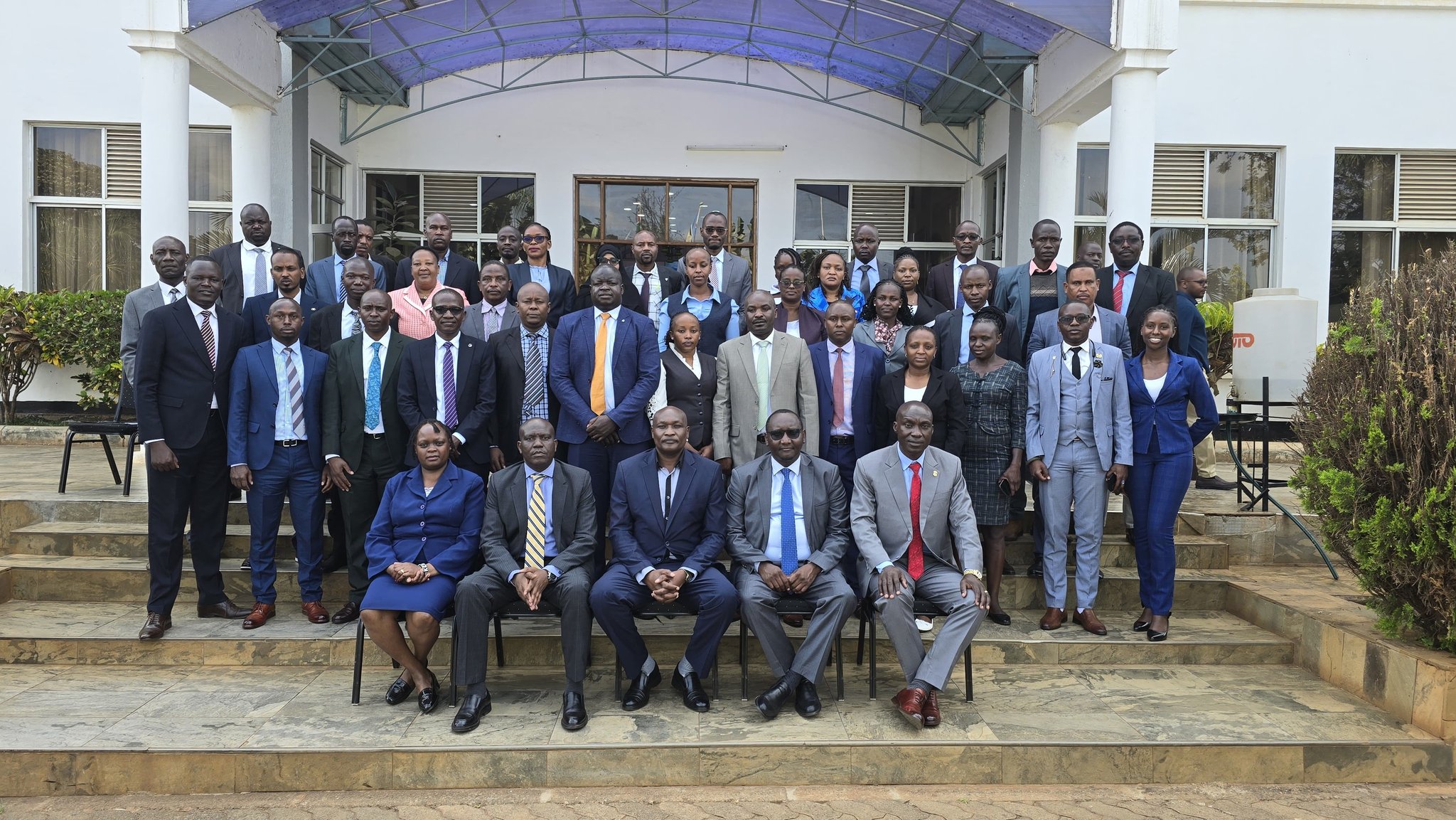
The Directorate of Criminal Investigations (DCI) has intensified its nationwide crackdown on illicit financial flows by rolling out specialised training for officers aimed at strengthening the country’s fight against money laundering and terrorism financing.
The sensitisation programme, which began with Training of Trainers (ToTs) sessions and senior officers, has now been expanded to include members of the Inspectorate and officers of other ranks, in a structured effort to enhance investigative capacity across the country.
Speaking during the training, DCI Director Mohamed Amin said the initiative is focused on strengthening intelligence-led investigations to dismantle financial crime networks.
“Our goal is straightforward: to trace illegal financial flows, disrupt criminal networks, and deny offenders access to the proceeds of crime,” Amin told participants.
This week’s seminars brought together detectives from DCI Headquarters as well as the Nairobi, Rift Valley, Eastern and Central regions.
The four-day sessions were held at the Kenya School of Government in Embu County and the Kenya Agricultural and Livestock Research Organisation (KARLO) in Naivasha.
Participants were equipped with practical skills to detect, investigate and disrupt complex money laundering and terrorism financing schemes.
The training covered key areas such as financial intelligence analysis, asset tracing and recovery, inter-agency coordination and compliance with international anti-money laundering and counter-terrorism financing standards.
“The nature of financial crime is evolving rapidly, becoming more sophisticated and borderless. Building technical expertise at the operational level is critical to staying ahead of criminal networks,” a senior DCI officer said during the sessions.
The intensified training comes at a time when Kenya is under increased international scrutiny following its placement on the Financial Action Task Force (FATF) grey list, a designation applied to countries with strategic deficiencies in combating money laundering and terrorism financing.
Officials said strengthening investigative capacity is a key step toward addressing the gaps identified and demonstrating the country’s commitment to global financial integrity standards.
“The objective is not only to meet international requirements but also to protect the integrity of our financial system, safeguard legitimate businesses and enhance investor confidence,” Amin said.
The DCI noted that the sensitisation programme will continue to be rolled out across all regions as part of a broader strategy to strengthen enforcement and ensure coordinated responses among investigative agencies.
As financial crimes increasingly exploit technology and cross-border networks, the agency says the enhanced training will enable detectives to better trace illicit funds, freeze criminal assets and build stronger cases for prosecution.
Further strengthening the crackdown, the Financial Reporting Centre (FRC) has designated 13 individuals believed to be involved in terrorism and terrorism financing, issuing immediate targeted financial sanctions in accordance with the United Nations Security Council Resolution 1373.
The move comes as part of Kenya’s ongoing efforts to combat terrorism and protect its financial system from abuse by criminal networks.
The notice, issued February 4, 2026, follows the work of the Counter Financing of Terrorism Inter-Ministerial Committee, established under Section 40D of the Prevention of Terrorism Act (POTA), 2012.
The committee identifies persons and entities suspected of funding terrorism and ensures their assets are frozen promptly, in line with both domestic law and international obligations.
"Following the decision by the Committee, the designated persons set out in paragraph 2 below are now subject to asset freeze and prohibition measures as stipulated in Regulation 15 of POT-TFR," the notice reads.
Under the Prevention of Terrorism (Implementation of the United Nations Security Council Resolutions on Suppression of Terrorism) Regulations, 2024 (POT-TFR), all funds or other assets owned or controlled by designated individuals are to be frozen without prior notice.
Institutions are also prohibited from providing any financial or economic resources to these individuals or to entities acting on their behalf, unless expressly authorised under law.