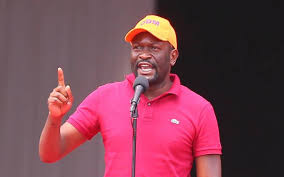
The growing wave around Nairobi Senator Edwin Sifuna and Siaya Governor James Orengo is threatening to complicate the planned negotiations between ODM and the ruling UDA, analysts warn.
The two leaders appear to have succeeded in consolidating a critical mass opposed to rapprochement with President William Ruto ahead of next year’s elections.
The team has positioned itself as defenders of the party’s grassroots base under their banner‘ Linda Wananchi’.
Their push appears to have resonated with a section of supporters who feel sidelined in recent high-level decisions.
Analysts now argue that this emerging Sifuna–Orengo wave could significantly weaken Oburu’s bargaining power in talks aimed at striking a pre-2027 political deal.
Political analyst Martin Andati told the Star the Oburu faction will have to scale down their expectations during the negotiations.
He said Ruto’s camp could offer a reduced deal, calculating that a divided partner lacks the cohesion to demand premium terms.
“Definitely it will water down the negotiations, Oburu will go to the negotiations when he is very much weakened,” Andati argues.
“Ruto will give them whatever he [Ruto] likes. It will be a matter of take or leave.”
ODM has, prior to the talks, put forward a demand for the Deputy President seat currently held by Kithure Kindiki.
Speaking during an ODM delegates meeting in Mombasa on February 12, Oburu made it clear they would be negotiating for the post in their talks with UDA.
“That Deputy President seat is what we are targeting very strongly,” Oburu said.
A section of ODM lawmakers admit that deepening cracks within the party could weaken its negotiating leverage with Ruto ahead of the 2027 political realignments.
Ruaraka MP TJ Kajwang conceded that persistent public spats between rival camps have not only confused supporters but also strategically disadvantaged them on the table.
“Of course, it [divisions] will weaken our position to negotiate. Who wants to negotiate with a house divided? Who wants to negotiate with somebody who does not bring anything to the table?” Kajwang told the Star, noting that unity has historically been ODM’s strongest bargaining chip in coalition talks.
“So watch out there. It does not make you better even if you are Linda Wananchi because you will still lose your bargaining power. It does not make you better if you are Linda Ground because it will make you a weaker person."
He warned that unless the wrangles are urgently resolved, ODM risks losing influence in any structured engagement, particularly on issues relating to power-sharing arrangements and the party’s future political direction.
“What you must know is that the baseline is numbers. If you cut yourself off, you are of no use to anybody. Nobody can negotiate with you. Even negotiating with the current regime, or if you choose to negotiate with other parties, you will still be useless. All of us will still go back to the opposition,” Kajwang warned.
Kibra MP Peter Orero was, however, optimistic the party will be able to strike a united front after the March National Delegates Convention (NDC).
“In politics, one day is a long time. We still have more than 14 months before the next election. It will be prudent that we hold our horses and see what happens after the NDC,” he said on Thursday during an interview with the Star.
Langata MP Felix Oduor dismissed the talks of unity, saying ODM is one under Siaya Senator Oburu Oginga.
“There is no party that is fractured, there are people who are walking saying Linda Wananchi – they don’t have ODM blessings,” he said.
The opposition party has also expressed that it will negotiate for a 50-50 share of government with Ruto.
Also on the list of demands is the push for zoning of regions that will see affiliate parties fielding candidates only in their strongholds.
Political commentator Daniel Orogo warned that divisions within the Orange party could hand Ruto a strategic advantage in any 2027 negotiations between ODM and UDA.
“It will significantly weaken the negotiations. It [ODM] has already weakened,” he told the Star on the phone.
The analyst added that such internal wrangles weaken the party’s bargaining power at the negotiation table.
ODM’s strength in past coalition talks, he noted, stemmed from its unified grassroots base and clear command structure.
“A united ODM is a threat to any negotiations with government,” he said.
Orogo said a fractured ODM could struggle to demand key positions or policy concessions in a potential 2027 deal, as UDA strategists may exploit the divisions to push for terms favourable to Ruto.
Already, there are calls for ODM to forget about negotiating for the Deputy President slot in a possible coalition arrangement.
A section of Ruto allies havewarned ODM against demanding Kindiki’s position, insisting the seat is neither vacant nor negotiable.
“The Deputy President’s seat should be completely off the negotiation table because there is no valid reason for it to be targeted. The current holder is capable and should continue serving,” Tharaka Nithi Governor Muthomi Njuki said last week.
“The only compromise we can make is to let Kindiki join ODM if it’s a must, the running mate to be from ODM, but the deputy president position is non-negotiable.”
Public Service CS Geoffrey Ruku has also dismissed recent claims by party leader Oburu Oginga that they are eyeing the DP’s slot.
“Just the other day, I heard ODM leader Senator Oburu Oginga say they want the Deputy President’s position come 2027,” he said.
“We want to tell him that from where we stand in this region, we agreed that we and ODM are in a broad-based government. We will continue working together under President Ruto to strengthen national unity and ensure the government delivers services to wananchi.”