The fragile calm that followed one of Africa’s deadliest conflicts in recent years is under severe strain, as Ethiopian Defence Forces deploy troops into Tigray.
Addis Ababa is accusing Asmara of continued occupation of territory inside the region, in open defiance of repeated demands to withdraw its forces.
The move signals an escalation that has further inflamed an already fragile security landscape, raising fears of an outright war.
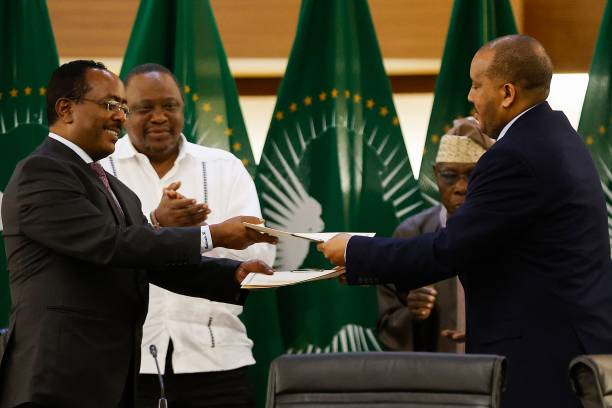
The Permanent Cessation of Hostilities Agreement signed in Pretoria on November 2, 2022, was brokered by the AU High-Level Panel for the Ethiopian Peace Process that consisted of Uhuru, former South African Deputy President Phumzile Mlambo-Ngcuka and former Nigerian President Olusegun Obasanjo. Obasanjo was the chairman of the team.
The trio played a strategic role in bringing the Ethiopian federal government and the Tigray People’s Liberation Front back from the brink after two years of devastating war. The agreement, facilitated under the auspices of the African Union, was hailed as a diplomatic breakthrough that silenced the guns and opened space for humanitarian access.
However, the escalating tensions are putting the fragile peace at risk of collapse, drawing the attention of the African Union.
In a statement on Tuesday, African Union Commission Chairperson Mahmoud Ali Youssouf said he was deeply concerned over the recent developments.
He called for the preservation of the “hard-won gains” achieved under the AU-led agreement.
“The Chairperson calls upon all parties to exercise maximum restraint, refrain from actions that could undermine confidence, and resolve all outstanding issues through constructive dialogue,” the statement said.
Youssouf reiterated the AU’s “unwavering commitment to the full and effective implementation” of the deal and signalled that the AU High-Level Panel on Ethiopia stands ready to scale up facilitation efforts.
A recent assessment titled Three Years into the Pretoria Agreement: Where does it stand? notes that while large-scale hostilities ceased after November 2022, implementation has been uneven and fraught with delays.
Key provisions, including disarmament, restoration of services, and the withdrawal of foreign forces, have faced persistent challenges.
One of the most contentious unresolved issues, the report said, has been the continued presence of Eritrean forces in parts of Tigray.
The Pretoria Agreement obligated the removal of non-Ethiopian forces from the region, but the report observes this process has not been fully realised, contributing to insecurity and mistrust.
The failure to fully implement these security guarantees has left the region vulnerable to renewed confrontation.
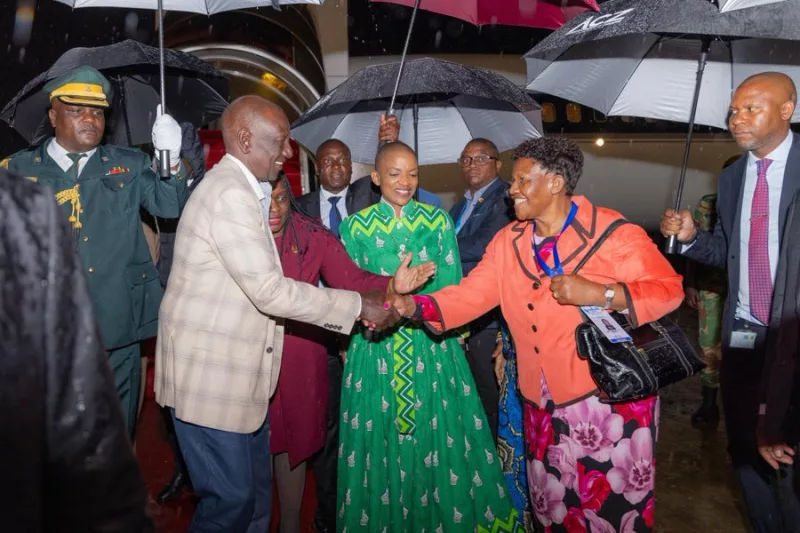
Uhuru’s role in brokering the deal was widely praised before he was honoured for his contribution to the peaceful settlement of the conflict during the "Enough with war lets sustain peace" event in Addis Ababa.
While federal authority has been restored in parts of Tigray and some humanitarian corridors reopened, political tensions, incomplete reintegration processes, and sporadic security incidents that threaten stability remain.
Eritrea was a key ally of the Ethiopian federal forces during the war against the TPLF. But its continued military footprint in Tigray has complicated post-war normalisation and raised sovereignty concerns within Ethiopia itself.
Analysts warn that a confrontation between Ethiopian and Eritrean forces in Tigray could shatter the fragile trust built since 2022. Such a scenario would not only endanger civilians but also undermine the credibility of the AU-led mediation framework that Uhuru helped champion.