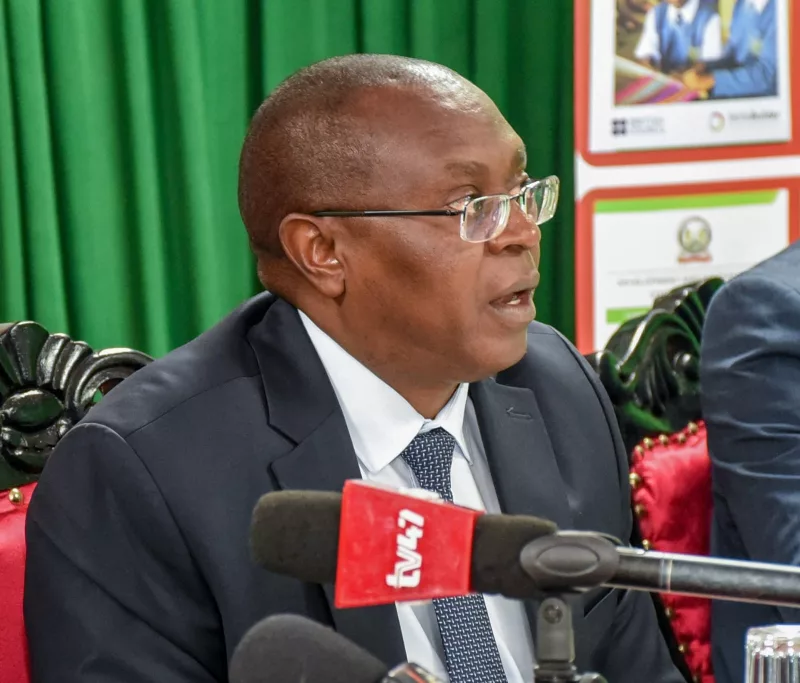
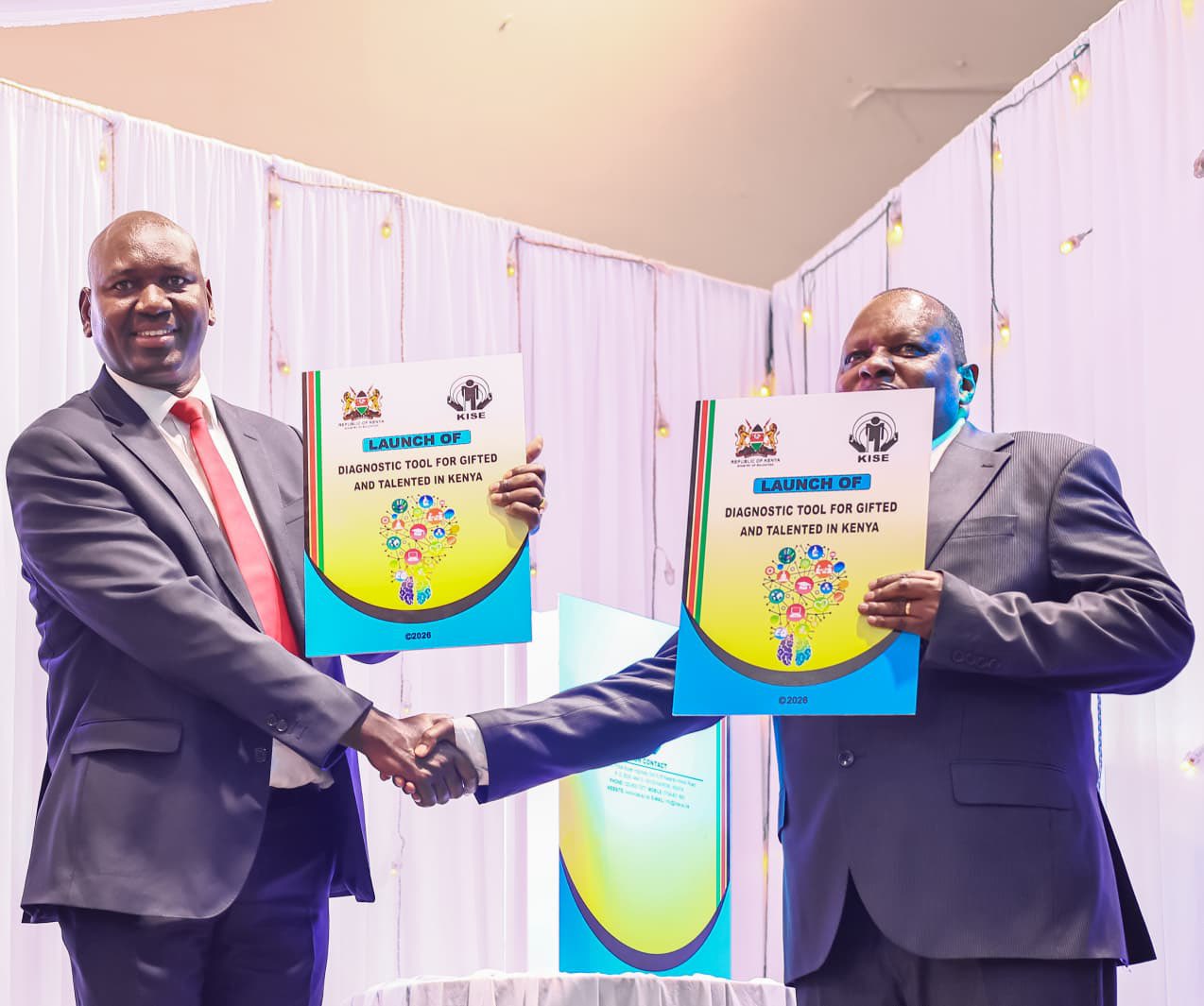
 Education PS Julius Bitok and Kenya Institute of Special Education director Norman Kiogora launch the Diagnostic Tool for the Gifted and Talented on February 18 /JULIUS BITOK
A new subject known as Nationhood Science could soon be infused into the Competency-Based Education curriculum and rolled out across all levels of learning if MPs approve proposed amendments contained in the Education Laws (Amendment) Bill, 2025.
The Bill, sponsored by Suba South MP Caroli Omondi, was officially received by the National Assembly on February 13.
It seeks to introduce the new subject into Kenya’s education system by amending specific provisions in the Basic Education Act, the Technical and Vocational Education and Training Act, the Kenya Institute of Curriculum Development Act and the Universities Act.
In his memorandum on the objectives of the Bill, Omondi states: “The principal object of this Bill is to actualise Article 10 of the constitution, entrench the learning of national values and principles and promote innovation and entrepreneurship in the education curriculum at all levels.”
Article 10 of the constitution binds all state organs, citizens, public and state officers to uphold the national values and principles of governance.
These include patriotism, national unity, sharing and devolution of power, the rule of law, democracy and participation of the people.
It further outlines human dignity, equity, social justice, inclusivity, equality, human rights, non-discrimination and protection of the marginalised, good governance, integrity, sustainable development, transparency and accountability.
The Bill proposes the amendment of specific sections of the various Acts by inserting “nationhood science”, defined as a programme of instruction that cultivates the national values and principles, a national ethos, innovation, entrepreneurship and the responsibilities of citizenship.
The proposed changes align with the architecture of Competency-Based Education, particularly Community Service Learning, which seeks to nurture a citizenry that is not only skilled but also ethically grounded and socially responsible.
The eight core values of CBE — love, responsibility, respect, unity, peace, patriotism, social justice and integrity — are directly derived from Article 10.
The curriculum is structured to impart these values with the aim of shaping learners into virtuous citizens.
It encourages learners to appreciate their role within a wider community while preparing them to become accountable citizens and future leaders, ensuring that education is not delinked from society.
Omondi encouraged MPs to pass the amendments, arguing that Parliament is mandated to actualise the intentions of the framers of the constitution and transform Kenya into a society anchored on real and tangible values.
He maintains that the framers were deliberate in their desire to build a national ethos infused with the spirit of oneness, honesty and integrity.
“The national ethos, innovation, entrepreneurship and various responsibilities of citizenship, such as the duty to promote harmonious living with other citizens, paying taxes and contributing to national development, collectively constitute "nationhood science",” he said.
The MP further contends that the Bill does not limit or infringe on any fundamental right or freedom and does not delegate legislative power, even though it affects the functions of county governments, entities that manage early childhood development and education.
If adopted, the amendments would formally embed Nationhood Science within Kenya’s education framework, ensuring national values, citizenship and innovation are taught from early childhood through to university level.
However, there's no clause amending the Basic Education Act or any other statute to designate Nationhood Science as a compulsory learning area.
Meanwhile, the CBE framework has marked a major milestone following the launch of the Diagnostic Tool for the Gifted and Talented by the Kenya Institute of Special Education (KISE).
The curriculum will serve as a guiding lens to help the new learning system see, measure and nurture exceptional ability across academics, arts, sports, leadership and innovation.