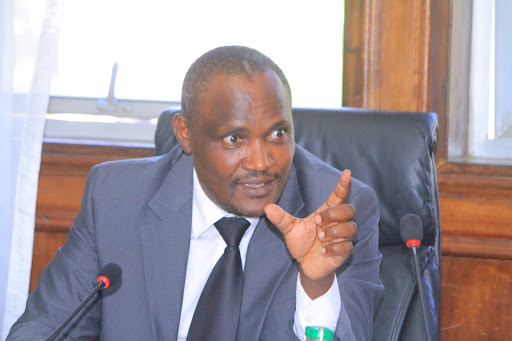
 Treasury Cabinet Secretary John Mbadi/FILE
The government will spend Sh1.54 trillion, more than half of all tax revenue, on debt repayments in the next financial year.
The revelation that lays bare the country’s deepening debt strain is contained in the draft Division of Revenue Bill, 2026.
The Bill shows that 53 per cent of the projected Sh2.9 trillion in ordinary revenue will go to servicing loans — the highest share in the country’s history.
“The Bill has taken into account public debt-related costs, including annual debt redemption and interest payments for both domestic and external debt,” it states.
The allocation marks an increase from Sh1.43 trillion in the current financial year and Sh1.34 trillion the previous year, underscoring the rapid growth of debt repayment obligations.
Treasury data indicates debt costs will rise by Sh104.2 billion from Sh1.44 trillion this year to Sh1.54 trillion in 2026/27.
The rising repayments highlight the fiscal pressure facing the government as it struggles to fund development while meeting mounting loan obligations.
Kenya’s debt stock is now approaching Sh12 trillion and is projected to remain elevated well beyond 2030 — the year the country had targeted to achieve middle-income industrial status under Vision 2030.
A recent budget implementation review by Controller of Budget Margaret Nyakang’o showed the extent of the squeeze, with nearly half of the Sh1.1 trillion spent between July and September going to debt servicing.
“Debt servicing has reduced the resources available for current spending needs,” Nyakang’o said, warning that essential programmes risk underfunding.
Treasury has opted against aggressive debt reduction, instead pursuing a strategy of restructuring and extending repayment periods.
“The government will continue to assess macroeconomic developments and explore opportunities for diversifying sources of borrowing,” Treasury Cabinet Secretary John Mbadi said.
Under the plan, 82 per cent of new borrowing will be sourced domestically through Treasury bills and bonds, while only 18 per cent will come from external lenders, mainly concessional loans aimed at lowering interest costs and reducing refinancing risks.
Economists, however, warn that heavy domestic borrowing could crowd out private sector credit, slowing investment and economic growth.
Despite the restructuring approach, the debt burden will persist, merely spread over a longer horizon. Treasury acknowledges Kenya faces a high risk of debt distress, leaving the economy vulnerable to shocks such as drought, global downturns and revenue shortfalls.
The strategy also signals the likelihood of continued tax pressure, tighter public spending and higher borrowing costs.
Taxpayers face additional exposure through Sh83.2 billion in government guarantees to state corporations including Kenya Airways and KenGen, liabilities that could crystallise if the firms run into financial trouble.
With debt servicing set to remain one of the largest items in the national budget through 2030, analysts warn the country has little fiscal space for major development spending unless revenue grows significantly or borrowing slows.
For now, a growing share of Kenya’s taxes will continue flowing not to new projects, but to settling past loans — a reality that underscores the scale of the country’s debt challenge.
INSTANT ANALYSIS
Kenya will spend a record Sh1.54 trillion on debt servicing in 2026/27, consuming 53 per cent of projected tax revenue and underscoring severe fiscal strain. Rising repayments are crowding out development spending, with nearly half of recent expenditure going to loans. Treasury plans to rely heavily on domestic borrowing and restructure existing debt, but risks remain high, including costlier credit, tax pressure and vulnerability to shocks. With debt nearing Sh12 trillion and obligations lasting beyond 2030, Kenya’s fiscal space for growth and public services will remain constrained.