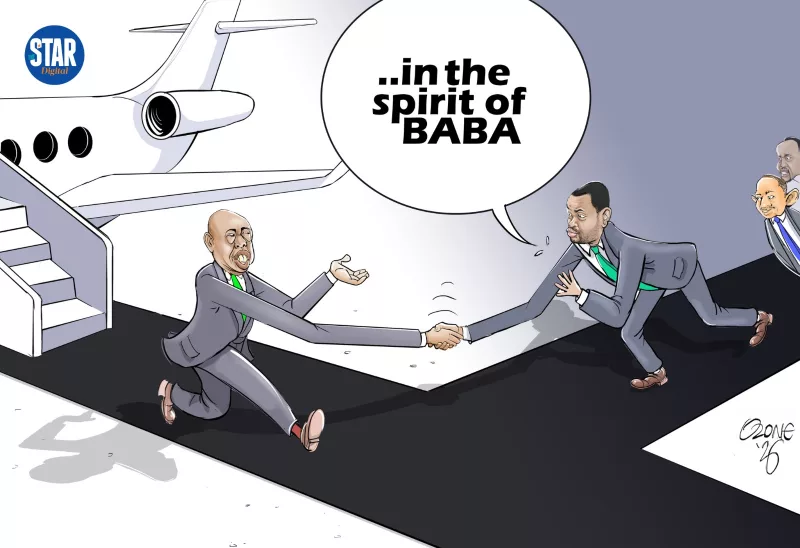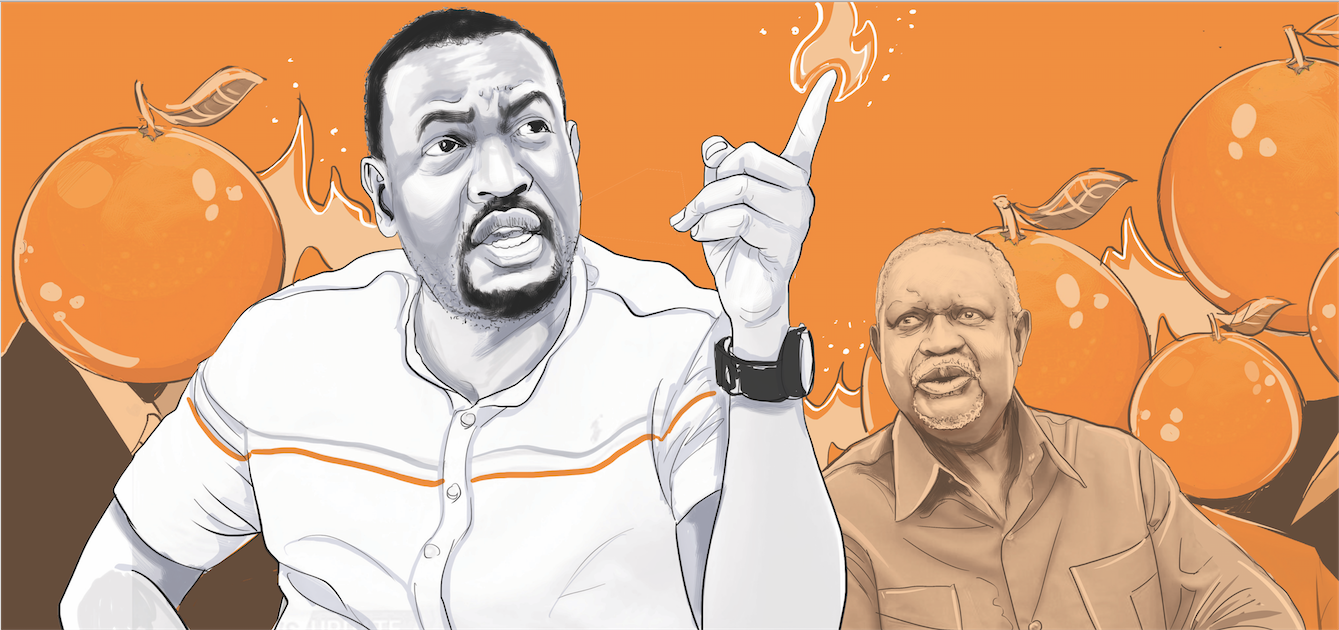
The Orange Democratic Movement (ODM) is going through its most delicate transition in history. With the death of its founding leader, Raila Odinga, the party has entered unknown territory. Moments like this require restraint, unity and disciplined leadership.
Instead, ODM now finds itself battling internal turbulence that threatens to fan small embers into a destructive fire.
At the centre of the storm is former secretary general Edwin Sifuna. The unavoidable question confronting loyal supporters is this: Is Sifuna acting as a reformer within ODM — or as a political arsonist at a time when the house is already exposed?
Oburu Oginga assumed leadership at a moment of grief, uncertainty and strategic vulnerability. Filling the vacuum left by Raila requires not theatrics, but steadiness; not slogans, but structure. This is the burden of stability.
Oburu’s position has been firm and consistent: ODM must be governed by its constitution, its National Executive Committee, and its recognised decision-making organs, not by parallel centres of mobilisation in markets or press-driven confrontation.
That insistence is not suppression. It is preservation.
Political parties collapse when senior officials openly undermine collective decisions while still holding executive office. Discipline is not optional in such moments; it is foundational.
Sifuna’s recent posture has raised serious and legitimate concerns. While serving as secretary general, he publicly challenged party strategy, particularly regarding engagement within the broad-based government framework. Debate is healthy. Persistent public contradiction from within top leadership is destabilising.
One cannot be both the chief administrative officer of a party and its most visible internal critic without creating institutional strain.
When disagreements migrate from internal deliberation to rallies and press briefings, the optics shift dramatically. What may begin as reformist energy quickly resembles factional escalation.
At a time when ODM needs consolidation and clarity, visible fragmentation weakens its negotiating strength and projects uncertainty to allies and rivals alike. The cost of public confrontation is very expensive.
The disagreement between Oburu’s leadership and Sifuna’s faction is fundamentally strategic.
Supporters of the current leadership argue that engagement within the broad-based government ensures ODM retains leverage and protects its constituencies. Leaders such as John Mbadi have defended participation as pragmatic statecraft, influence from within rather than protest from the margins.
Critics, including Sifuna, frame the same approach as ideological dilution.
That debate is legitimate. But legitimacy does not excuse escalation. It demands structured engagement within constitutional forums, not political brinkmanship played out in public squares and markets.
Recourse to the Political Parties Disputes Tribunal may be procedurally lawful. Politically, however, it underscores how far internal cohesion has frayed. Courts adjudicate rules. They do not restore trust.
Reform requires responsibility. If Sifuna seeks to reposition ODM for 2027, the route is clear: articulate a coherent roadmap, build internal alliances, and contest leadership through established party organs.
Electoral politics is not powered by rhetoric alone. It demands coalition arithmetic, disciplined messaging, resource mobilisation and calculated timing. Competing power centres weaken all sides.
In transitional seasons, tone is not cosmetic; it is consequential. Escalatory politics may energise segments of a base, but it also heightens risk. And risk, unmanaged, becomes fire.
Political parties rarely implode overnight. They erode when internal disputes harden into camps that view one another as existential threats.
It is a defining test for the Orange party. Oburu’s message has been unequivocal: no individual is bigger than ODM. That principle must apply uniformly to veterans and to rising figures alike.
ODM accommodates ambition. It allows debate. But only do so within the guardrails of its constitution. This has been clear from the onset.
If confrontation continues to overshadow consultation, Sifuna risks being perceived not as a reformer strengthening the house but as an accelerant and political arsonist at a moment of combustible fragility.
ODM does not need sparks. It needs steadiness.
This is a defining test of political maturity. The party can consolidate, manage dissent through structure and emerge stronger, or it can allow internal fire to consume the very foundation built over decades.
History is watching. And history is rarely sympathetic to institutions that fail to protect themselves from within.
Strategic advisor and expert in leadership and governance