The global energy landscape continues to be defined by a select group of nations holding the keys to the world’s natural gas supply.
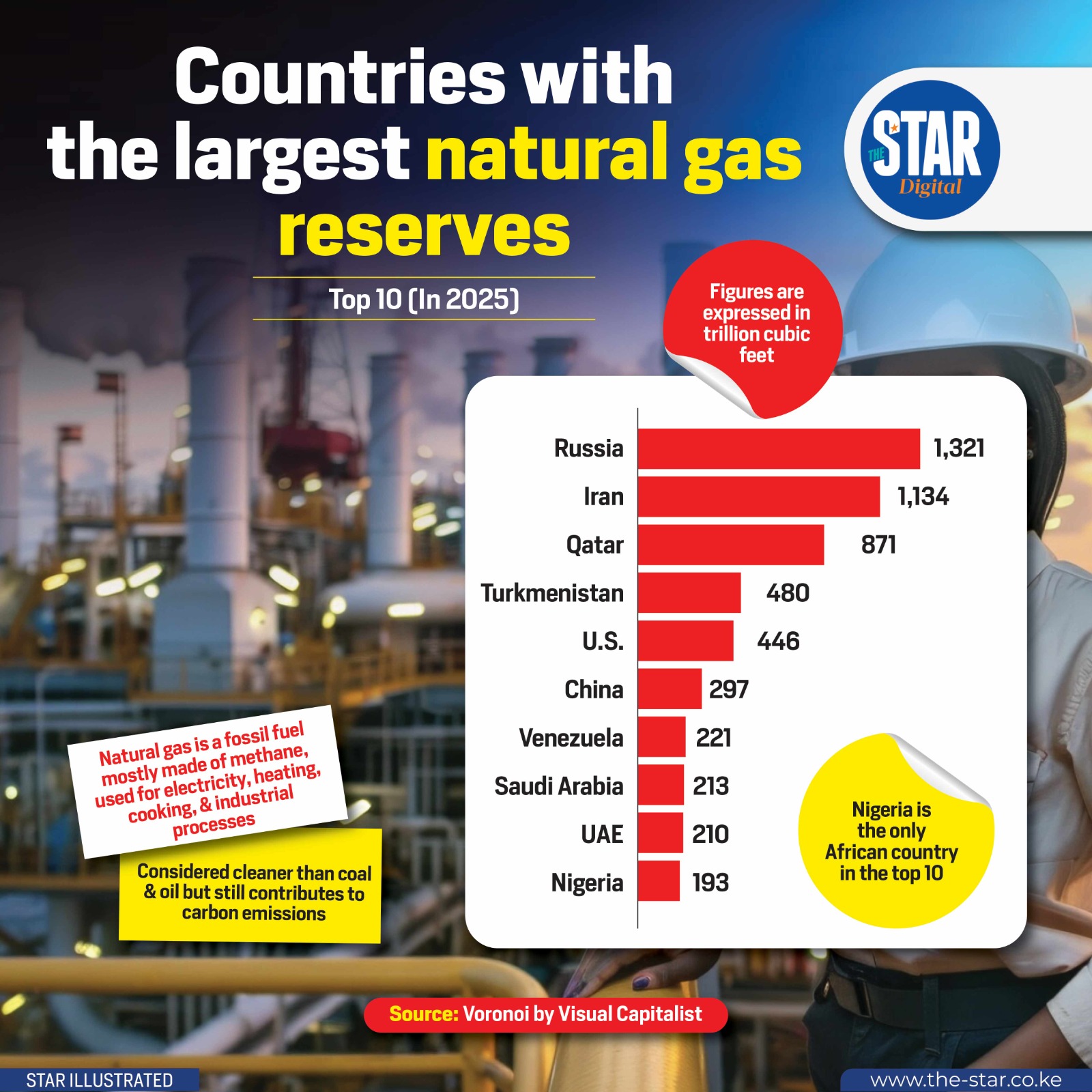
As 2025 data reveals, Russia remains the undisputed leader in this sector, boasting a staggering 1,321 trillion cubic feet of natural gas reserves. This vast inventory cements its position as a central player in the international energy market, particularly for regions heavily reliant on gas for heating and industrial power.
Close behind is Iran, which holds 1,134 trillion cubic feet, followed by Qatar with 871 trillion cubic feet.
Together, these three nations represent a massive concentration of the planet's methane-rich resources, largely dictating the flow of energy through both pipelines and Liquified Natural Gas (LNG) shipping routes.
The middle tier of the global top ten showcases a mix of established Western powers and rapidly growing Eastern economies.
Turkmenistan holds a significant 480 trillion cubic feet, narrowly edging out the United States, which possesses 446 trillion cubic feet. China, a major consumer and producer, follows with 297 trillion cubic feet.
Further down the list, South American and Middle Eastern influence persists through Venezuela, Saudi Arabia, and the UAE, each maintaining reserves between 210 and 221 trillion cubic feet. Notably, Nigeria stands as the sole African representative in this elite group, holding 193 trillion cubic feet.
As the world balances the need for cleaner-burning fuels against the reality of carbon emissions, these ten nations remain the primary custodians of the fuel powering the modern industrial age.